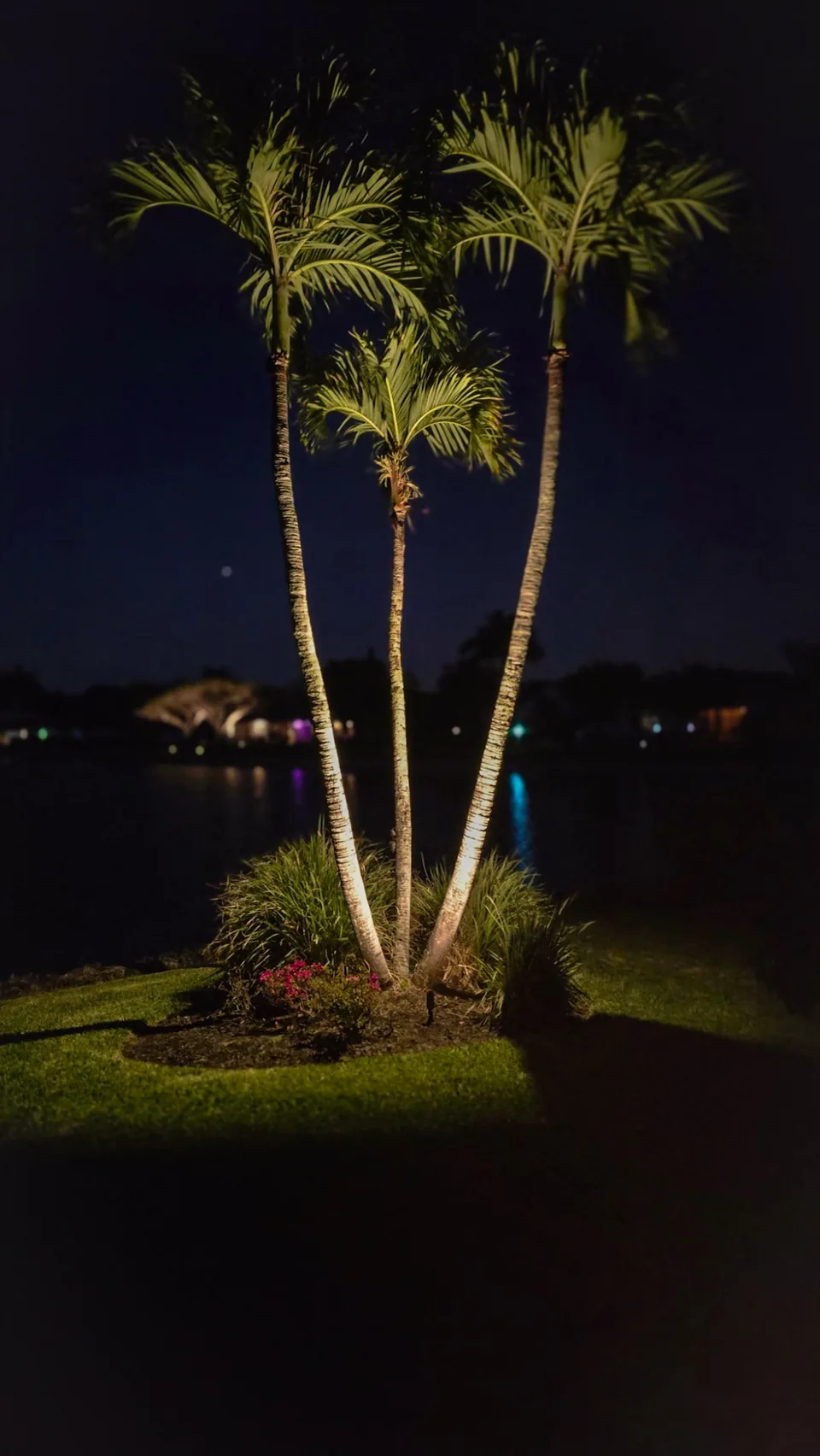
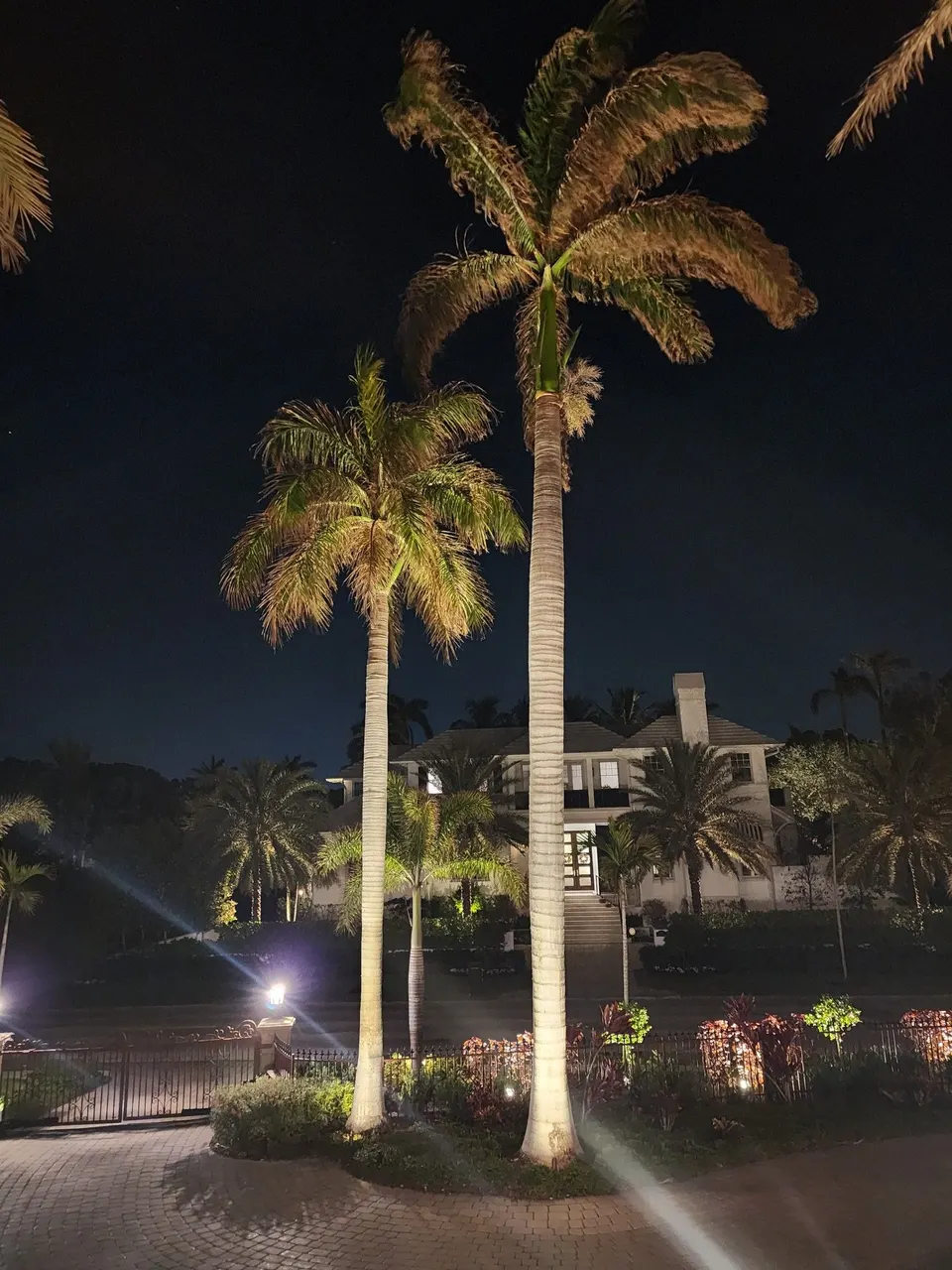
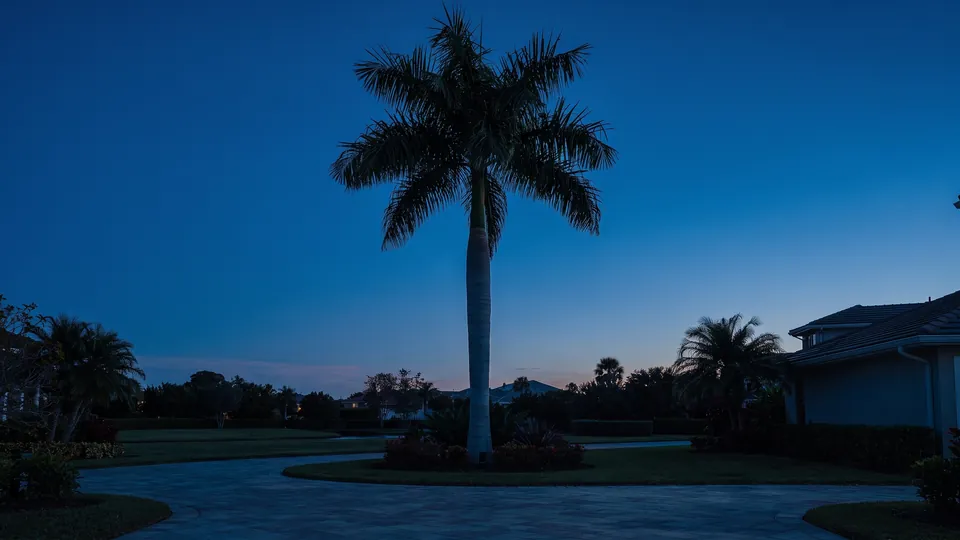
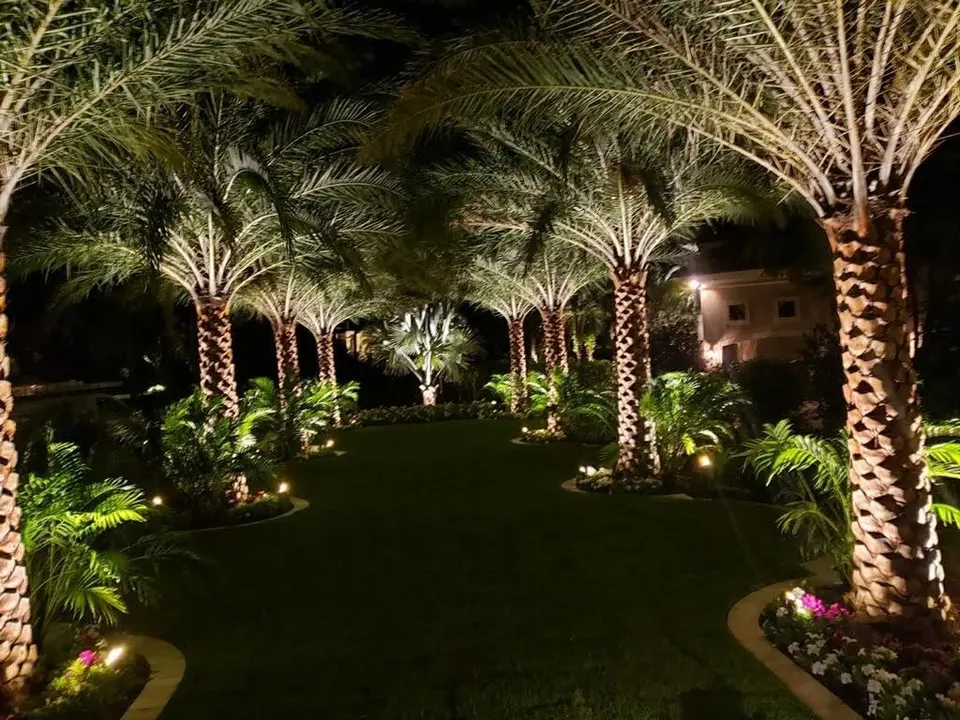
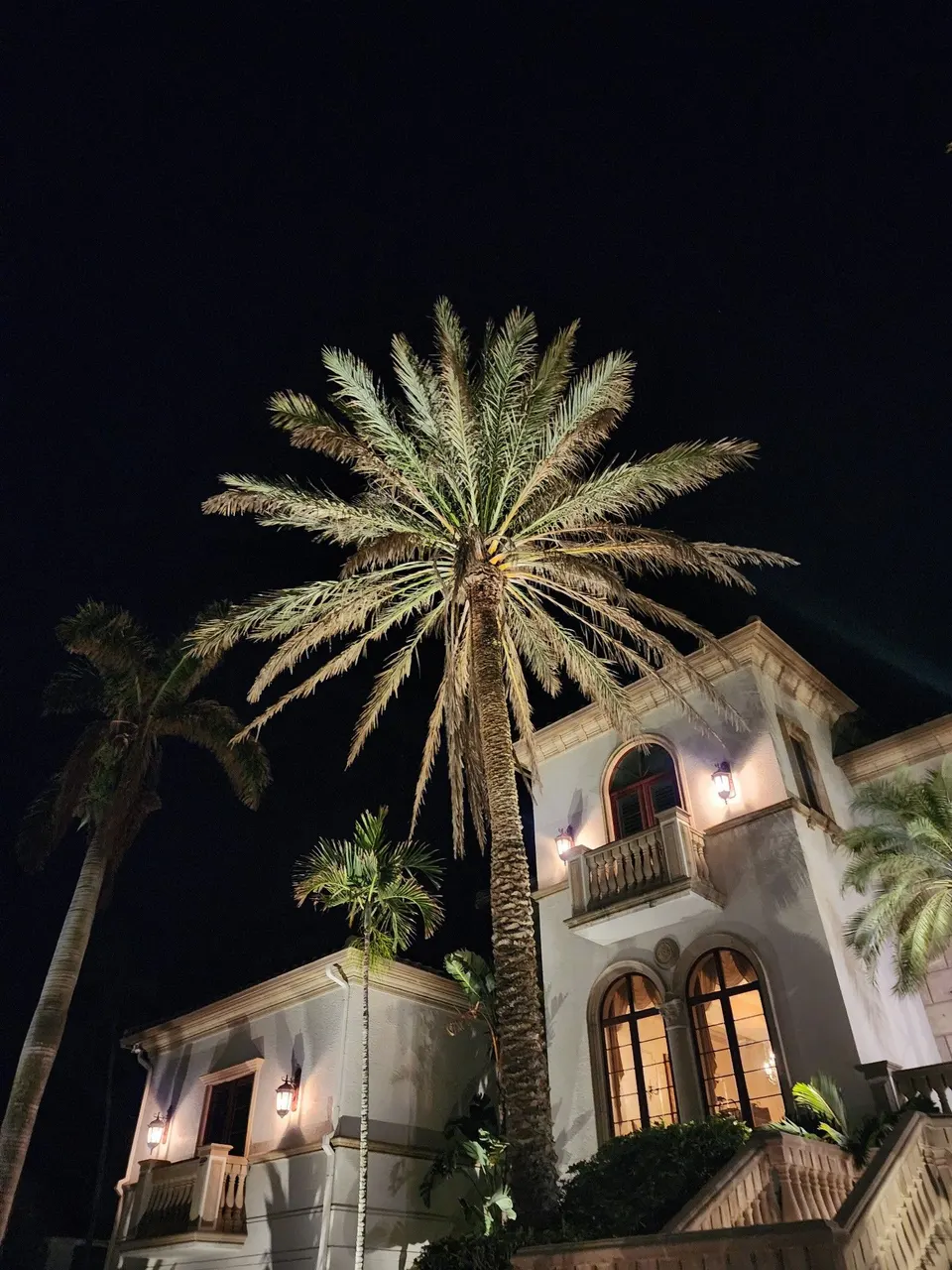
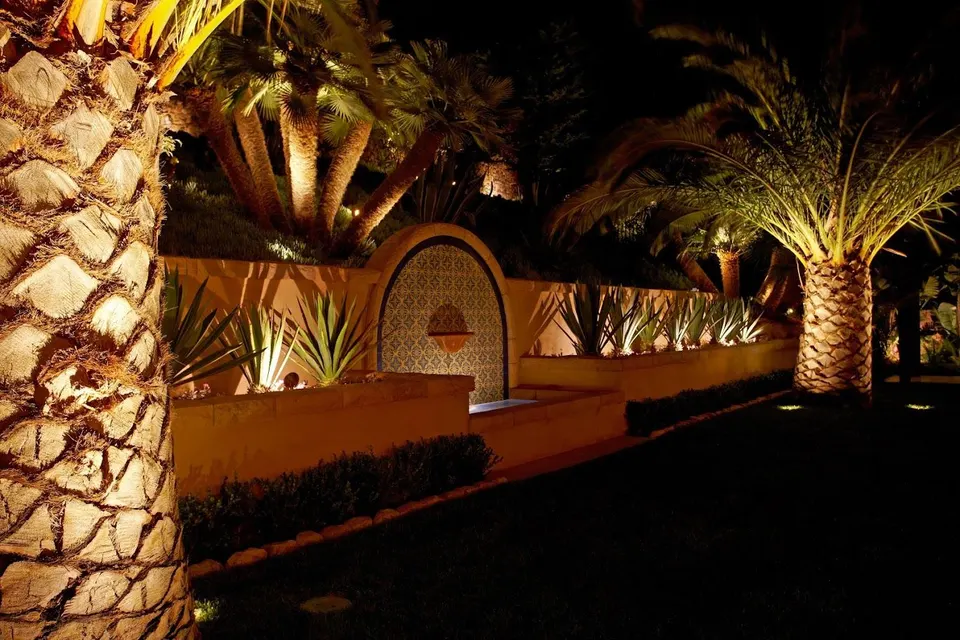
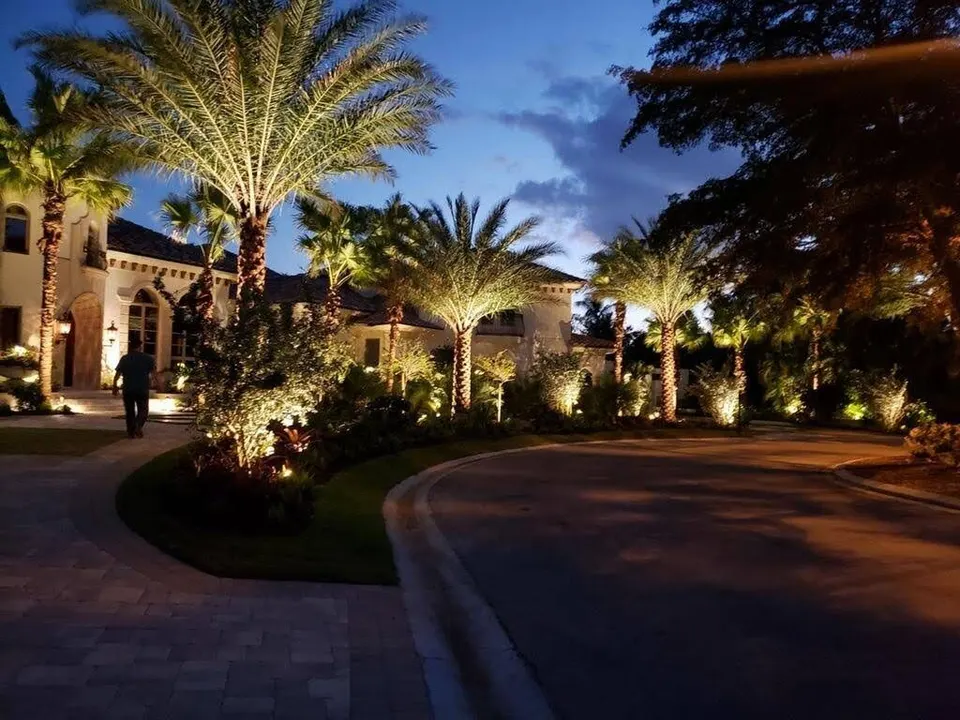
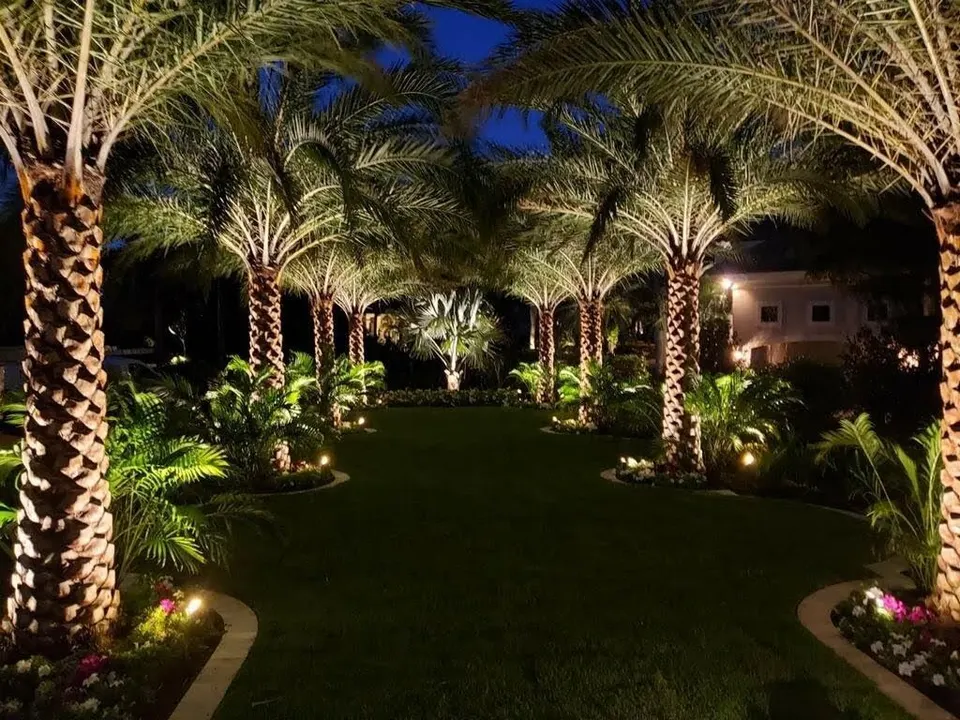
A young palm and a mature palm are different targets
A crown that sat at one height at planting is somewhere else a few summers later. The
beam is still pointed at the old position. What used to be a lit crown is now a lit
patch of trunk with dark fronds above it. Nothing has failed. The lamp works, the wire
is sound, and the transformer is delivering what it always did. That is why it gets
missed: there is no fault to notice, only a view that is slightly worse than it was.
Trimming changes what the crown catches
Palms here are trimmed at least once a year, often before hurricane season. A heavily
trimmed crown has fewer fronds hanging in the path of the beam, so the same fixture that
lit a full head now sends half its light straight through. After a hard trim the crown
can look thin at night for months, until the new fronds drop into the beam.
The light is aimed at the tree as it was. The tree does not stay that way.
After a storm
Wind takes fronds, and sometimes it moves the fixture too: a stake loosens in saturated
ground and the head tips a few degrees. A few degrees at the base is several feet at the
crown. Walk the property after any strong blow and look at each palm from where you
normally see it. Damage beyond aim, such as a fixture under water or a cut cable,
belongs with storm damage repair.
What to do about it
Re-aiming is quick work. The part that takes discipline is doing it on a schedule, at
night, when the result can be seen. That is the main reason we suggest
scheduled re-aiming visits for any property where palms
are the main event. Where the trees have simply outgrown the fixtures, it becomes a
question of adding to the system. If you are
planning from scratch, start with
how palm lighting fits the rest of the property.