Golden Gate Estates
The lived-in Estates north of I-75: lots of at least 2.25 acres, homes at least 75 feet back from the front line.
Golden Gate Estates guide
Golden Gate Estates is not a beach story. Lots in the Estates district are at least two and a quarter acres, homes sit far back from the road, horses and chickens are allowed by right, and the state forest to the south has panther tracks on its sandy roads. Good lighting here is about distance, darkness and animals, and FWC is plain about what lights can and cannot do.
Tell us about the property
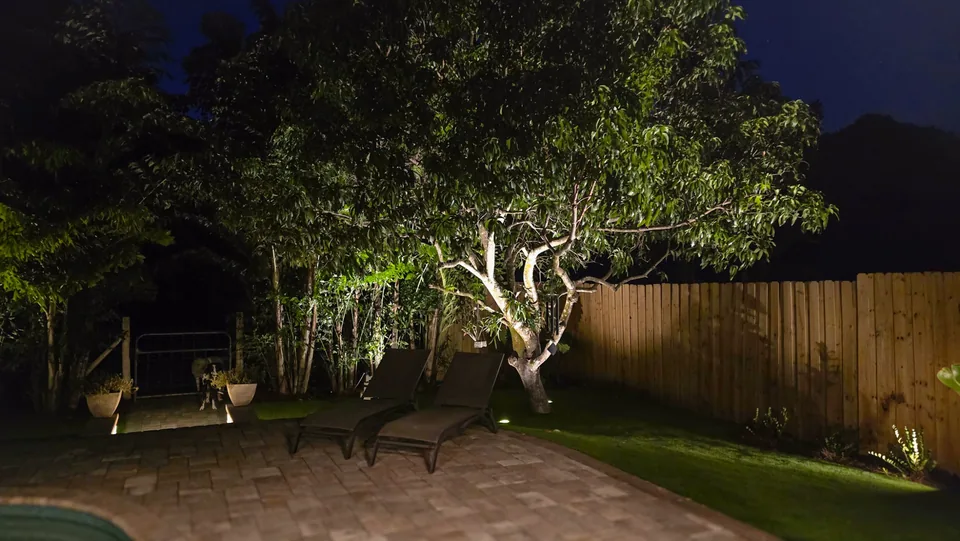
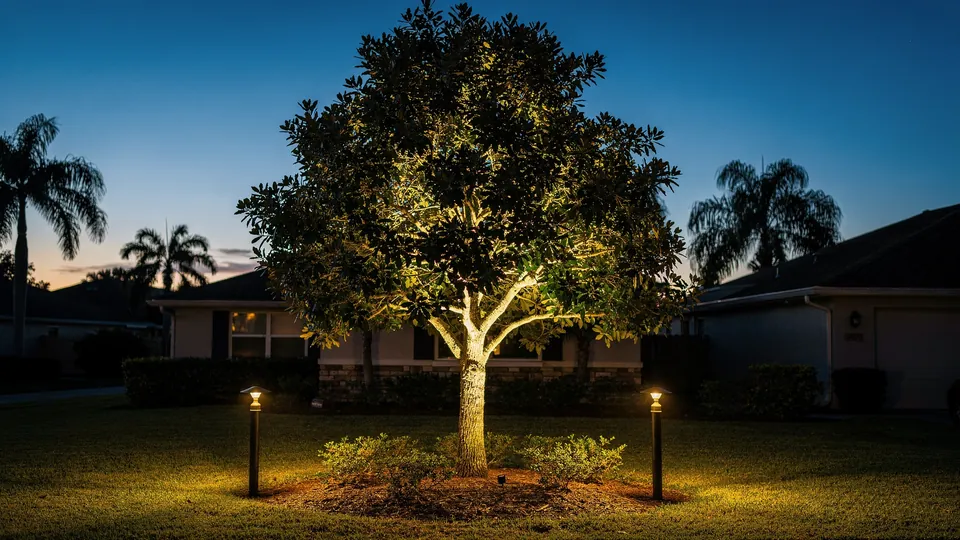
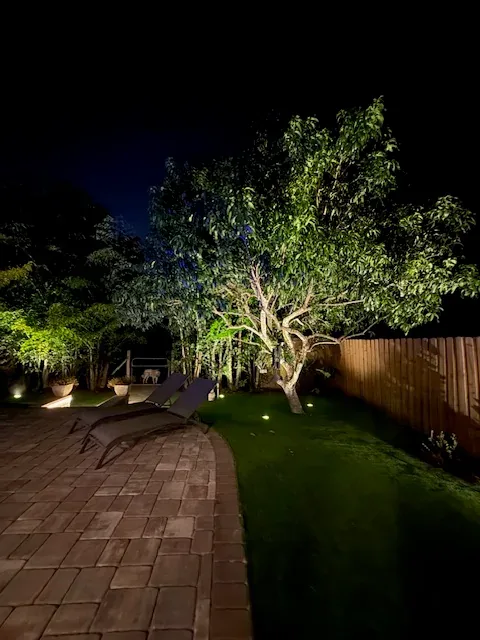
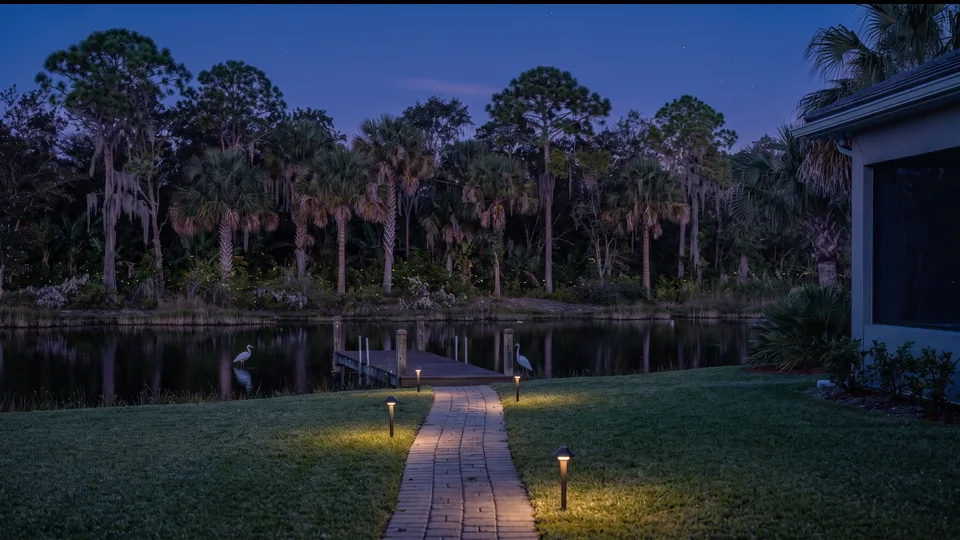
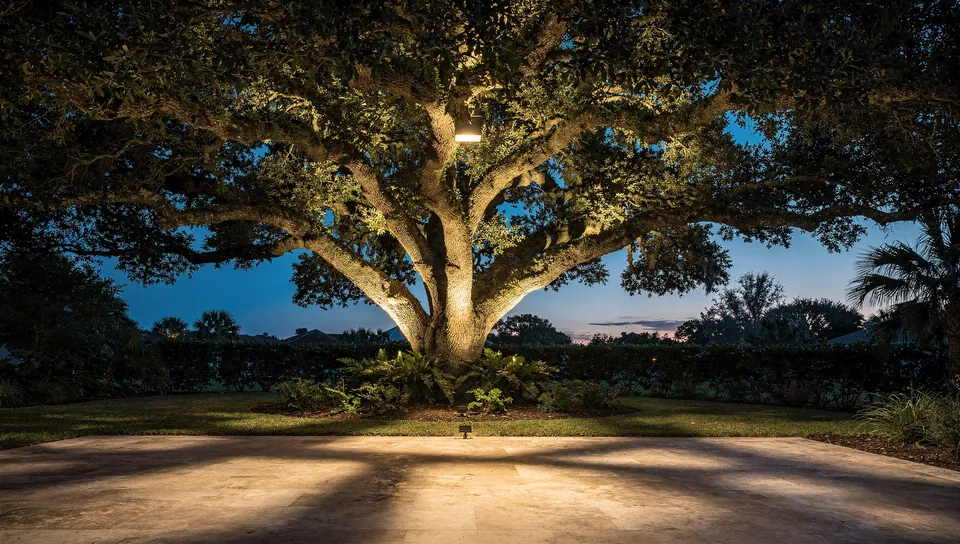
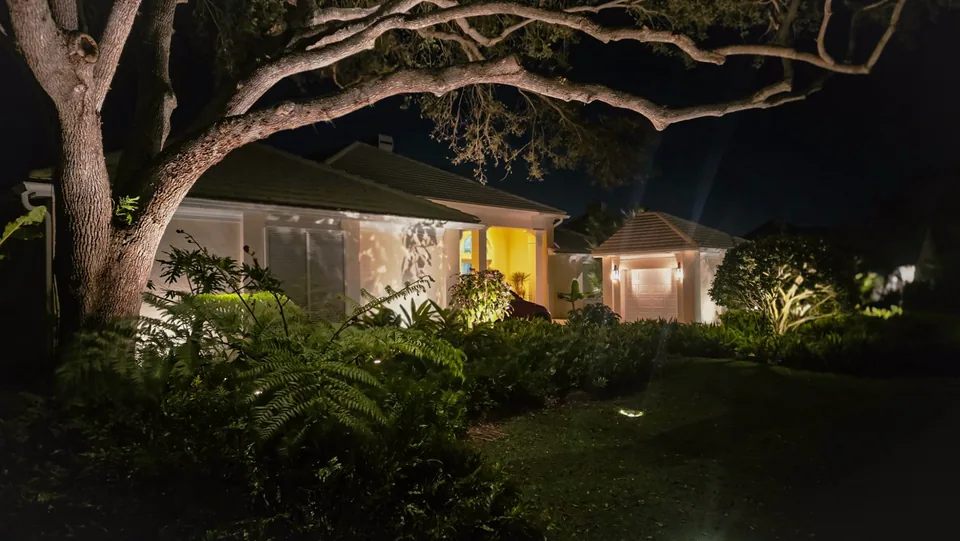
Photograph: a back yard and shade tree at night, shown for the lighting, not the place.
From the road to the door
Collier County's Estates district requires lots of at least 98,010 square feet, about 2.25 acres, and at least 150 feet wide, with homes set back at least 75 feet from the front line. That puts the house far from the road and the gate. Good lighting here starts at the address and the entrance, then follows the drive in, rather than trying to light the whole acreage.
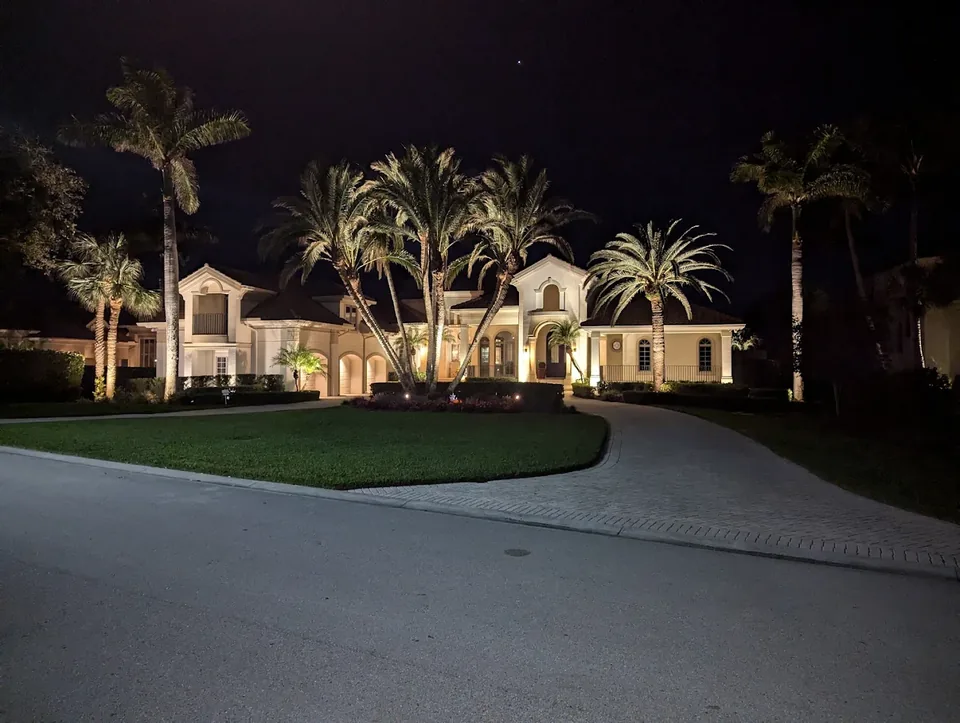
Collier County’s Estates district sets a minimum lot of 98,010 square feet, about 2.25 acres, at least 150 feet wide, and its setback table puts the home at least 75 feet from the front line, with 30-foot side yards and a 75-foot rear yard. The county describes the district as low density homes “in a semi-rural to rural environment, with limited agricultural activities.” On a grid of long, straight roads, the first thing to light is what a visitor or a delivery driver has to find: the address, and the mouth of the drive.
Where there is a gate, a low, shielded light on the keypad and the pavement in front of it does more than a floodlight on a pole. A driver needs to see the edge of the drive and the gate, not a bright lamp at eye level. DarkSky’s position is that glare from bright, unshielded lights “actually decreases safety because it shines into our eyes and constricts our pupils,” and on a dark rural road there is nothing else around to soften it. See driveway and entrance lighting.
Light the decision points: the entrance, any curve, a culvert or canal crossing, and the place you park. Low fixtures spaced for driving, rather than a continuous row, keep the drive readable and leave the land around it dark. The long run of cable back to the transformer is its own design problem, and it has its own section further down this page.
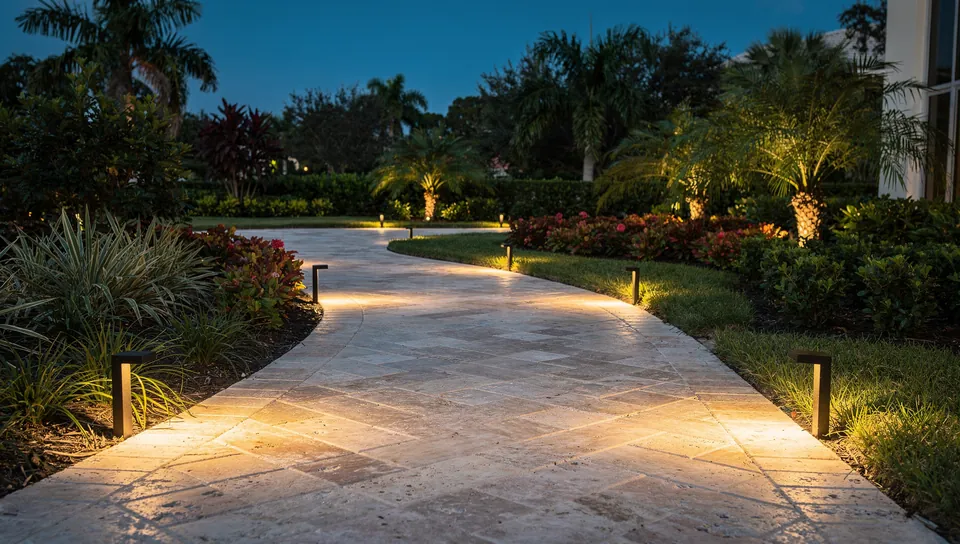
Near the house the plan starts to look like a garden: path and step lights from where you park to the door, a feature tree or two, a porch. On acreage, that is where most of the light belongs, because that is where people are at night. The rest of the lot can stay as dark as the roads around it. See pathway lighting.
Livestock and panthers
The Estates district allows horses, livestock and up to 25 poultry. For yards in panther country, FWC lists motion-activated lighting among options to consider, and adds that a light that is always on may help you see but will not deter a panther. FWC also recommends a secure pen. UF/IFAS advises keeping livestock in well-lit corrals at night instead of open pasture.
The district’s own text allows “Keeping of horses and livestock (except for hogs), not to exceed two such animals for each acre, and with no open feedlots,” and up to 25 fowl or poultry “kept in an enclosure.” That puts animals outdoors at night on many Estates lots, which is exactly the yard FWC’s Living with Panthers page and a UF/IFAS publication are written for.
FWC’s wording on lights is careful, and so is ours. Its yard list includes “Motion-activated lighting (a light that is always on may help you to see what's happening but will not deter a panther.)” and a secure pen for pets and livestock, and it says individual circumstances vary. UF/IFAS advises: “Keep livestock in well-lit corrals at night rather than leaving them out to pasture or free ranging.” Neither says a light protects an animal. Panther tracks are documented in Picayune Strand State Forest to the south; we found no source documenting panthers on Estates lots themselves, so we do not claim it.
In lighting terms, that points to two kinds of light at a barn or coop: motion-activated fixtures that come on when something moves, and a shielded, steady light only where people actually work after dark, on a switch or a timer. A floodlight left burning over a pasture all night does neither job well. Our security lighting page covers motion control without glare.
Sources, read 2026-10-14: FWC, Living with Panthers; UF/IFAS, EDIS UW399 (reviewed August 2024); Collier County LDC 2.03.01, Municode; Florida Forest Service, Picayune Strand State Forest.
Ask about an Estates lighting planFWC and UF/IFAS, for a yard with animalsNightScapes Landscape Lighting
Options to weigh together, not promises.
Bears
The state forest's management plan lists the Florida black bear among common animals in its hydric hammocks. FWC's first step with bears is always removing attractants such as trash and feed. Only if a bear keeps returning does FWC describe motion-activated devices, such as visual and audio alarms or sprinklers, as non-contact ways to scare it. Lights support good habits; they do not replace them.
The Florida Forest Service’s 2020 management plan for Picayune Strand lists the Florida black bear with white-tailed deer and bobcat among the common animals of its hydric hammocks, and says deer and Florida black bears “will also utilize these areas for forage and denning.” The forest is reached from the north by Everglades Boulevard, a road that runs through the Estates. As with the panther, the bear is documented in the forest; we did not find a source counting bears on Estates lots, and we do not guess at one.
FWC’s guidance starts with attractants: garbage, pet food, bird seed, feed. Only “If after removing attractants the bear continues to return” does it describe non-contact scaring, including “motion-activated devices like visual and audio alarms or water sprinklers, which can deter bears without anyone being present.” It adds that bears used to people respond less. The BearWise basics page we read gives no lighting advice at all.
A motion-activated light at the feed room or the trash enclosure tells you something is there, and after the attractants are dealt with it may serve as one of the visual devices FWC describes. It is not a substitute for a locked feed bin. We would rather light the path to the bin so you can secure it after dark than light the whole yard all night in the hope of keeping a bear away.
Sources, read 2026-10-14: Florida Forest Service, Picayune Strand land management plan (2020) and forest page; FWC, Scare That Bear; BearWise Basics.
The country around you
Golden Gate Estates sits in the middle of a great deal of dark country. Its drainage canals run through it, the state forest that was once its southern half lies to the south, Corkscrew Swamp Sanctuary is about ten miles north and the panther refuge about eleven miles east. Each bulb marks one of the places this guide draws on, measured from verified map points.
The lived-in Estates north of I-75: lots of at least 2.25 acres, homes at least 75 feet back from the front line.
The Estates road that leads south to the state forest. One of the long, straight roads of the original grid.
One of the two canal systems dug to drain the subdivision. In the forest next door, the bonneted bat was found near canals.
The second drainage canal system of the original Golden Gate Estates plan.
Once the south of the subdivision. Panther tracks on its sandy roads, black bears in its hammocks, bonneted bats near its canals.
Old-growth bald cypress about ten miles north, the control site in a 2023 to 2026 insect light-trapping study.
The panther refuge about eleven miles east, adjacent to the state forest on its northeast.
Points placed from nominatim.openstreetmap.org. Map data from Google.
How it was built
Golden Gate Estates was laid out in the 1960s as a 173-square-mile project with 183 miles of canals and 813 miles of roads a quarter mile apart. Few homes were built in the southern part, which lacked electricity, and it became Picayune Strand State Forest. What remains is a grid of long, straight roads and big lots, where a few well-placed lights read clearly and too many read as glare.
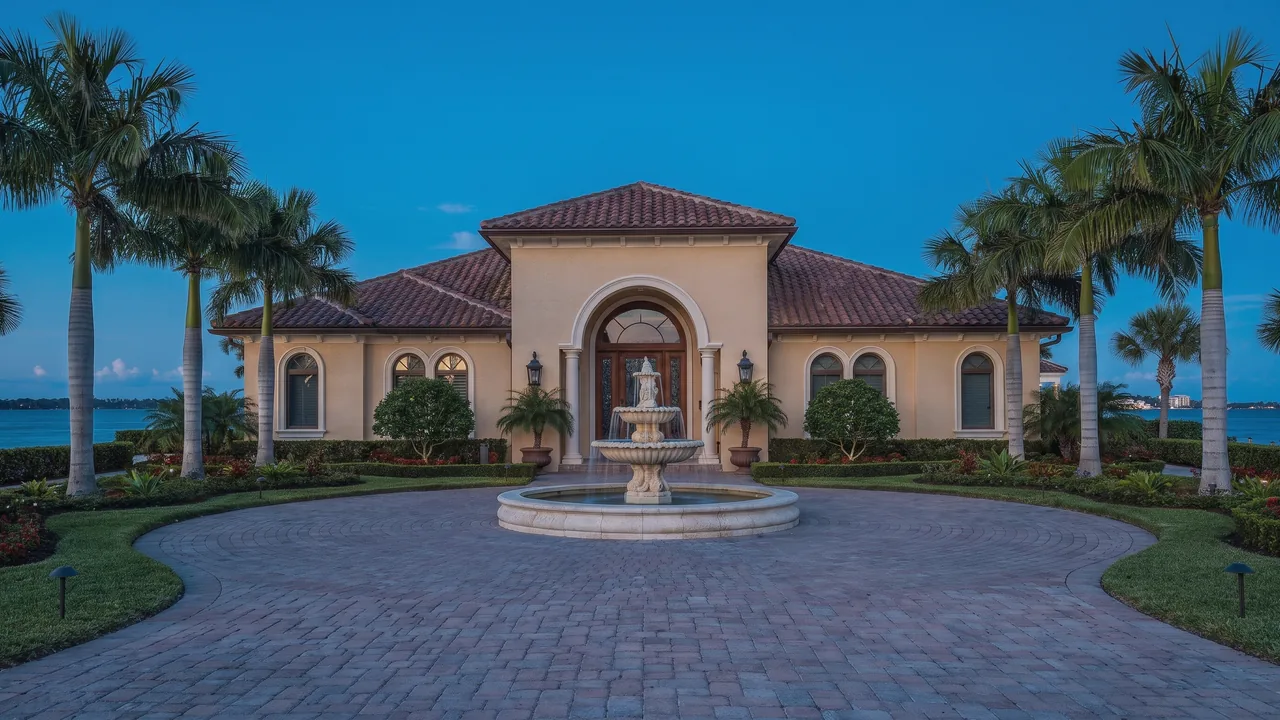 Illustration
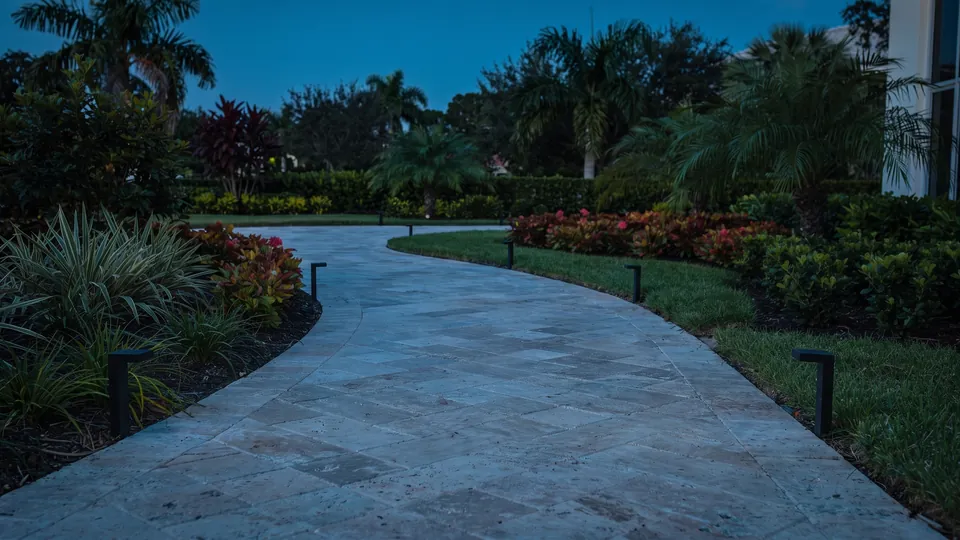 Illustration
 Illustration
Who does the work
NightScapes Landscape Lighting is owned and run by Todd and Sherry and has done outdoor lighting, and nothing else, from Naples since 1998. This guide rests on Collier County's code, the Florida Forest Service, FWC, UF/IFAS, the U.S. Fish and Wildlife Service and Audubon, each linked where it is used. Where those sources stop, such as panthers on Estates lots, so does the guide.
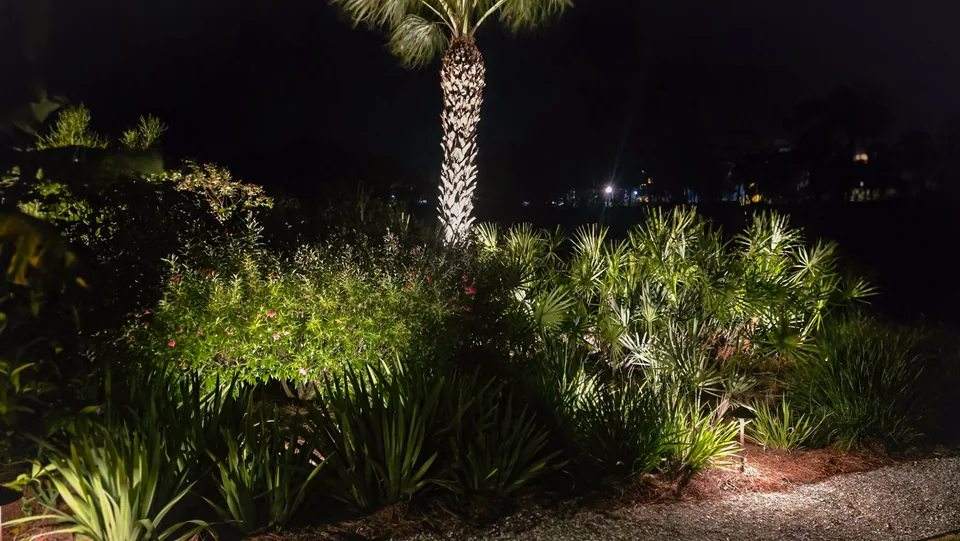
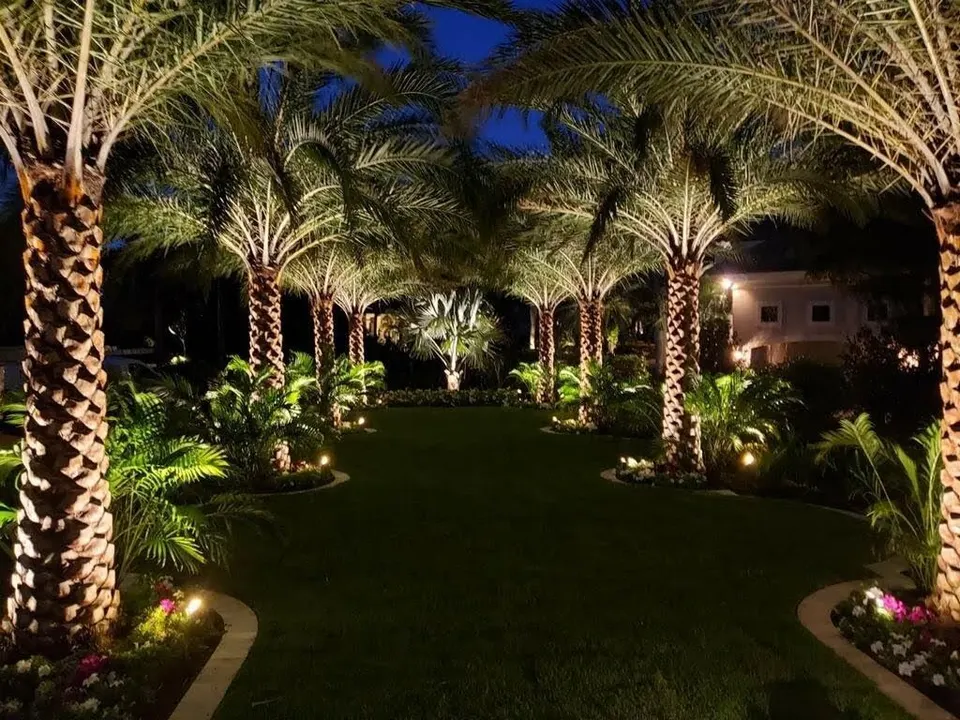
The photographs on this page show lighting, not particular Estates properties, and drawings are labeled as illustrations. Rural acreage is a different job from a coastal lot: fewer fixtures, longer runs, and more thought about what lives out there in the dark. The sections below cover the canals, the wire and the wild land around the Estates.
Ask about an Estates lighting plan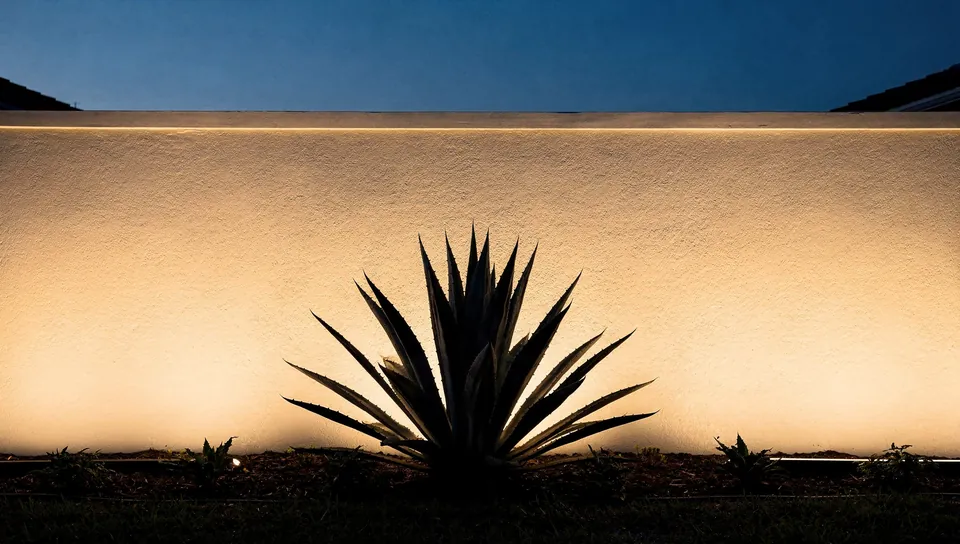
Canal edges
The endangered Florida bonneted bat has been found near canals in Picayune Strand State Forest, and federal biologists list sufficient darkness as an essential part of its habitat, while noting its response to light has not been specifically studied. On a canal-side Estates lot, the simple choice is to keep fixtures shielded and aimed at the yard, with the canal bank left dark.
In its 2024 critical habitat rule for the Florida bonneted bat, the U.S. Fish and Wildlife Service wrote that at Picayune Strand State Forest “all sites where the species has been detected were located near canals.” It lists “Habitats with sufficient darkness that provide for roosting and rearing of offspring” as an essential habitat feature, and names “excessive alteration of natural lighting” among activities that may harm that habitat. The forest is one of the largest landholdings in the bat’s Unit 6, most of which lies in Collier County south of I-75. Corkscrew Swamp, to the north, sits in Unit 5, which the rule treats as occupied.
Those lighting words sit in a list of federal actions that may be reviewed under the Endangered Species Act. They do not regulate a homeowner’s landscape lights, and we are not saying any Estates property lies in critical habitat; that was not checked. The same rule says the bat’s responses to artificial lighting “have not been specifically studied,” and that “there has been no evidence that Florida bonneted bats exploit artificial light sources.”
The cautious choice is simple. Light the yard, the steps and the dock you actually use, keep fixtures shielded and aimed away from the water, and leave the bank and the canal dark. The same edge holds frogs: the forest’s species list includes the green treefrog, the squirrel treefrog and the southern toad. FWC says the effect of lights on amphibians “has not been well studied,” but that lights have been found to alter nest hiding and possibly calling, and that some frogs gather at lights to forage.
Sources: U.S. Fish and Wildlife Service, Florida bonneted bat critical habitat rule, March 2024, read 2026-10-14 (ledger F-249 to F-251); FWC light pollution page (F-256), read 2026-10-13; Florida Forest Service 2020 plan, read 2026-10-14.
Long runs
With homes at least 75 feet back and lots 150 feet wide or more, low-voltage runs to the entrance, the gate and the mailbox can be long. FX Luminaire explains that longer runs and undersized wire lose voltage, and that LED systems still need voltage drop designed in. Plan wire size, transformer location and hub layout before trenching. Try a run below.
FX Luminaire, a Hunter Industries brand, puts it simply: “The greater the resistance of the circuit, the higher the voltage drop.” A longer wire is more resistance. Its support page names 16/2, 14/2 and 12/2 as the common low-voltage wire sizes, warns that “Incorrect wire size may result in voltage dropping past 10 VAC,” and says “It is imperative to take voltage drop into account even when designing an LED lighting system.”
The fixtures near the transformer look right and the ones out at the gate look dim. On an Estates lot, that is usually the entrance, the one place you most want lit. Hanging more fixtures off the same undersized run only makes it worse.
Wire size, where the transformer goes, and whether the runs split at a hub partway out are all settled before anyone digs. FX describes the 12 V to 15 V multi-tap outputs on its transformers as there to “minimize voltage loss,” which is one tool for a long run; a second transformer nearer the gate, where there is power for it, is another. On a lot with a 75-foot front yard and a canal to cross, we would rather plan it once than trench twice. If an existing system already shows the problem, see transformer and timer repair and redesign and expansion.
Sources: FX Luminaire, support note (ledger F-126, F-130, F-131) and PX transformer (F-132), read 2026-10-13; Collier County LDC 4.02.01, Municode, read 2026-10-14.
The neighbors
Corkscrew Swamp Sanctuary, about ten miles north, protects the largest remaining old-growth bald cypress forest, and a 2026 Audubon article on insect research there names light pollution among the pressures on insects. The Florida Panther National Wildlife Refuge lies about eleven miles east. Estates homes sit inside that wild landscape, so lighting that stays low, shielded and timed fits the place.
Audubon’s sanctuary at 375 Sanctuary Road West “protects the largest remaining old-growth bald cypress forest in the world,” and it is a Ramsar wetland. Measured between the two map points, it is about ten miles north of the Estates. In July 2026 Audubon wrote up an Ave Maria University light-trapping study, run from 2023 to 2026, that used Corkscrew as its undisturbed comparison site. On just two sample nights there, the student recorded 191 species, 27 of them found only at Corkscrew. The article says insects “are largely in trouble due to the impacts of urbanization, especially habitat loss, pesticide use, and light pollution.”
The Florida Panther National Wildlife Refuge lies about eleven miles east, and the state forest’s plan lists it as adjacent to the forest on the northeast. The forest itself lies south, reached by Everglades Boulevard. Between Corkscrew, the refuge and the forest, the Estates are the lived-in part of a large, mostly dark landscape.
A 2024 review of the insect research found the strongest evidence for removing unnecessary light sources, and called shielding and motion detectors promising but understudied. The Xerces Society suggests placing landscape lighting low and shielding it so it points down, and says dim, motion-activated or warm-colored LED lighting is less attractive to moths and other insects. DarkSky recommends 3000K and below. The evidence on color is mixed, though: the same review found color tuning and dimming generally ineffective in practice, so we never say warm light is safe for insects. Fewer lights, aimed down and on timers, comes first; color comes last. See zoning, dimming and color.
If you want trees lit, keep it to a few specimens near the house, aimed tightly and on a timer. Say it plainly: the U.S. Fish and Wildlife Service names upward directed spot and flood lights among decorative lighting to turn off during bird migration, and Xerces lists tree lights and facade lighting among cosmetic lights to remove. A lit oak by the porch is a choice, and on acreage it is best made sparingly.
Sources: Audubon, Corkscrew Swamp Sanctuary and July 2026 insect study article, read 2026-10-14; 2024 review (ledger F-242, F-243); Xerces firefly, moth and lighting guidance (F-235, F-237, F-238); DarkSky (F-234); USFWS (F-215), read 2026-10-13.
Wear and tear inland
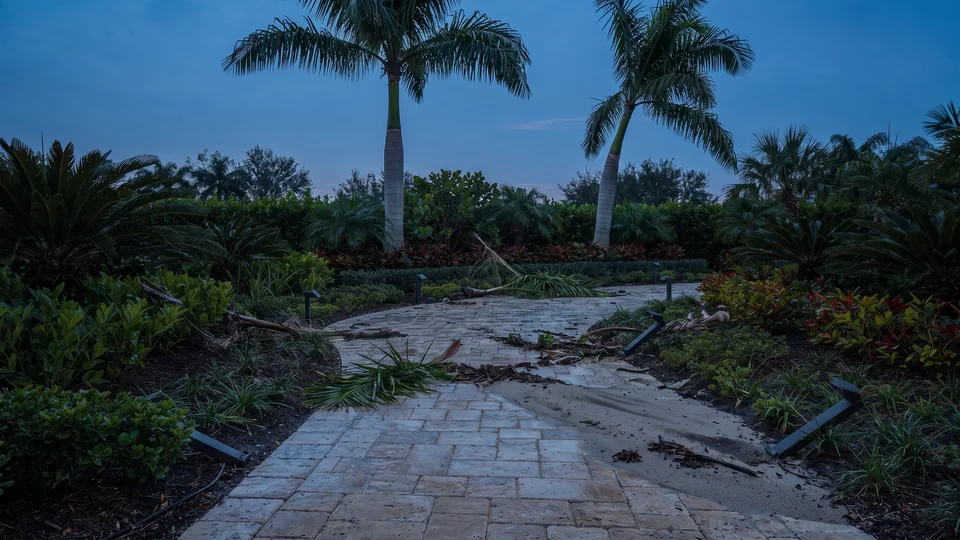
The Estates sit roughly fifteen miles inland, farther than the five to ten miles at which FEMA reports faster corrosion from salt. That does not mean nothing corrodes, but the coastal salt-spray problem that drives fixture choices on the beach is far smaller here. The bigger maintenance issues on acreage are long runs, standing water in the wet season and growing vegetation.
What else to know
Because the Estates are inland, Collier County's sea turtle lighting section does not reach them, and we found no county rule limiting home landscape lighting in the Estates district. Nor did we find a measured dark sky rating for the area. A few things that matter to lighting here, such as flood zones and which utility serves an address, we could not confirm, so this guide leaves them out.
Collier’s sea turtle section is triggered within 300 feet of coastal mean high water, among other tests, and the Estates map point is about 15.8 miles from the nearest Gulf beach point. FEMA’s bulletin says studies have found faster corrosion “as far inland as 5 to 10 miles,” so the Estates sit beyond that band. The county’s outside lighting section, LDC 4.02.08, covers golf course lights aimed at homes and pole heights in the GC, C-1 and CF districts only; it sets nothing for an Estates home. Some subdivisions may carry private deed restrictions, so ask your association if you have one.
What we could not confirm: whether every Estates parcel is zoned E, FEMA flood zones for the lived-in Estates, which electric utility serves a given address, and any deed restrictions or civic association lighting rules. The forest to the south is under water much of the wet season, in the Forest Service’s words, but that is the forest, not your lot. Ask the county about your own parcel.
Sources: FEMA Technical Bulletin 8 (ledger F-159), read 2026-10-13; Collier LDC 3.04.02 (F-40) and the ledger’s search for local wildlife lighting rules (F-265), read 2026-10-13; Florida Forest Service forest page, read 2026-10-14.
Questions we hear
Rural acreage raises its own questions: whether motion lights keep panthers away from the chickens, whether lights scare bears, whether the county regulates home lighting out here, how to light a long drive, whether to light a canal bank, and why a state forest sits where the subdivision was meant to be. Each answer names its source.
 NightScapes Landscape Lighting Outdoor lighting only, Naples since 1998
Choose a question
Ask us about lighting in Golden Gate Estates. Choose a question, or call and we will answer it on the phone.
FWC lists motion-activated lighting among options to make a yard less attractive to panthers, and says a light that is always on will not deter one. It pairs that with a secure pen, an electric fence about two feet high around pens, clearing cover and not feeding wildlife. FWC notes individual circumstances vary, so treat lighting as one layer, never a sure thing.
FWC’s guidance starts with removing attractants such as garbage, pet food and bird seed. If a bear keeps returning after that, FWC allows non-contact scaring, including motion-activated devices like visual and audio alarms or sprinklers. Lights are a supporting tool after attractants are secured, never the fix on their own, and bears that are used to people respond less.
No Collier County provision limiting home landscape lighting in the Estates district was found for this guide. The county’s sea turtle rules apply near the beach, roughly fifteen miles away, and its outside lighting section covers golf courses and certain commercial districts. Some subdivisions may have private deed restrictions, so ask your association if you have one.
Light the decision points: the entrance, the address, any curve and the parking area, with low fixtures spaced for safe driving rather than a continuous line. On lots with 75-foot setbacks, plan wire size and transformer placement so the far fixtures get proper voltage. Keep every fixture shielded so drivers see the drive, not the bulbs.
In the neighboring state forest, the endangered Florida bonneted bat has been detected at sites near canals, and federal biologists count sufficient darkness as part of its habitat, while noting its response to light has not been specifically studied. Lighting the yard and dock steps you actually use, and leaving the bank and water dark, is the cautious choice.
The southern part of the 1960s subdivision was drained and platted, but few homes were ever built there because it lacked electricity and stood under high summer water. Florida bought the land back from about 17,000 owners and named it Picayune Strand State Forest in 1995. That forest, with its panthers, bears and bats, is now the Estates’ wild neighbor.
Free Consultations and Estimates
Tell us how far the house sits from the road, whether there is a gate, any pens, coops or barns, and whether the lot backs onto a canal. We plan the long runs first, put motion where the animals are, and keep the dark parts of the property dark.
Tell us about the property