
Design and installation
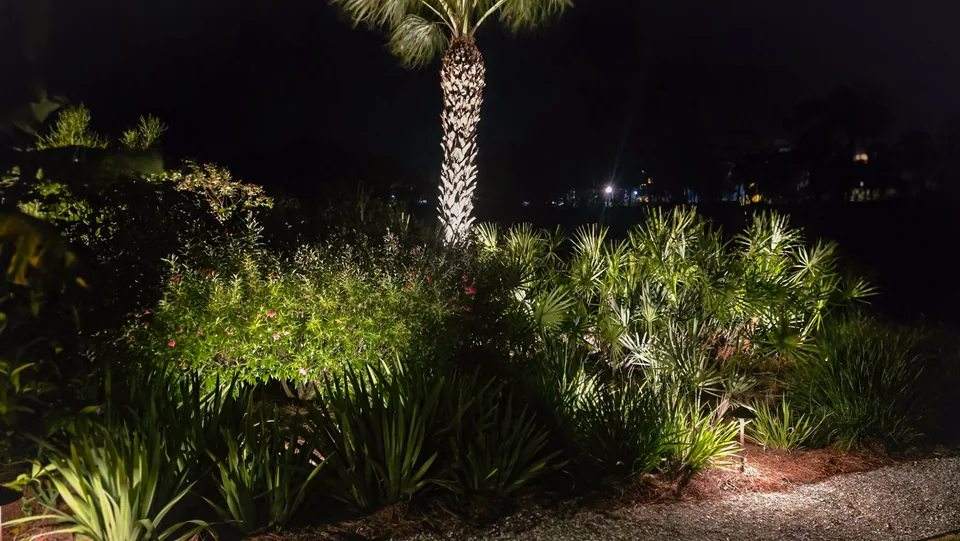
Garden bed and specimen plant lighting in Naples, FL
A planting bed is lit a plant at a time. Pick what matters, give it light, give the ground around it a little, and leave the rest alone. The dark part is what makes the lit part look lit.
Tell us about the garden
NightScapes project, Southwest Florida
If the bed is a row of dots
A bed is lit in layers, and most of it stays dark
If your beds show a row of bright dots on the mulch while the best plants sit in the dark, the lights were spaced by the foot. A bed is lit by picking the one or two plants that carry it, giving each a small accent, washing the ground around them softly, and leaving the rest dark.
The usual way a bed gets lit is by counting. So many feet of bed, a fixture every so often, done. The result is a line of bright dots at ground level with the planting itself in shadow above them, and the best plant in the bed is as dark as the worst.
We start from the other end. Stand where the bed is seen from, decide what in it deserves to be looked at, and light that. Then add just enough light on the ground that the lit plant has a setting. Then stop.
This page is about beds, borders and the plants in them. The trees that stand over a bed are a different job: see uplighting trunks and crowns.
- First
- The specimen. One or two plants, each with its own small accent.
- Then
- A low wash over the ground and the planting at its feet.
- Then
- Nothing. The rest of the bed is left dark on purpose.
In Southwest Florida
What a Southwest Florida bed does to a fixture
A garden light spends its life in the one part of the property that is dug, watered, trimmed and re-mulched all year. Summer growth swallows it, mulch buries it, irrigation films the lens, trimmers knock it and sandy soil lets it lean. Most of what goes wrong with it is gardening, not electricity.
Summer growth swallows fixtures
Planting here grows hardest through the wet season. A shaded light that stood clear of its groundcover in spring can be inside it by September, lighting the underside of a leaf and nothing else. An accent aimed at a young specimen ends up buried in its lower growth. The fixture has not failed and nothing has moved. The bed has simply come up to meet it.
The answer is to place fixtures for the plant as it will be, not as it is, and to leave enough lead that a fixture can be lifted or shifted a foot when the bed fills in. Then someone has to look, at night, a couple of times a year. That is most of what seasonal trimming and fixture adjustment means in a garden.
Mulch buries them
Beds are topped up with mulch every year. Each layer raises the ground a little around anything that sits low, and a small accent at grade is under two seasons of mulch before anyone notices it has dimmed. Buried lenses run hot and scatter their light. Digging fixtures back out and resetting them at the new grade is routine work.
Irrigation and the film it leaves
A fixture near a spray head is wet every morning. The water dries and leaves its minerals behind, and over a season a clear lens turns cloudy. The light gets dimmer and patchier so gradually that it is easy to miss. Cleaning lenses is unglamorous and makes more difference to a garden than almost anything else.
Most of what goes wrong with a garden light is gardening, not electricity.
Trimmers, edgers and sandy soil
A light at the edge of a bed is in the path of every string trimmer and edger that passes. It gets knocked, and in sandy soil a knocked stake does not spring back; it leans, and it stays leaning. Fixtures set inside the bed line, behind the edging, are left alone. When one has been hit hard enough to stop working, that is a job for repair.
Borders, lake edges and the long view
A border along a property line is seen side on, from a distance, so it is lit as a sequence: a lit plant, a gap, another lit plant, with the gaps doing as much work as the lights. A bed at the edge of a lake or a canal is seen twice, once directly and once in the water, and wants about half the light. Where the water itself is the feature, see fountain and pond lighting. Where the bed runs beside a walk, the lighting has two jobs and the second one is on our page about path lights that edge a walkway.
Beds are one layer of a property. How they sit with the trees, the house and the paths is covered under landscape lighting across the whole property.
What the light meets
Leaf, color and texture under warm light
Foliage decides the fixture. Glossy leaves throw light back as a highlight and need very little. Matte and fine-textured planting glows and can take more, from closer. Reds, oranges and greens all stay richer under warm white light than under cool. Two plants side by side in one Naples bed can need opposite treatment. Choose a plant type.
Glossy and matte leaves
- Glossy
- Throws light back as a highlight. It takes very little before it starts to sparkle, and too much turns it into glare.
- Matte and fine
- Glows instead of sparkling, can take more light, and wants it from closer.
- So
- Two plants side by side in one bed can need opposite treatment.
Flower and leaf color
- Reds, oranges, pinks
- Hold their color under warm white light and can go muddy under cool light.
- Greens
- Do the opposite of what people expect: warm light makes them richer, not yellower.
- So
- Color is chosen for the actual plants. There is more about the choice on our LED page.
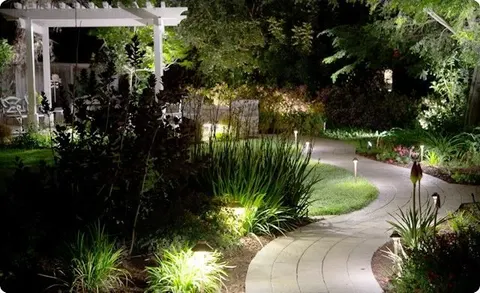
Grasses and strappy plants
- The fixture
- Tucked at the base, sending light up through the blades.
- What it gives
- Every blade catches an edge, and they move, which night lighting rarely gets for free.
- So
- The most generous plants in a garden to light.
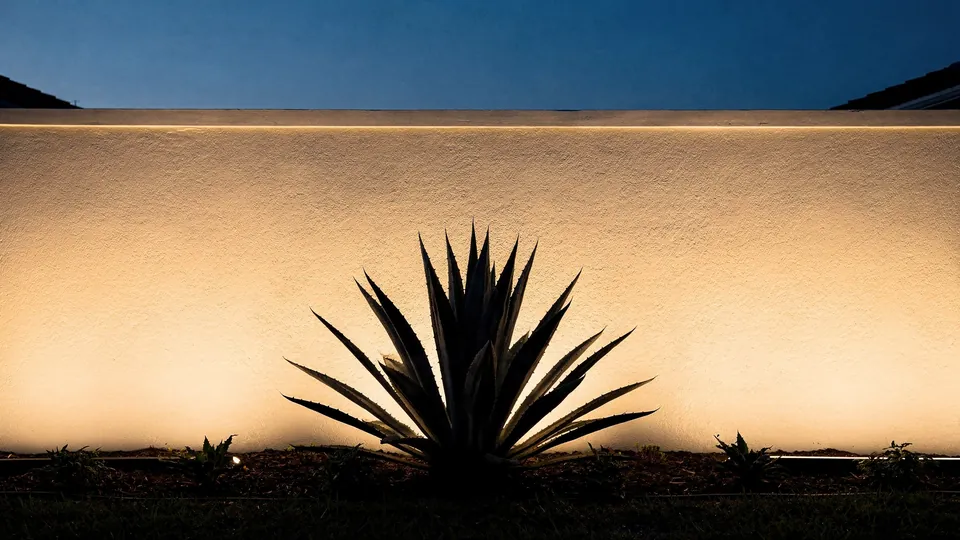
Shape against a wall
- The trick
- Light the plain wall behind a spiky or architectural plant, not the plant itself.
- What it gives
- The plant is seen as a dark outline against the glow.
- So
- It uses less light than lighting the plant, and often looks better.
One bed, three ways
Set the three layers yourself
The same bed reads three different ways depending on how its three layers are balanced: the specimen, the low wash across the planting, and the hedge behind. Turn everything up to the same level and the bed looks floodlit. Give one plant the lead and keep the dark between the layers, and it looks designed. Try it on the faders.
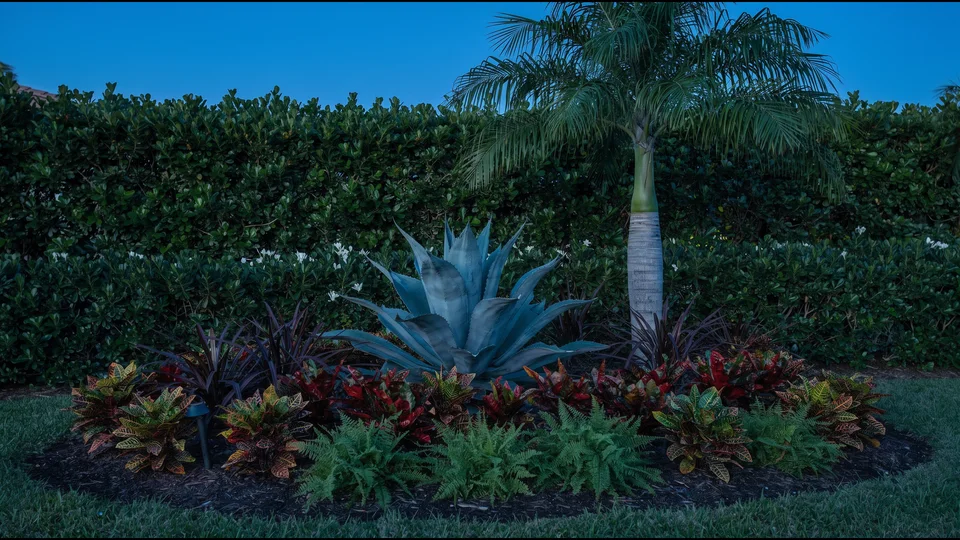
Layered. The specimen leads, the low wash supports it, the hedge sits back, and the dark between them does the rest. This is the balance a bed is set to on the night.
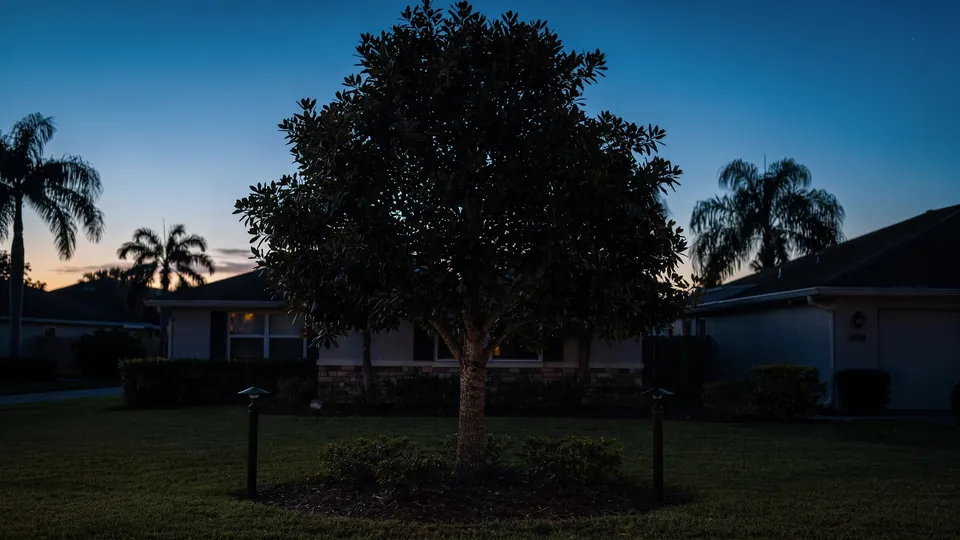
Garden bed lighting, layer by layer
Layer one: the specimen
Every bed has one or two plants that carry it. Each gets its own small, low-output accent, set close and aimed up into it from inside the bed, and it is the brightest thing in the bed. With only this layer on, the plant floats in the dark, which is striking and a little stark. Scroll to add the next layer.
Layer two: the low wash
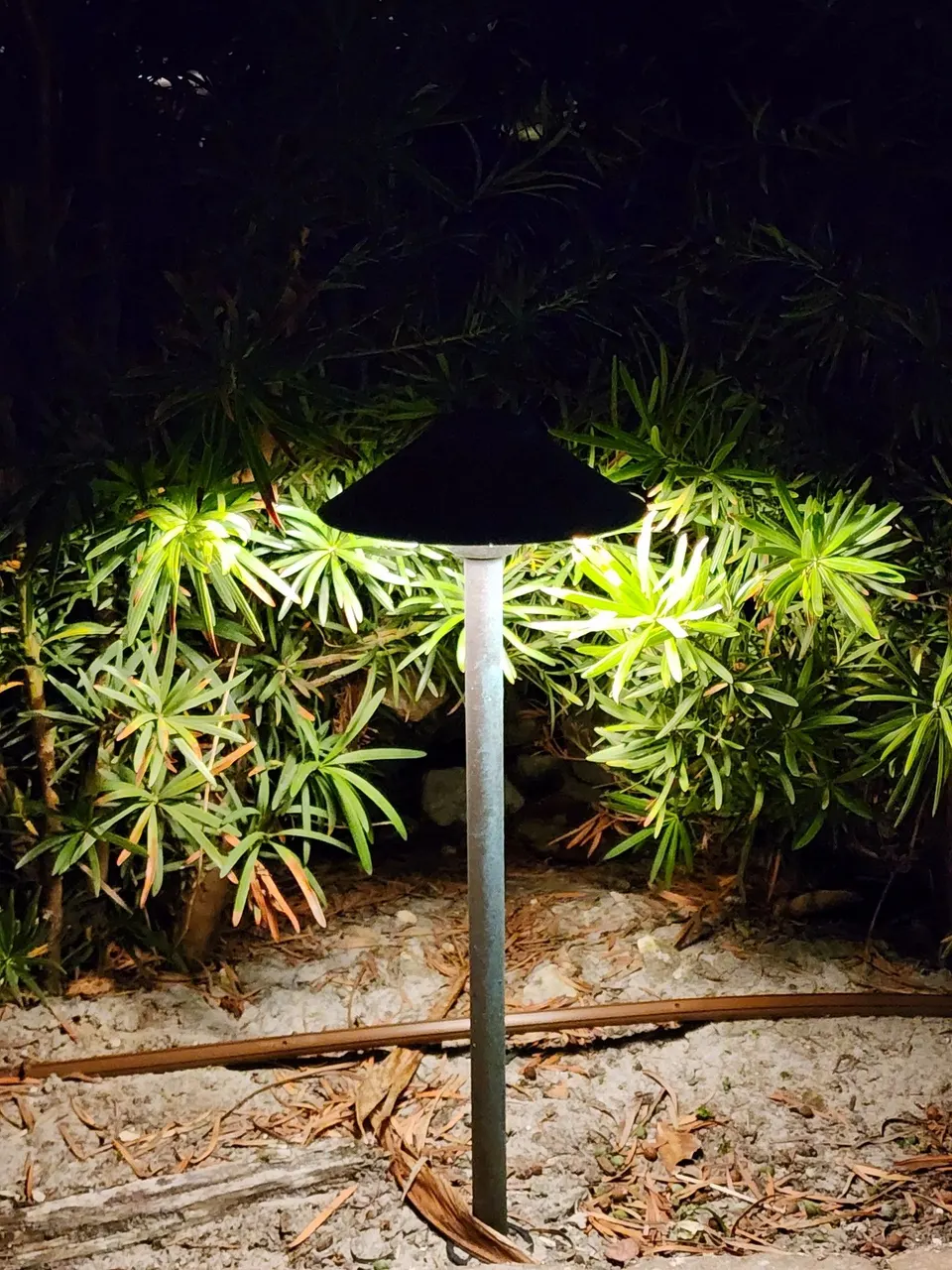
Shaded fixtures on short stems throw light down and out over groundcover and low planting. They light the floor of the bed and give the specimen something to stand on. The shade sits a little taller than the plants around it, which is the whole trick: too short, and the fixture lights only its own foot.
- Fixture
- A shaded area light on a stem, just taller than the planting it covers.
- Level
- Held well below the accent, so the specimen still leads.
Layer three: the background, and the dark between
A soft wash on the hedge, wall or fence behind a bed gives it depth and turns the plants in front into shapes. Then the lighting stops. A garden lit evenly from edge to edge is flat, and what makes a lit plant look lit is the unlit one beside it. In most beds the dark part is the larger part.
- Left alone
- Fillers, the back of the bed, and most of the mulch.
- Gives
- Contrast, and with it a bed that looks designed, not just bright.
Who does the work
Who lights the garden: NightScapes Landscape Lighting, Naples
NightScapes Landscape Lighting has lit planting beds in Naples since 1998. Todd and Sherry own and run it, outdoor lighting is all it does, and its Google Business Profile shows 63 reviews at 5.0. Beds are lit a plant at a time and looked at from where the owner sits.
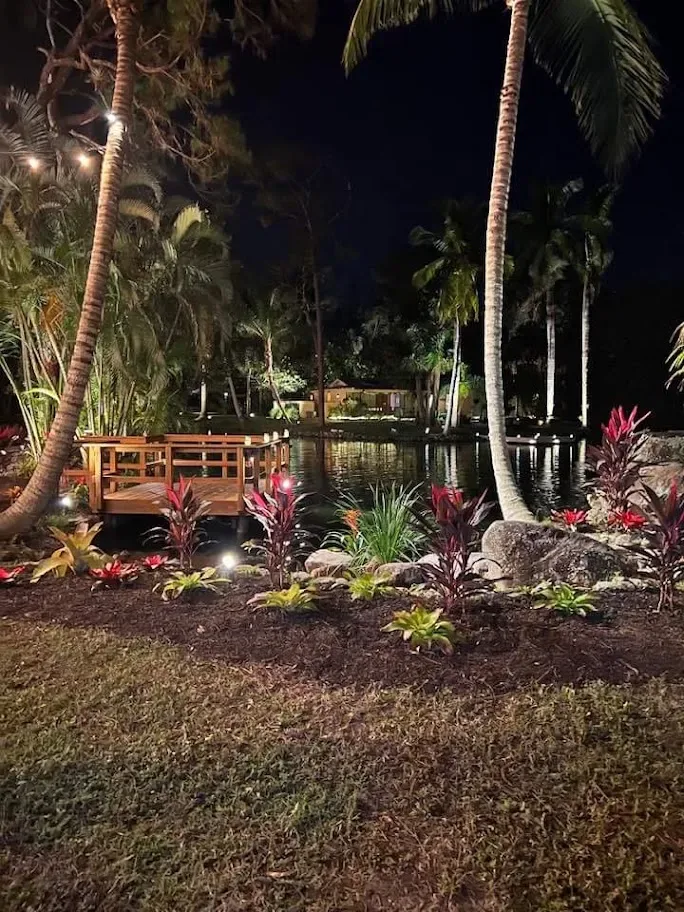
The beds on this page are on Naples properties: bromeliads under palms at a lake edge, grasses along a curving walk, low planting under a shaded light. We work in Pelican Bay, Grey Oaks, Port Royal, Old Naples, the Moorings, Park Shore and on Marco Island, and through Lee and Collier counties.
No bed is too small to do properly. One specimen and one shaded light, set well, is a better garden at night than twenty fixtures in a row.
Ask about your beds 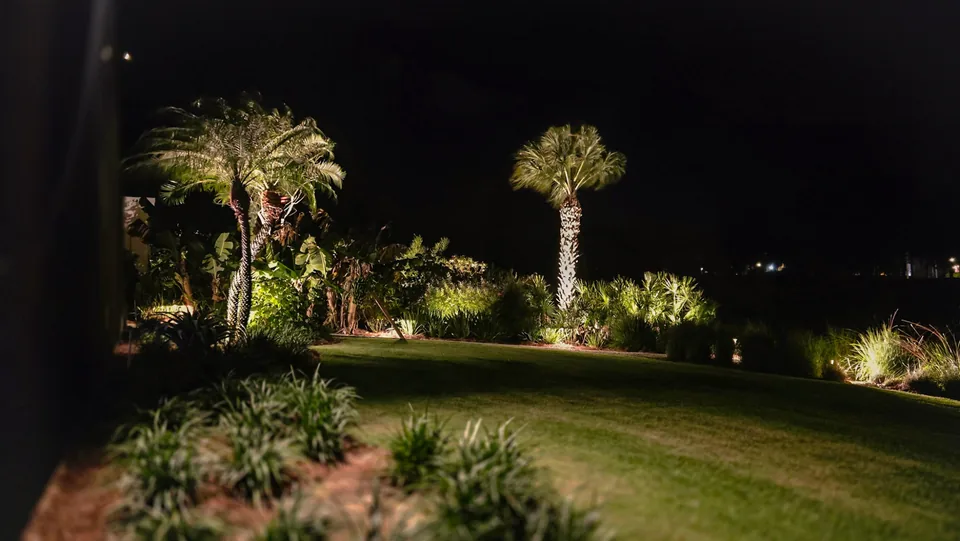
- Since 1998
- Lighting properties in Naples and Southwest Florida.
- Todd and Sherry
- Family and locally owned. The owners are the people you deal with.
- 63 Google reviews
- Rated 5.0 on the NightScapes Google Business Profile.
- Outdoor lighting only
- No side trades, this is the whole business.
Design from the chair
Borders, lake edges and beds seen from indoors
A bed is lit for where it is looked at from: the lanai, the kitchen window, the street, the far bank of a lake. A border seen side on is lit as a sequence with gaps. A bed at the water's edge is seen twice, once in the water, and needs about half the light. Point at each to see what changes.
-
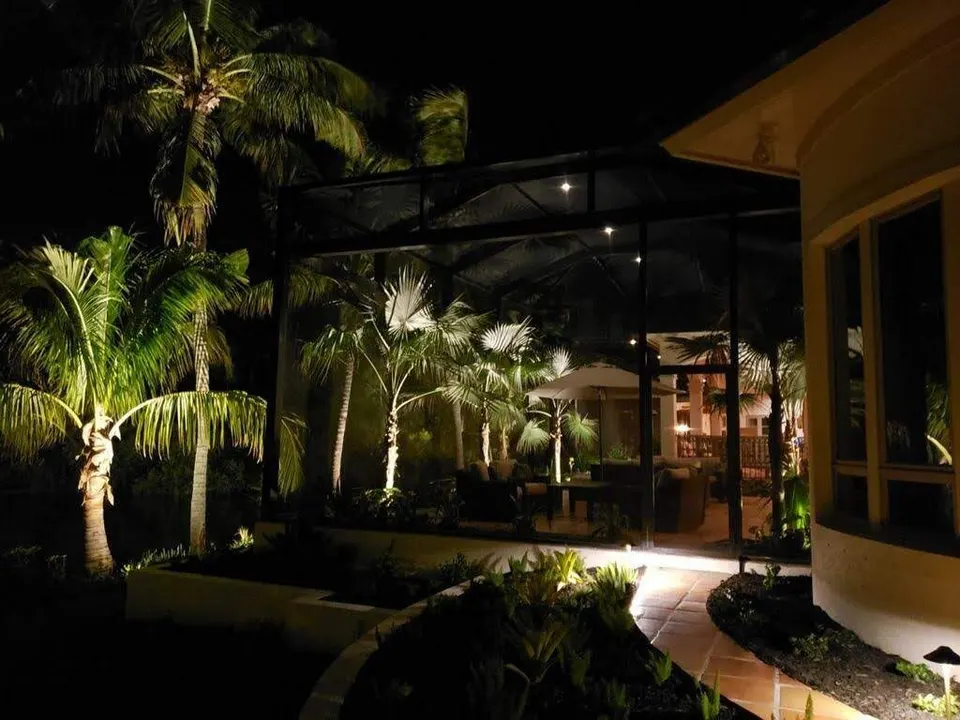
From the lanai
- What you see
- The beds outside the screen, across the pool deck, at sitting height.
- What matters
- Depth. The planting is lit so the yard does not stop at a black wall beyond the cage.
- What we avoid
- Any fixture aimed back toward the seating. Through a screen it flares.
-
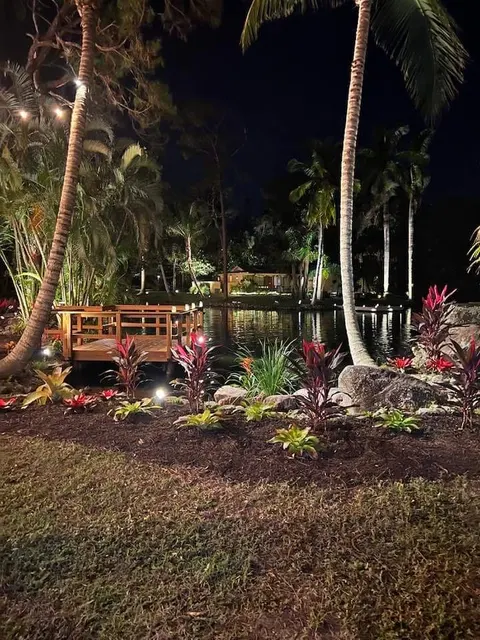
From inside the house
- What you see
- One framed view, through a kitchen window or the sliders, every evening.
- What matters
- That the view has a subject. One lit specimen in the frame beats ten dots.
- What we avoid
- Reflections. Bright light close to the glass turns the window into a mirror.
-
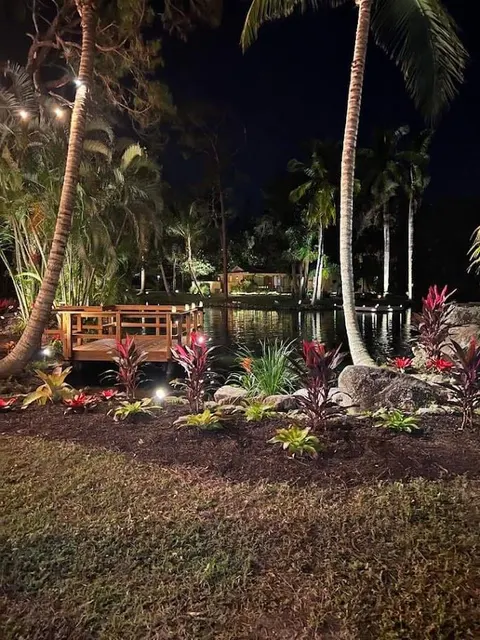
From the water
- What you see
- The bed and its reflection, from the far bank, a dock or the seating by the lake.
- What matters
- Still water doubles everything, so the bed needs half the light you would think.
- What we avoid
- Sources visible from across the water. They reflect as hard points.
On the property
What NightScapes sets in every garden bed it lights
Beds are designed from where the planting is actually seen. Six things are settled for each bed before anything is fixed in the ground: the specimen, fixture height, what stays dark, the view, clearance from the lawn crew, and room to move.
Half of them are about what the bed will be doing in two years.
Ask about your bedsPer bedNightScapes Landscape Lighting
- The specimen Which one or two plants carry the bed, chosen before any fixture is placed.
- Fixture height Shade above the planting it lights, and still above it after a season of growth.
- What stays dark The parts of the bed that are deliberately left alone.
- The view Checked from the lanai, the windows and the street, not from beside the bed.
- Clear of the crew Fixtures inside the bed line, away from trimmers and edgers.
- Room to move Enough lead on each fixture that it can shift as the planting fills in.
Set from the chair, not from the bed.
Questions we hear
Questions Naples homeowners ask about garden lighting
Which fixtures suit a planting bed, why path lights in mulch light only mulch, why a new bed does not stand out at night, whether hedges can be uplit, and whether lighting affects the plants. These are the questions people ask when the beds are planted and the lighting is not doing them justice.
 NightScapes Landscape Lighting Outdoor lighting only, Naples since 1998
Choose a question
- What kind of fixtures work best in flower and planting beds?
- Why do path lights in the middle of a bed only light the mulch?
- My new bed has lights but the plants do not stand out. Why?
- Can dense shrubs and hedges be uplit?
- Spotlights or path lights for shrubs along the edge of a bed?
- How bright should garden bed lighting be, and what color?
- Does outdoor lighting affect the plants?
Ask us about your beds. Choose a question, or call and we will answer it on the phone.
What kind of fixtures work best in flower and planting beds?
Two kinds do most of the work. A small accent light, set low and close, picks out a specimen plant. A shaded area light on a short stem throws a soft pool down over groundcover. Which one goes where depends on the plant: accents for things with height or shape, shaded lights for low planting that is seen from above.
Why do path lights in the middle of a bed only light the mulch?
Because a path light throws its light down and out, and the brightest part lands at its own foot. In a bed of mulch with shrubs a few feet away, that foot is mulch. The fixture either needs to be closer to the planting and taller than it, or it is the wrong fixture and an accent aimed at the plant would do the job.
My new bed has lights but the plants do not stand out. Why?
Usually because everything is lit to the same level. If the specimen, the fillers and the ground are all equally bright, nothing leads. The fix is rarely more light. It is choosing the one or two plants that matter, lighting those properly, and turning the rest down or off.
Can dense shrubs and hedges be uplit?
Not well from underneath. Light cannot get into a solid mass of foliage, so you get a bright patch at the base and a dark top. Dense planting is better washed from in front, at a low level, or left dark as a background for the plants in front of it.
Spotlights or path lights for shrubs along the edge of a bed?
It depends on what you want to see. If the shrubs are the feature, small accents from in front show their shape. If the bed edge is beside a walk and the aim is to see where you are going, shaded path lights are right. Often it is one of each: a few accents on the best plants and a path light or two where people walk.
How bright should garden bed lighting be, and what color?
Lower than most people expect. A bed is seen against darkness, so a small amount of light reads clearly, and too much flattens it. Warm white suits planting, because it keeps reds and greens rich. We set both on the property, plant by plant.
Does outdoor lighting affect the plants?
Garden lighting done properly is low in level, warm in color, shielded and aimed at foliage, and it runs for part of the night, not all of it. That is a long way from a floodlight on a plant from dusk to dawn. If you have a plant you are concerned about, tell us and we can keep light off it or put that part of the bed on its own schedule.
Free Consultations and Estimates
Ready to see the planting, not the fixtures?
Tell us which beds matter most, what is planted in them, and where you look at them from. We walk it with you and design each bed before anything goes in the ground.
- The specimen first
- Most of the bed left dark
- Free consultation and estimate
Tell us about the garden