Clam Pass
The inlet the county taxing unit advises on and the Services Division dredges. Beach-side lighting here is under Collier’s turtle section.
Pelican Bay guide
Pelican Bay is unincorporated Collier County, so the county's code, not the City of Naples code, sets the sea turtle rules on its Gulf beach. Between the beach and most homes lie a mangrove preserve, a raised berm with a tram, and boardwalks. This guide covers what each of those means for lighting, with its sources.
Tell us about the property
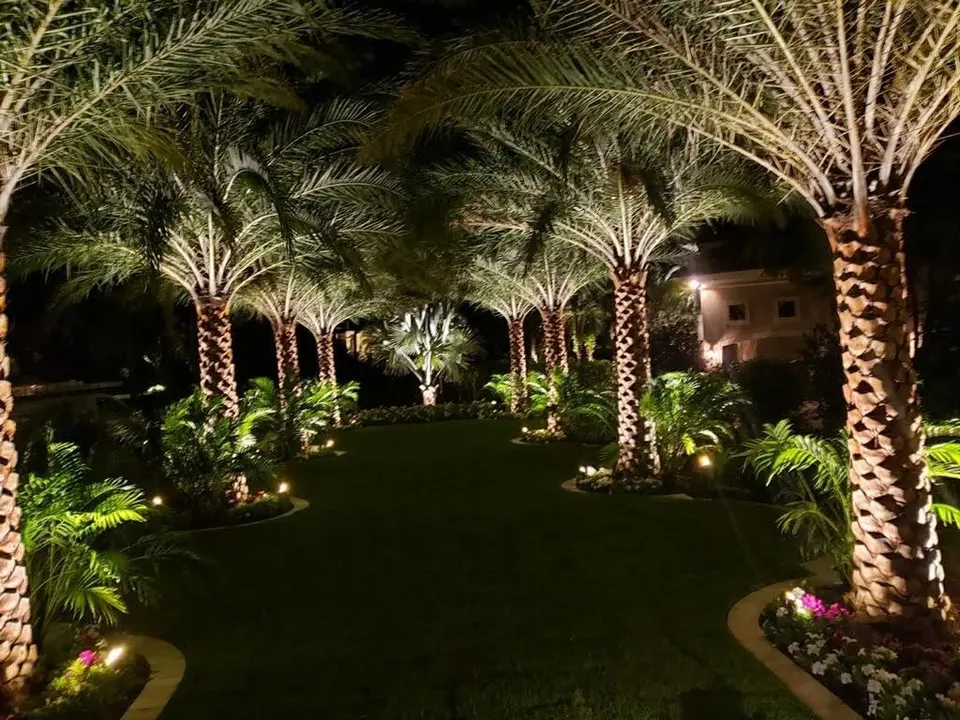
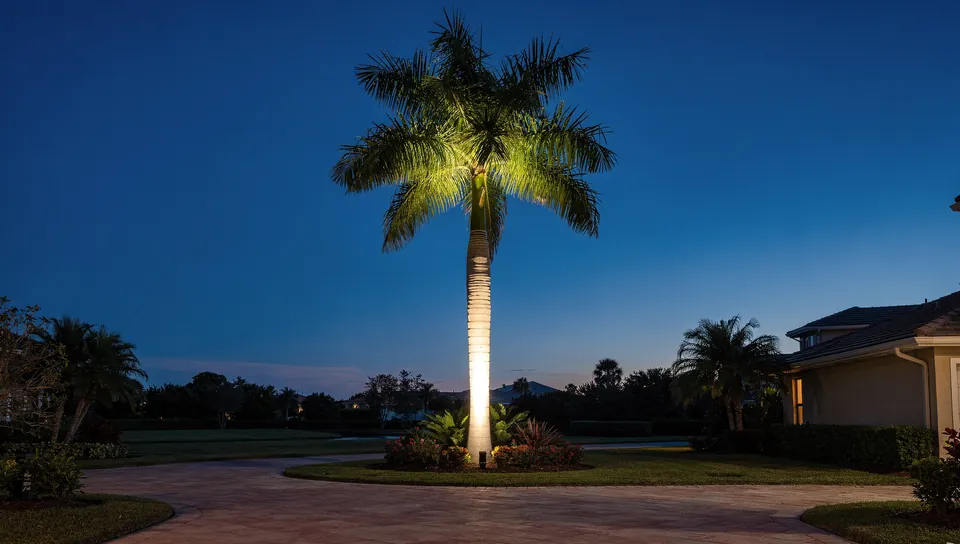
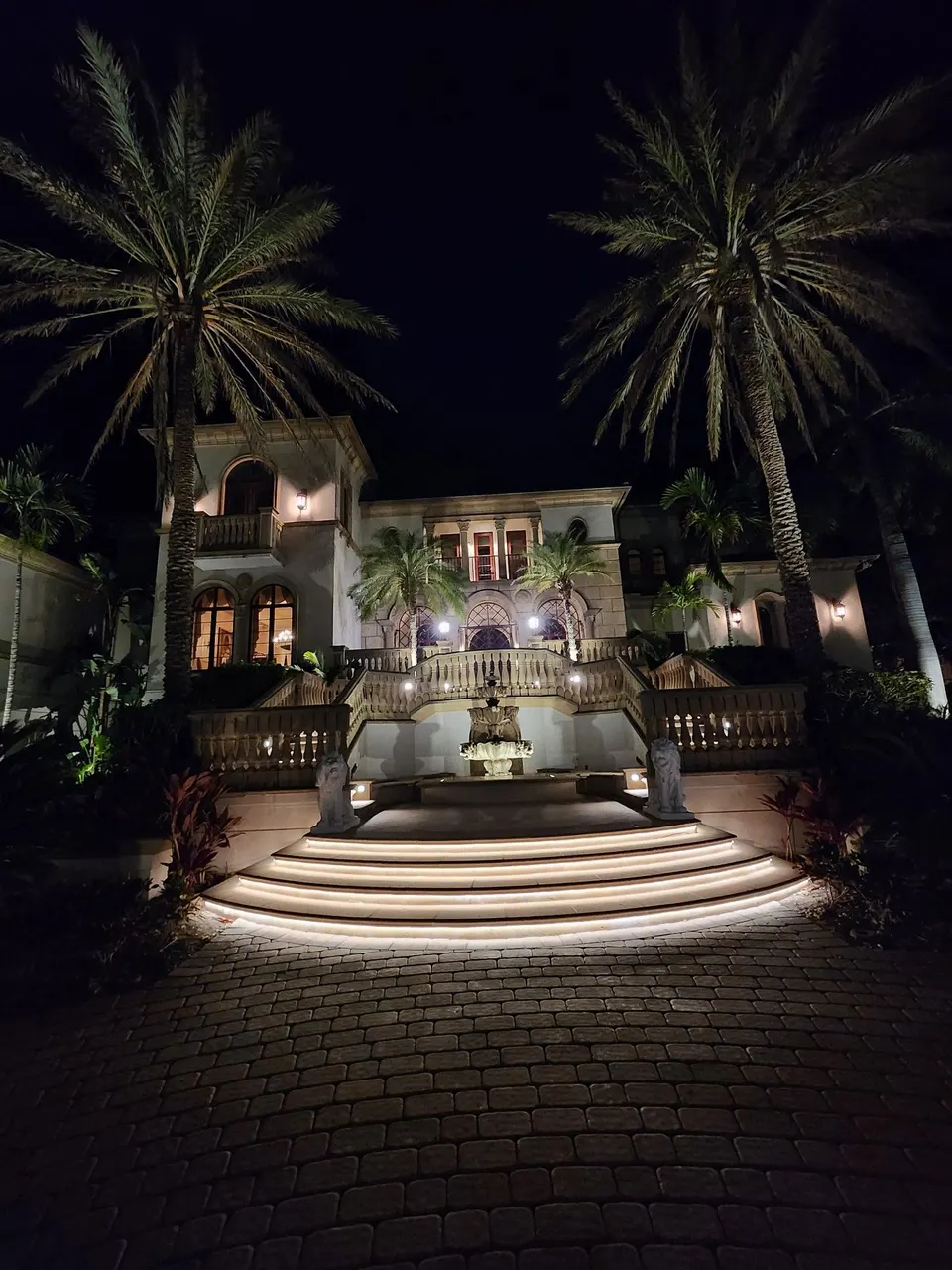
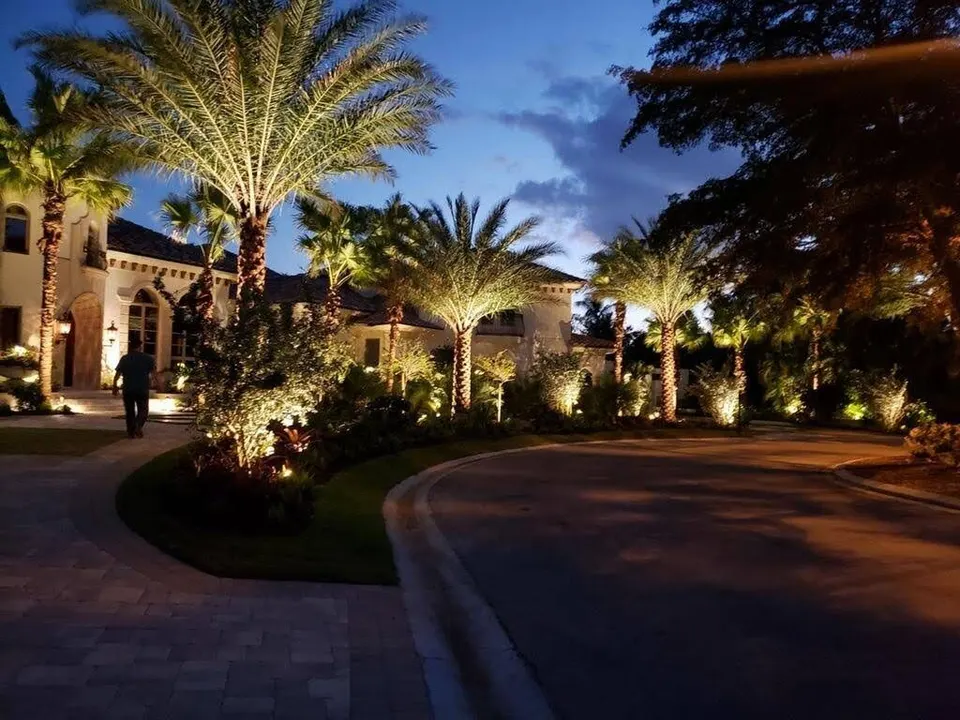
Photograph: palms and garden beds lit at night. Not taken in Pelican Bay.
From Clam Pass to Bay Colony
Pelican Bay puts a Gulf beach on one side of a mangrove preserve and most of its homes on the other. The eight lights on this map run from Outer Clam Bay and Clam Pass in the south to Bay Colony Shores in the north, and each says why that place matters for lighting. All eight returned Collier County, Florida when checked.
The inlet the county taxing unit advises on and the Services Division dredges. Beach-side lighting here is under Collier’s turtle section.
Collier County’s mangrove boardwalk park, where Audubon Florida reported a large wintering flock of black skimmers. It sits between the preserve and the beach; neighboring light belongs off both.
Part of the Clam Bay Conservation Area NRPA. Light should stop at the shoreline, not cross the water.
The mangrove-lined center of the system, between the homes and the beach. Path lighting near it should be low and shielded.
Gulf beach where Collier’s sea turtle section applies within 300 feet of mean high water.
Gulf beach. FEMA returns zone VE, 12 foot base flood elevation, near this point.
The northern bay of the system, closest to the Bay Colony homes.
Bay Colony, inside Pelican Bay. FEMA zone AE, 9 foot base flood elevation, at this point. Sub-association rules are not public.
Points placed from nominatim.openstreetmap.org. Map data from Google.
Who sets the rules
Pelican Bay sits in unincorporated Collier County. Its own taxing unit is governed by the county commission, so the county's land development code applies, not the City of Naples code. For lighting that means Collier's sea turtle section governs Gulf-front and beach-visible lots. If you are comparing advice written for Park Shore or Old Naples, check which code it was written for first.
Collier County created the Pelican Bay Municipal Service Taxing and Benefit Unit, and the county code is plain about who runs it: "The governing body of the unit shall be ex-officio the Board of County Commissioners of Collier County, Florida." The Pelican Bay Services Division Board advises it. There is no city council anywhere in that chain, which is why the lighting rules that matter on a Pelican Bay lot come from Collier County’s Land Development Code.
Seagate and Park Shore, just to the south, are inside the City of Naples, and the city writes its own sea turtle section with its own hours. Advice written for those streets does not carry over. The Pelican Bay Services Division drew the same line about water in 2025, setting the "naturally maintained Clam Bay NRPA outside the City" against the walled canals of Seagate, Naples Cay, Venetian Bay and Outer Doctors Bay inside it.
There is an older layer too. A special act created the Pelican Bay Improvement District, "a special tax district in Collier County," whose seal reads "Established 1974," covering land south of Vanderbilt Beach Road and west of U.S. 41. The Foundation says the community "was referred to as Clam Bay, and renamed Pelican Bay in 1974." For what the county section asks on the Gulf side, read on; for fixtures and shields, see coastal lighting in nesting season.
Sources, read 2026-10-14: Collier County Code Sec. 122-1653 and 122-1654, Municode; Collier County, Pelican Bay Services; Sec. 262-366 and 262-372, Municode; Pelican Bay Services Division, letter of May 27, 2025; Pelican Bay Foundation.
The Gulf side
Where Collier's sea turtle section applies, within 300 feet of mean high water among other triggers, landscape and accent lighting are prohibited and remaining lights must be low, hooded and not visible from the beach. In season, existing buildings either turn beach-visible lights off after 9 p.m. or shield them. A Gulf-side plan should start by mapping which fixtures the beach can see.
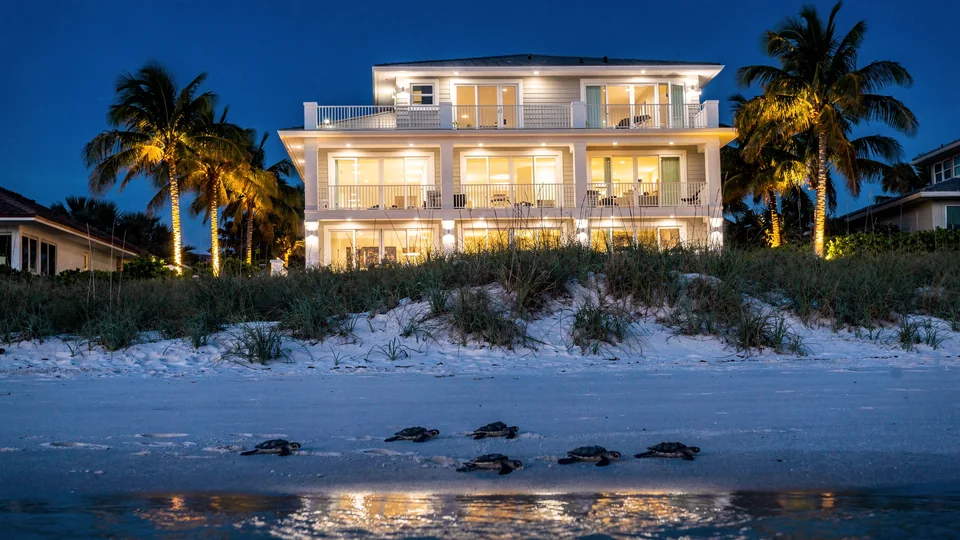
Collier’s section applies "when development or lighting associated with development is located within 300 feet of coastal mean high water," and the same sentence goes on to name parking lots, dune walkovers, other outdoor lighting and reflective surfaces visible from the beach. On a Gulf-front tower or villa, the first step is a look from the sand: every fixture, lit wall and bright window the beach can see goes on a list.
The code is short on this point: "Outdoor lighting shall be held to the minimum necessary for security and safety. Floodlights and landscape or accent lighting shall be prohibited." On the beach-facing side that rules out the uplit palm, the washed facade and the floodlit lawn. FWC separately advises against "uplighting of vegetation" anywhere it can be seen from the beach.
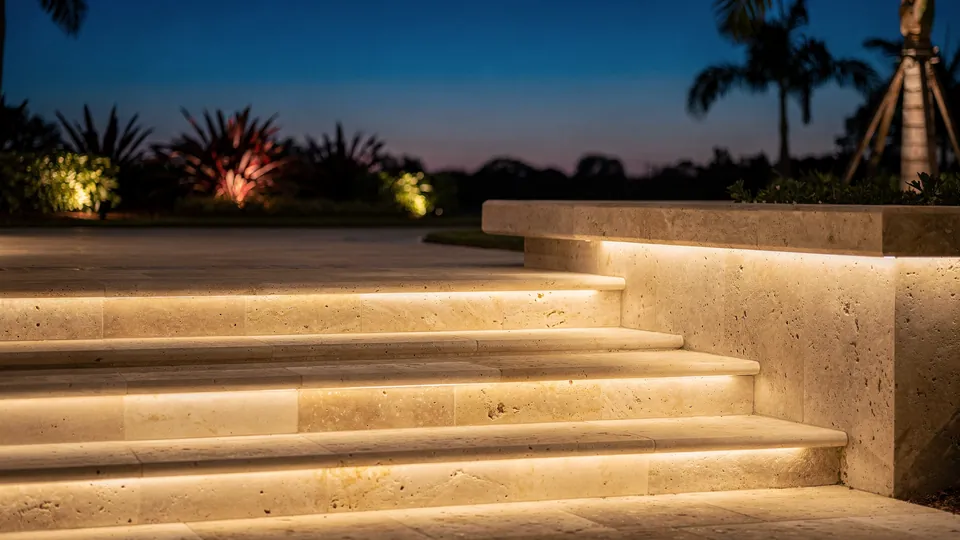
Lights that remain for safety "shall be of low intensity," and must be hooded or positioned so the source, and any surface it lights, cannot be seen from the beach. FWC’s shorthand for the same idea is "Low-Shielded-Long": mounted as low as the job allows, shielded, and long wavelength. On steps and walks to the berm that usually means step lights recessed into the riser and aimed at the tread.
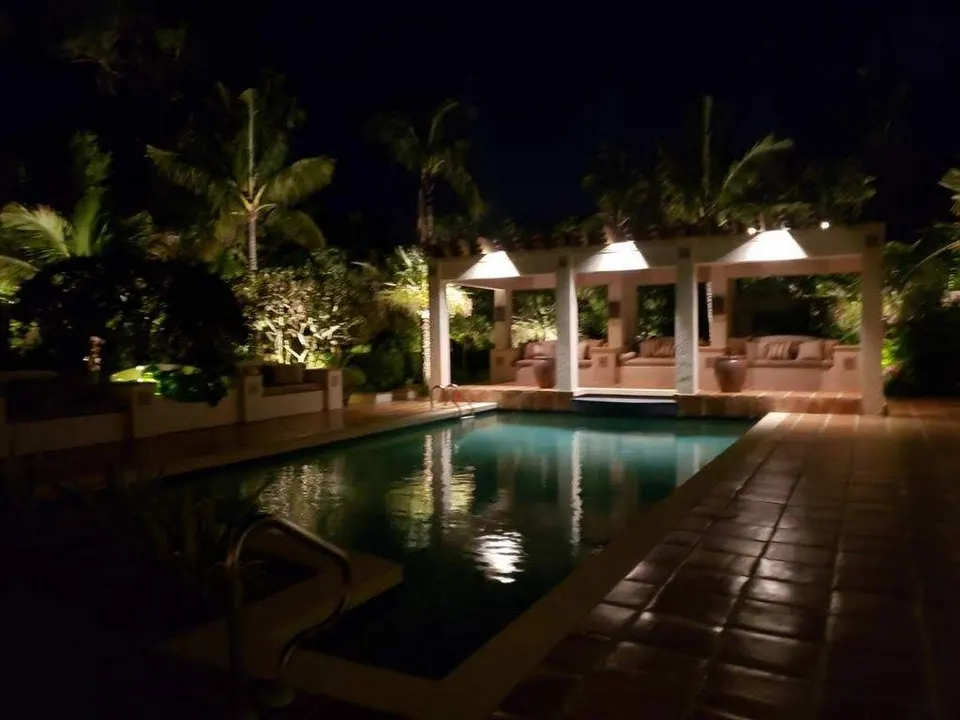
A lit pool and deck on the Gulf side reads from the sand as one bright patch. The county section names "other outdoor lighting" along with the rest, so the same tests apply: low, hooded or positioned out of the beach’s sight, and nothing decorative. A courtyard pool on the landward side of the building is a different conversation. See pool and lanai lighting.
Pelican Bay was planned with "high rise condominiums that were placed back from the beach," and most homes sit east of the mangroves and the berm. Entries, courtyards and facades the beach cannot see are where accent lighting belongs, still subject to Foundation design review. See architectural lighting. Sources: Collier LDC 3.04.02, Municode; FWC, sea turtle lighting and lighting guidelines; Collier County Parks, sea turtle protection (read 2026-10-13); Pelican Bay Foundation, Where it all started (read 2026-10-14).
May to October
Collier's option for existing buildings is turning beach-visible lights off after 9 p.m. from May 1 to October 31, or shielding them. A zoned controller lets those fixtures follow that schedule while courtyard and entry lighting away from the beach runs normally. Season dates differ between sources, so confirm the current window with Collier County Parks. Pick a month below.
For existing development, Collier’s section turns beach-visible lights off after 9:00 p.m. from May 1 to October 31, or has them hooded or positioned so the beach cannot see the source or what it lights. The code gives no end time. On a controller, those fixtures sit on their own zone so the rest of the property is not tied to their schedule.
Fixtures on the landward side that the beach cannot see run on their own timer, separate from the beach zone. They still go through Foundation design review like any other lighting.
Walks and steps near the Clam Bay edge are lit while people are using them, then off. In DarkSky’s words, "Use light only when it is needed." A motion sensor or a short timer does it. See smart lighting control for zones and scenes.
Sources: Collier LDC 3.04.02, Municode; Collier County Parks, sea turtle protection; DarkSky, lighting principles (read 2026-10-13). Sunset: NOAA solar equations, gml.noaa.gov/grad/solcalc.
Before any fixture goes in
Every Pelican Bay owner is a Foundation member, and design review applications now go through the Foundation’s online HOALife portal. The Foundation does not publish its lighting standards on its public site, so ask the Design Review and Covenants Department, 239-799-6299, what your neighborhood requires. Bring a fixture schedule, beam angles and a site plan to that conversation.
The Foundation calls itself "the master homeowner’s association for the community," adds that "All property owners within Pelican Bay are members," and elects a seven-member board community wide. Its design review page announces that applications "Have Moved Online" and asks owners to "contact the Design Review and Covenants Department at 239-799-6299 or visit the Administration Office for assistance."
We looked for the Foundation’s exterior lighting standards and did not find them on its public site, so this guide does not describe them, and neither should anyone who has not read them. The list to the right is what a reviewer needs in order to read a lighting plan, not the Foundation’s own checklist. Our redesign and zoning and dimming pages show how such a plan is put together.
Sources, read 2026-10-14: Pelican Bay Foundation, Our reason and Design Review and Covenants application.
Ask about a Pelican Bay planWhat a design review can readNightScapes Landscape Lighting
Ask first. The standards are not public.
The mangrove edge
The Clam Bay Conservation Area is a county Natural Resource Protection Area, set up to protect listed species. No lighting rule comes with that label, but the guidance is consistent: light the walk, not the water. Use low, shielded path lights aimed down, the fewest fixtures that work, and warm color, and keep beams from reaching across into the mangroves or the bay.
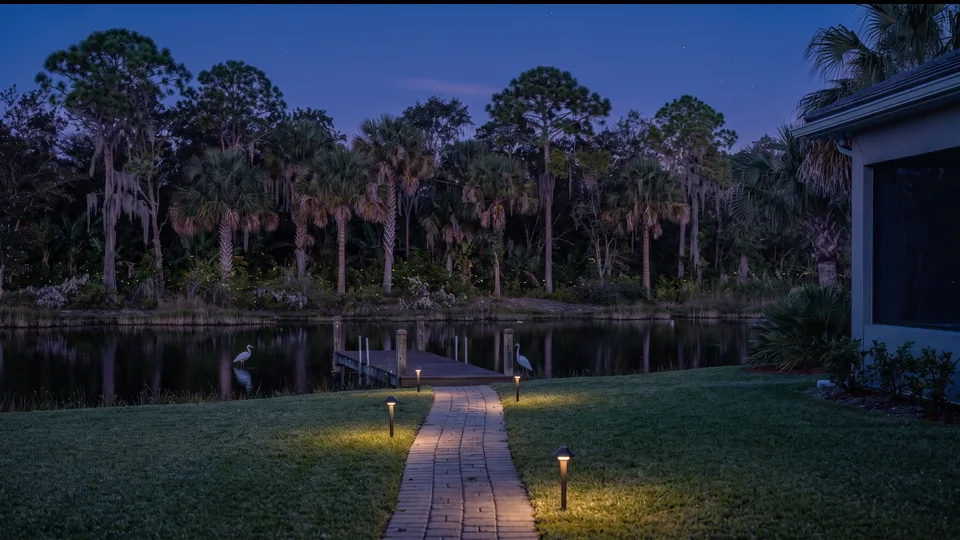
Collier’s Land Development Code lists the "Clam Bay Conservation Area (within Pelican Bay Planned Unit development)" among its Natural Resource Protection Areas, an overlay meant to "protect endangered or potentially endangered species by directing incompatible land uses away from their habitats." The Pelican Bay Services Division manages the bay under "the Clam Bay NRPA Management Plan 6.5, approved by the Commissioners in 2014." The overlay text we read sets land use and vegetation standards. We found no lighting standard in it, and no county lighting rule for any wildlife other than sea turtles.
The Foundation describes how the community was laid out: "an ingenious berm and boardwalk system that allowed Gulf access without compromising the mangrove forest." Its tram still runs that way: "Eight stations are strategically located along a raised berm conservation area and connect to boardwalks that run through the mangroves." A home whose garden backs onto that edge is lighting the boundary of a preserve, and the walk is the only thing out there that needs the light.
FWC calls artificial lighting "another form of habitat loss," and says keeping light low and shielded "cuts down on the amount of glare and light visible to the animals". A 2024 review of the research found the strongest evidence for removing unnecessary light from natural habitats, and called shielding and motion detectors promising but understudied. None of this is a rule for Pelican Bay. It is the reasoning behind one simple habit: light the walk, not the water.
Low path lights with a shade over the lamp, aimed down at the walk. Step lights set into the risers. The fewest fixtures that let people see their footing, on a timer. Warm color helps too: DarkSky recommends 3000K and below to cut blue light, though the same 2024 review found color tuning generally ineffective in practice, so fewer and lower lights matter more than the color. Nothing aimed into the mangrove fringe, and no beam crossing open water toward the bay. See path lighting and wildlife-friendly lighting.
Sources: Collier LDC 2.03.08 B, Municode; Pelican Bay Services Division, letter of May 27, 2025; Pelican Bay Foundation, Where it all started and Tram service (all read 2026-10-14). FWC, light pollution; Owens, Pocock and Seymoure, 2024 review; DarkSky, wildlife handout and lighting principles (read 2026-10-13).
The north end
Bay Colony's residential areas fall inside Pelican Bay's census boundary on OpenStreetMap, so the same county code applies there. FEMA's map puts one Bay Colony Shores point in zone AE with a 9 foot base flood elevation. Ask your Bay Colony association about its own lighting rules, which are not public, before design begins.
OpenStreetMap’s Pelican Bay census boundary contains the Bay Colony residential areas, including Bay Colony Shores, Vizcaya at Bay Colony and Villa La Palma at Bay Colony. That is a point-in-polygon test against a census line, not a legal survey. It places Bay Colony in unincorporated Collier County with the rest of Pelican Bay, under the same county sea turtle section, and its owners among the Foundation’s members.
Upper Clam Bay, the northern bay of the system, is the one closest to the Bay Colony homes, so the mangrove-edge advice above applies on that side. FEMA’s flood map returns zone AE with a base flood elevation of 9 feet at the Bay Colony Shores point we checked, a step below the VE 12 returned near the beach. A lot’s own zone needs its own lookup. On an AE lot, though, the transformer and timer belong on a wall or post above the water you can expect, with sealed connections. That is practical advice, not a code requirement.
Neighborhoods inside Bay Colony may have their own association rules on top of the Foundation’s. Those rules are not public. We did not read them and will not guess at them. Before design starts, ask your Bay Colony association what it requires and whether its review comes before or alongside the Foundation’s. For a condominium building or common area, see lighting for associations.
Sources, read 2026-10-14: OpenStreetMap, Pelican Bay boundary (way 33614617), tested point by point; FEMA National Flood Hazard Layer, Bay Colony Shores point query.
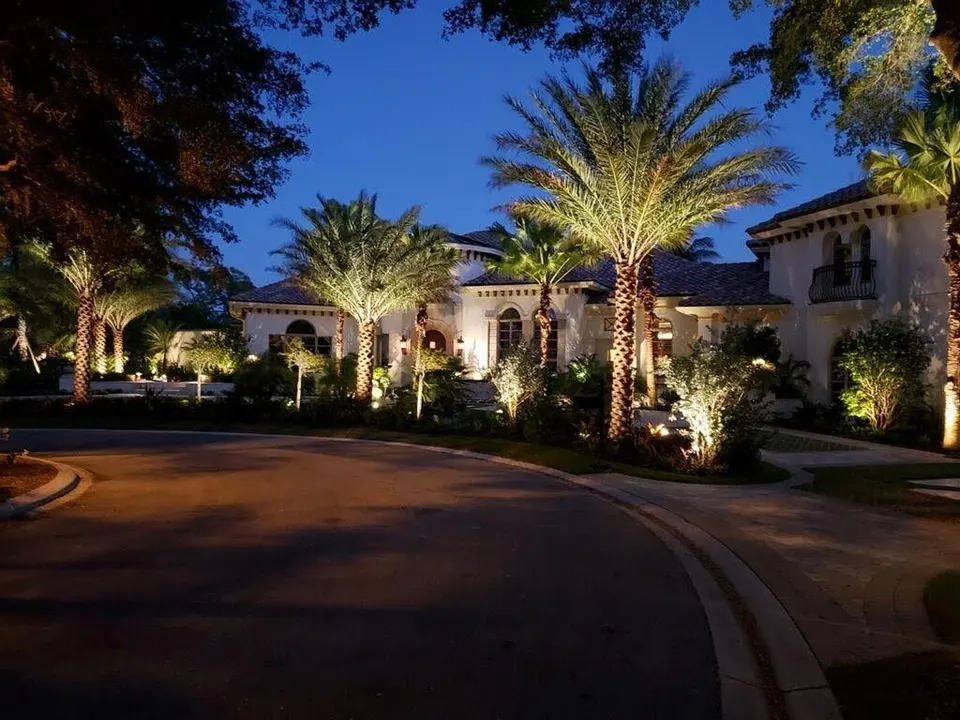
Clam Pass Park
Audubon Florida reports that Clam Pass Park hosts one of the largest wintering flocks of black skimmers in the eastern United States. FWC's beach-nesting bird guidance does not list lighting as a threat, so no one should claim lighting harms them. What federal guidance does say is to reduce decorative and upward lighting during migration, which is reasonable restraint next to a preserve, though it was written for buildings.
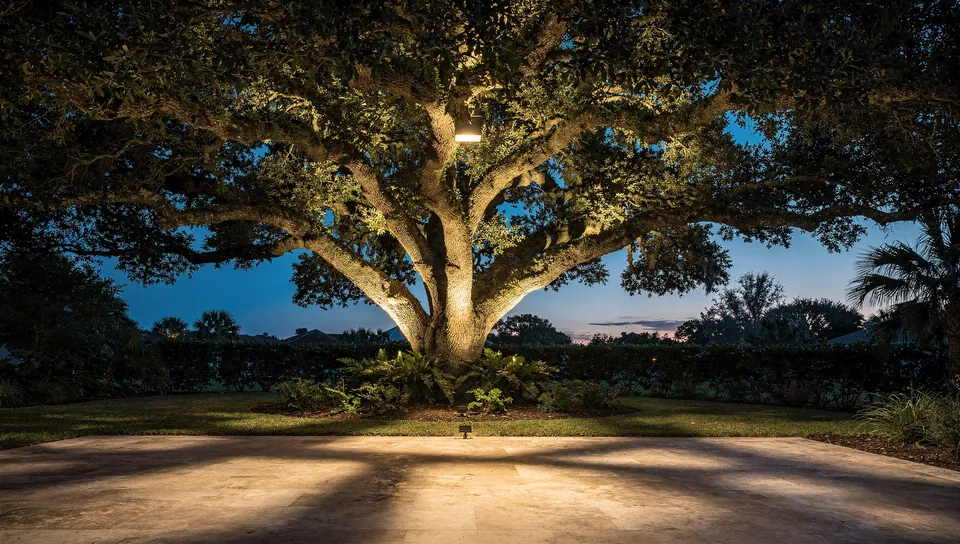
Clam Pass Park is a Collier County park at 465 Seagate Drive. The county says it "sits between a mangrove-fringed lagoon and the sandy beaches that line the Gulf," with beach access "from a three-quarter-mile boardwalk," open 8 a.m. to sunset. The county also says the "Clam Pass boardwalk offers an opportunity to view marine life, coastal birds, and butterflies on the way to the beach," and names black, red and white mangrove among the park’s plants.
In January 2020, Audubon Florida wrote of the Clam Pass Park site: "This site annually hosts one of the largest wintering flocks of Black Skimmers in the eastern United States." That is a statement about wintering birds, not nesting ones, and it is from 2020; we did not find a newer count. FWC lists the black skimmer as a state Threatened species.
FWC’s guidelines for beach-nesting birds, the black skimmer among them, name "Human-related disturbance, habitat loss, habitat alteration, and predation" as the primary threats. Artificial lighting is not on that list. FWC does ask beachgoers to keep beaches "clean and dark," but the reason it gives for the dark part is sea turtles. We found no FWC or Audubon lighting guidance written for these birds. So we will not tell you that a garden light harms the skimmers at Clam Pass, or that any fixture protects them.
The U.S. Fish and Wildlife Service writes that "Birds are frequently attracted to lighting, especially during inclement weather events in the migration season," and recommends dropping decorative lighting during migration, which "includes upward directed spot- and flood-lights". That guidance was written for buildings, and it sits in tension with palm and facade uplighting, which is much of what a landscape lighting company installs. Sources give different months for migration, so we do not publish one window. Next to a preserve, less upward and decorative light in spring and fall is a reasonable choice, and a timer makes it easy. See palm uplighting.
Sources: Collier County Parks, Clam Pass Park; Audubon Florida, January 15, 2020 (read 2026-10-14). FWC, beach-nesting birds, guidelines and 2024 release; USFWS, Reducing Bird Collisions with Buildings (read 2026-10-13).
Water and weather
FEMA's flood map returns zone VE with a 12 foot base flood elevation at the Pelican Bay beach and Clam Pass Park points, and zone X at inland points near the Community Center. FEMA also says airborne salt is heaviest near breaking waves. Gulf-side systems need corrosion-aware materials and higher equipment placement; inland systems face less of both.
0 of 5
Zone known, equipment high, connections sealed, materials chosen and a routine in place.
The flood zone and the height of the transformer are the two that are hardest to fix later.
Look the lot up on FEMA’s map. Everything else follows from how close to the water it sits.
Sources: FEMA National Flood Hazard Layer point queries at North Beach, Clam Pass Park, Laurel Oaks and the Community Center (read 2026-10-14); FEMA Technical Bulletin 8 (read 2026-10-13). See maintenance plans and putting lighting right after a storm.
Streets and yards
Pelican Bay's county taxing unit was formed to provide street lighting, water management, beach renourishment and beautification. That covers the public streets and common areas. Lighting on your own lot is yours, subject to county code and Foundation design review. If a streetlight shines into your home, that is a question for the Services Division.
The county code says: "The Unit is formed for the purpose of providing street lighting, water management, beach renourishment, ambient noise management, extraordinary law enforcement service and beautification". It is also "solely responsible for advising the County on dredging and maintaining Clam Pass for the purpose of enhancing the health of the affected mangrove forest". In its 2025 letter the Services Division said "Clam Pass has been dredged in six of the last eight years." A 2014 settlement also acknowledged the Foundation’s right to restrict additional watercraft in Outer Clam Bay.
The Foundation describes "nearly three miles of pristine white sand beaches, open daily from 9 a.m. to sunset," at North Beach and South Beach. Collier County said in October 2025 that Pelican Bay’s renourishment "will be funded by the Pelican Bay Services Division since it is not a public beach," with the project running to about 1,000 feet south of the Pelican Bay North Pavilion. Private or not, the county’s sea turtle section turns on distance from mean high water and on what the beach can see, not on who owns the sand.
Nothing we read describes the taxing unit as regulating lighting on private lots, and we will not say it does. Your landscape lighting is your own, under the county code where it applies and through Foundation design review. The Foundation says its common areas sit on "more than three square miles" and serve "over 15,000 residential, commercial members and their guests." If a streetlight shines into a bedroom, ask the Services Division about it before adding light of your own to compete with it. For the controls side of a home system, see smart lighting control.
Sources, read 2026-10-14: Collier County Code Sec. 122-1654, Municode; Pelican Bay Services Division, letter of May 27, 2025; Pelican Bay Foundation, Our beaches and A home within a sanctuary; Collier County, renourishment notice (published October 17, 2025).
Who does the work
NightScapes Landscape Lighting is a Naples outdoor lighting company. This guide was written from Collier County's code, county pages, the Pelican Bay Foundation's public site, Audubon Florida, FWC and FEMA's flood map, each linked where it is used. The facts beside this note come from our own records, and the photographs show lighting in general, not Pelican Bay homes.
The drawings on this page are labeled as illustrations. Where a rule comes from Collier County rather than the Foundation, or from guidance rather than code, the page says so. Where a source was silent, as with the Foundation’s and Bay Colony’s lighting standards, the gap is left open rather than filled.
Ask about a Pelican Bay plan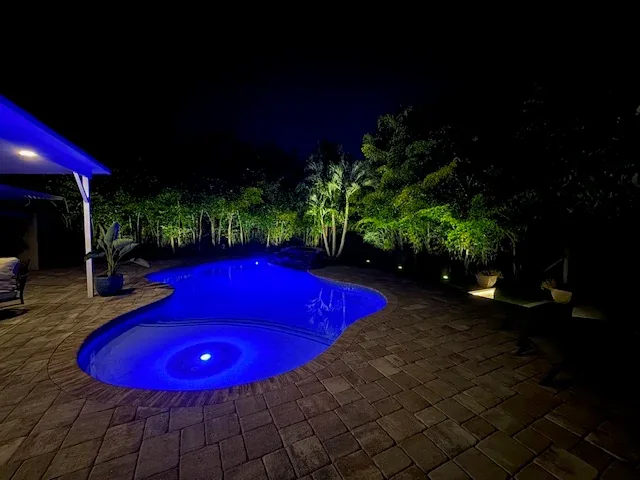
Questions we hear
Whether the county's turtle rules reach your home, whether the Foundation has to approve new lighting, palms on a Gulf-front lot, amber light, when beach-visible lights go off, whether the Clam Bay preserve limits lighting, and who handles streetlights. Each answer comes from Collier County's code, county pages, the Foundation's public site or FWC.
 NightScapes Landscape Lighting Outdoor lighting only, Naples since 1998
Choose a question
Ask us about lighting in Pelican Bay or Bay Colony. Choose a question, or call and we will answer it on the phone.
They apply where development or its lighting sits within 300 feet of coastal mean high water, among other triggers in the code, including light visible from the beach. Many Pelican Bay homes are well east of the beach behind the mangroves and berm, others front the Gulf. A site check shows which of your fixtures the beach can actually see.
The Foundation runs a Design Review and Covenants process, now through its online HOALife portal, and every owner is a member. Its lighting standards are not posted publicly, so whether your project needs approval is a question for the Design Review and Covenants Department at 239-799-6299. Have your lighting designer prepare a plan the review can read.
Where Collier’s sea turtle section applies, landscape and accent lighting are prohibited, and FWC advises against uplighting vegetation that is visible from the beach. So on the beach-facing side, generally no. Palms on the landward side that the beach cannot see are a different case, subject to Foundation review. Map sight lines from the beach before choosing fixtures.
Collier County’s code does not state a wavelength. It requires low intensity, hooded or positioned lighting where the section applies, and specifies low pressure sodium where high intensity light is needed. FWC’s guidance uses long wavelength light at 560 nm, worded two ways in different FWC documents. No single nanometer figure is county law.
For existing development, Collier’s code says lights visible from the beach go off after 9:00 p.m. from May 1 to October 31, or are hooded or positioned so the beach cannot see them. The code gives no end time. Collier County Parks inspects twice a month in season and treats a visible shadow on the beach as a violation.
The Clam Bay Conservation Area is a county Natural Resource Protection Area overlay, but no lighting standard was found in that overlay, and we found no county lighting rule for wildlife other than sea turtles. Even so, light spilling into a mangrove preserve does no favors. Keep beams low, shielded and pointed away from the water.
Street lighting is one of the stated purposes of the Pelican Bay Municipal Service Taxing and Benefit Unit, which the Pelican Bay Services Division Board advises and the county commission governs. For a streetlight problem, contact the Services Division. Lighting on private lots is separate and is the owner’s responsibility.
Free Consultations and Estimates
Tell us the address, whether it faces the Gulf, the berm or Clam Bay, what is lit now and what you would like to see at night. We look at it with you, from the street and, on a Gulf-side lot, from the beach.
Tell us about the property