
Service and repair
Expanding an existing lighting system in Naples, phase by phase
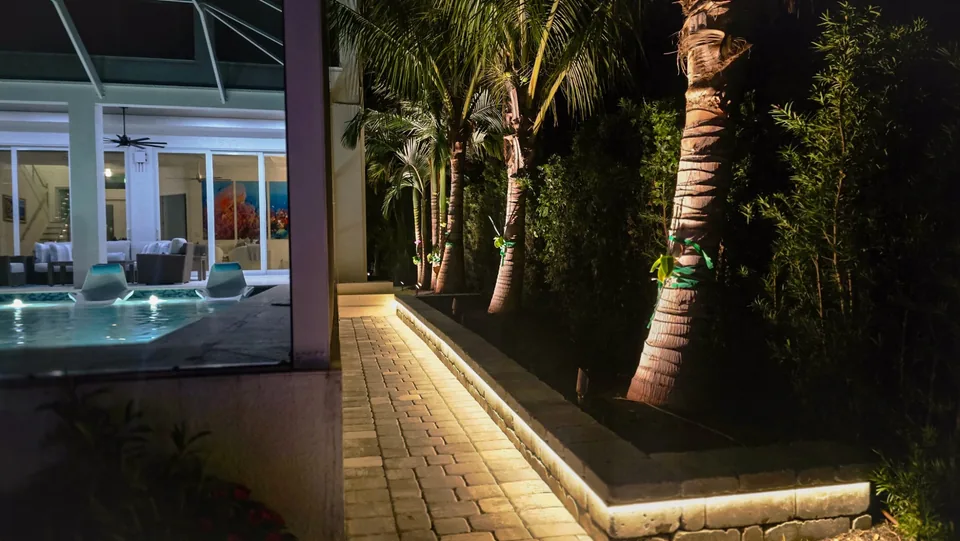
Most lighting systems grow. A pool goes in, a patio is added, palms mature that were never lit. Done well, every addition looks as if it was part of the plan all along.
Tell us what you want to add
NightScapes project
If you have added to the property
Can new lights be added to the system you already have?
If you have added a pool, a patio or new planting and want it lit, the existing system can usually take it. Three things decide how: whether the transformer has capacity left, whether the voltage at the far end of the run will stay in range, and whether the new fixtures will read as part of the same system at night.
Adding to a system is mostly a question of capacity and distance. A transformer has a rating and the fixtures already on it use part of it. A new area may be close to an existing run or across the property from it. Both are measured, not guessed, before anything is promised.
The third question is the one that gets skipped. New fixtures beside old ones, with fresher lamps in a different white, look like an afterthought. Matching color, beam and brightness to what is there is what makes an addition invisible as an addition.
If the system was converted from halogen to LED at some point, there is often a great deal of capacity free, which makes most additions simple.
- Capacity
- What the transformer can carry, against what is already on it.
- Distance
- Whether the far fixture on a new or extended run stays in voltage.
- Match
- Whether new light looks like the old, at night, side by side.
The transformer
What the existing transformer can carry
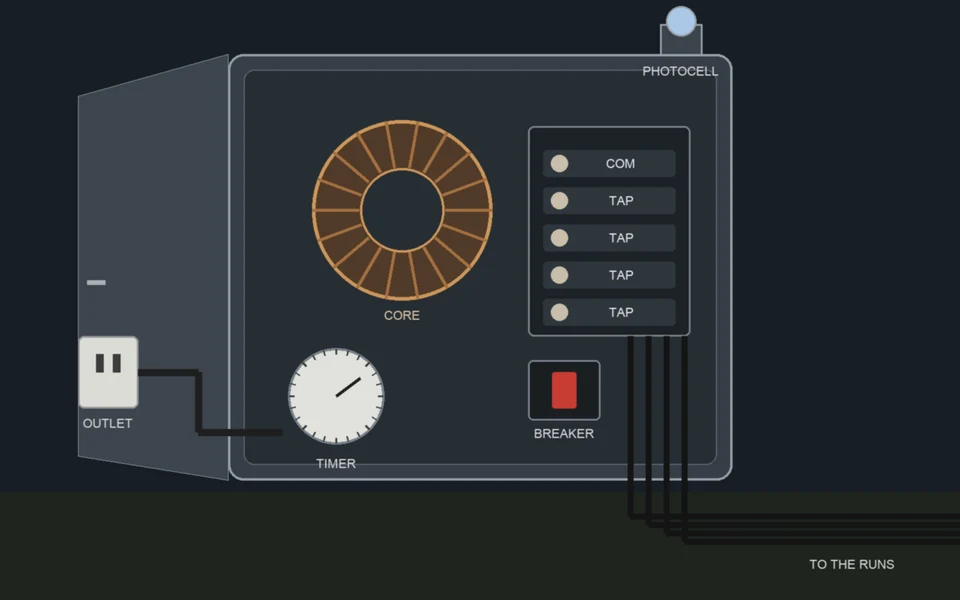
A transformer's rated capacity is compared with the load already connected, measured at the cabinet rather than guessed from a fixture count. A past LED conversion usually leaves plenty free. When the existing unit is near its limit, or the new area is far from it, a second transformer near the new area is often the better answer.
Rating against load
Every landscape transformer converts line voltage to low voltage; FX Luminaire describes the job as converting "120 V in North America" to "low-voltage current (12 V)." Each has a rating, and every fixture on it draws part of that. The sum of what is on it now, measured, is the starting point for anything added.
How a conversion changes the sum
A halogen fixture can draw anywhere from 10 to 50 watts, in FX Luminaire’s words, while its own lamp table lists an LED sold as a 35-watt equivalent drawing an actual 5.0 watts. A system converted to LED often uses a small fraction of its transformer, and that freed capacity is how most systems grow. See an LED conversion that frees transformer capacity.
Capacity is measured at the cabinet, not estimated from a fixture count.
When a second transformer is better
If the existing transformer is near its limit, or the new area is across the property, a second transformer near the new area can be simpler and better than stretching the old one. It keeps runs short, voltage even, and the new area independent.
Sources, read 2026-10-13: FX Luminaire, Landscape lighting design guide (2021); FX Luminaire, Advantages of LED lighting.
Wiring the new area
Extending a run or starting a new one
Adding fixtures to the end of a long existing run makes everything after the join dimmer, because they share its voltage loss. Usually the better answer is a new home run from the transformer to the new area, with cable sized for the distance and voltage read at the last fixture. Point at each option.
-
The end of a long chain
- What happens
- Fixtures added to the far end of an existing run share its voltage drop, and everything after the join dims a little.
- When it works
- A short run with capacity to spare and a couple of fixtures to add.
- Measured
- At the last fixture, with everything on.
-
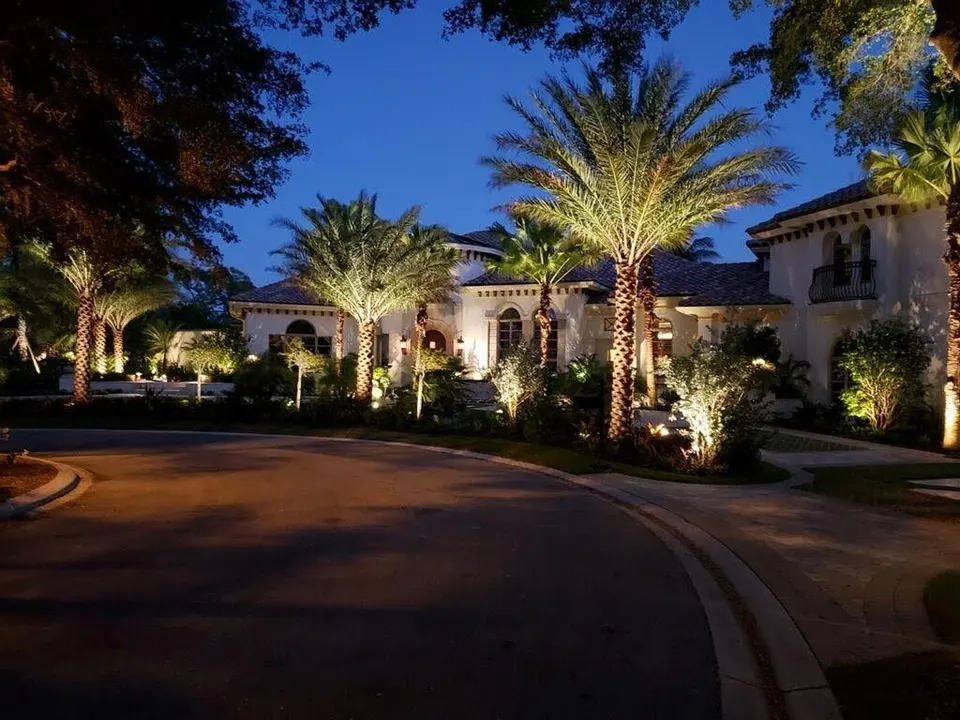
A new home run
- What happens
- A new cable from the transformer straight to the new area, sized for the distance.
- When it works
- A new area of any size, or anywhere the existing run is already long.
- Measured
- At the last fixture on the new run, and it gets its own tap.
-
A second transformer
- What happens
- A transformer placed near the new area, fed from a nearby outlet.
- When it works
- The first is at capacity, or the new area is far from it.
- Measured
- As its own system, then balanced with the first.
Getting there
Getting cable to a new pool, patio or drive
The cheapest moment to place a cable sleeve is before the hardscape exists. Laid under a pool deck, a patio or a drive before it is built, a sleeve lets cable be pulled through at any time. After the pour, the same crossing means lifting pavers, boring under concrete or going the long way round. Plan the route below.
Sleeves before the hardscape
The cheapest moment to get cable under a new pool deck, patio or drive is before it exists. A plastic sleeve laid under the base before the pavers or concrete go down lets cable be pulled through later. After the pour, the same crossing means cutting, boring or going the long way round.
Crossing a drive
An existing drive between the transformer and the new area is the usual obstacle. Pavers can often be lifted and relaid over a sleeve; poured concrete usually means boring underneath or finding another route. It is decided before any trench is dug.
A sleeve laid before the pour is the cheapest part of any future lighting.
Into a screen enclosure
Getting low-voltage cable into a pool cage means crossing the deck, the footer or the frame without leaving it exposed. It is planned with the cage, ideally before it is built, so lighting inside and outside the screen can be fed cleanly. See lighting a new pool deck and screen enclosure.
Around a new kitchen or patio
A new outdoor kitchen or patio wants its own task and ambient light on its own zones. The cable for it is run while the structure is going up, into the counters, the seat walls and the roof, so nothing is surface mounted later. See task and ambient light for an outdoor kitchen.
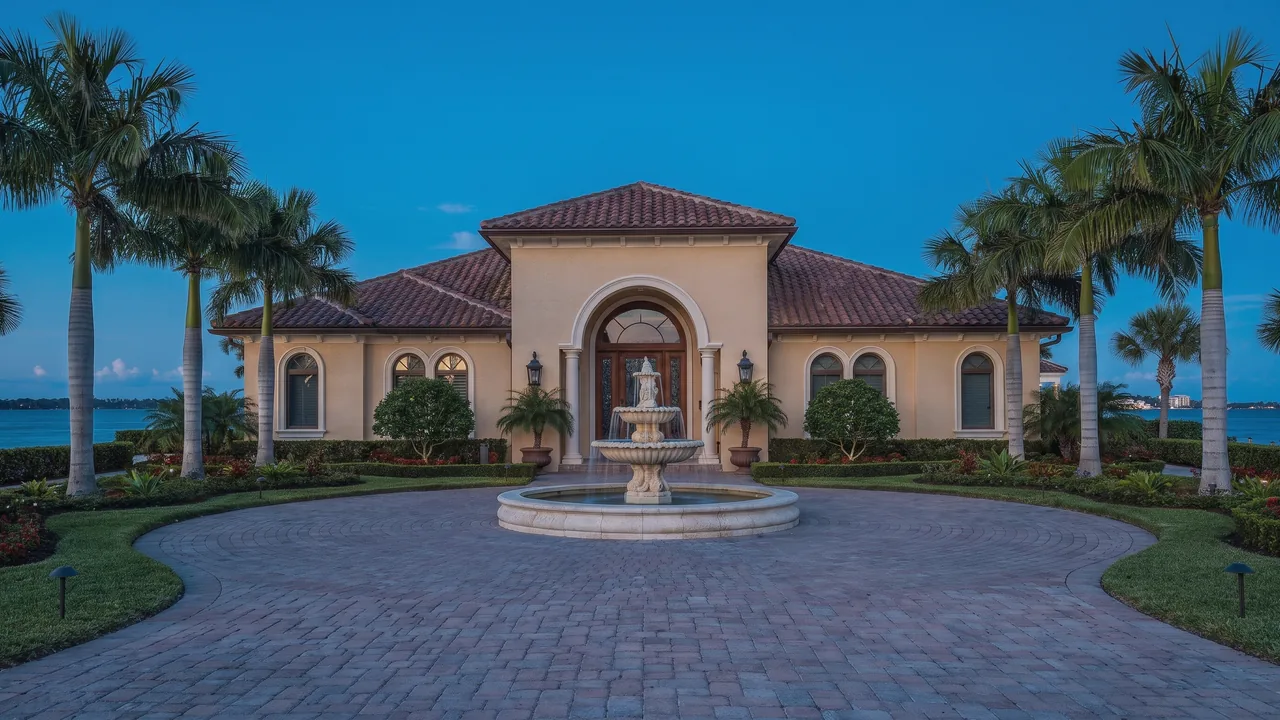
Phased lighting design
Planning in phases
Many systems are built over years, and that works well when the end state is decided first. The transformer, the runs and the sleeves are sized for the finished property, then the work is done in an order that makes sense. Scroll through one property built in three phases.
The arrival
Phase one: the arrival view
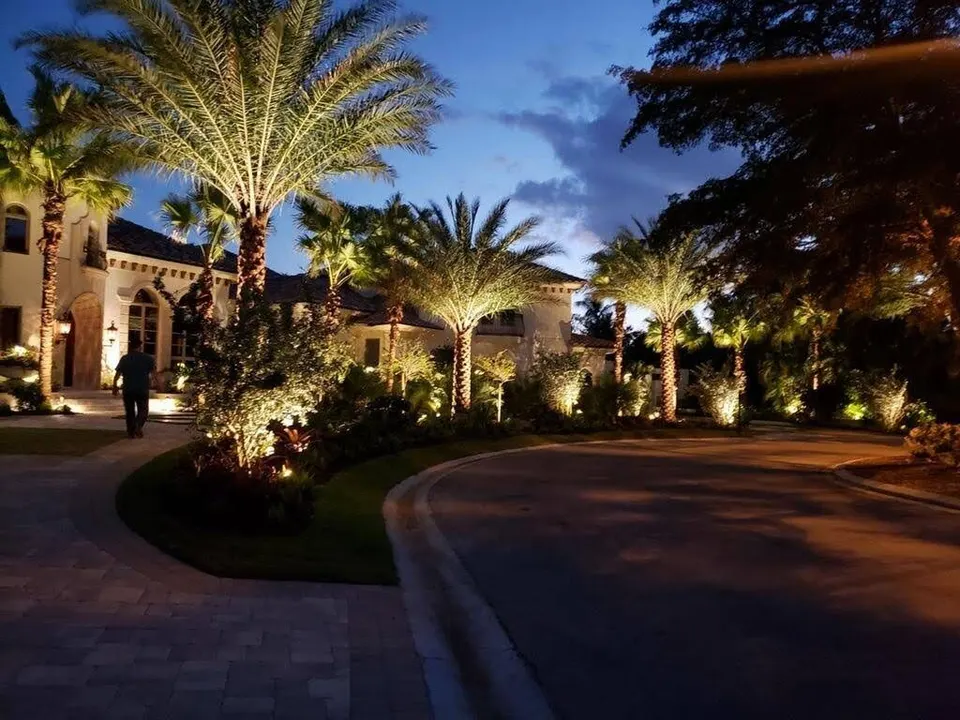
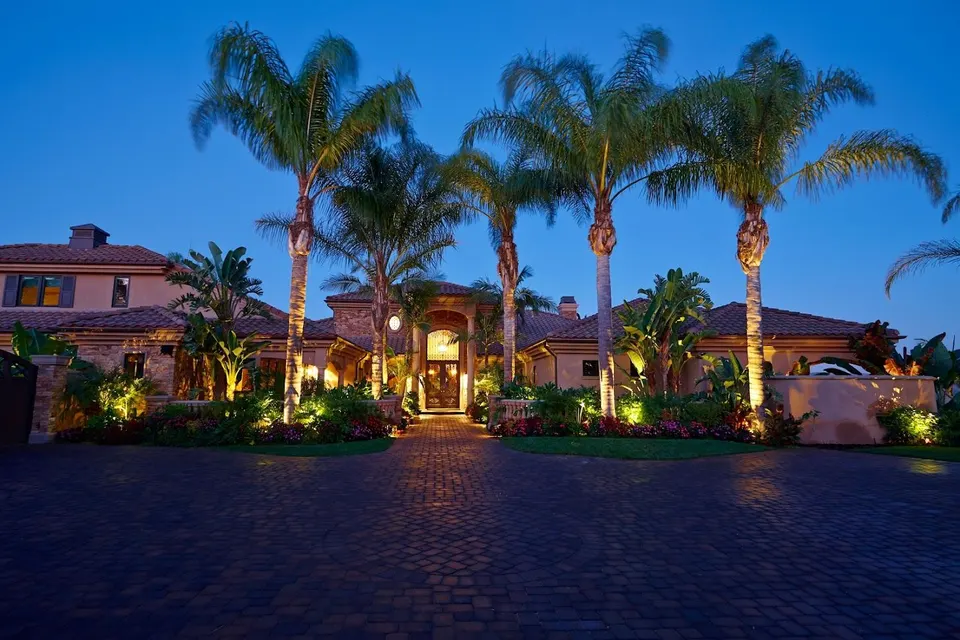
The view from the street and the drive comes first, because it is seen most: the palms either side and the drive itself. The transformer and main runs are put in sized for everything that follows.
- Added
- Palms either side, the drive edge.
- Sized for
- The whole plan, not just this phase.
The living areas
Phase two: where you spend the evening
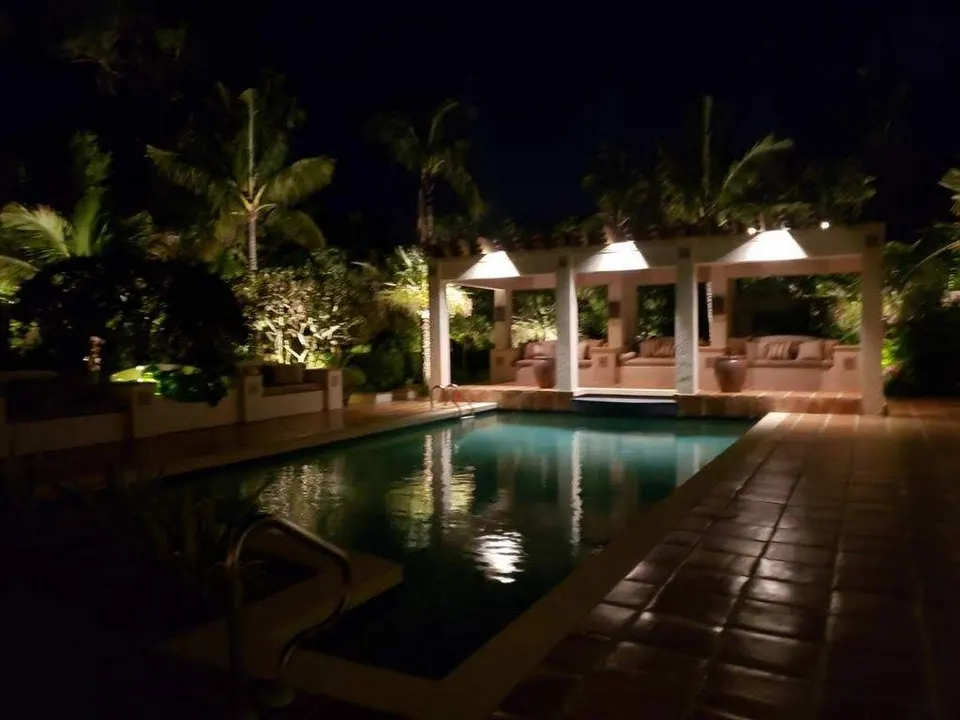
Next, the places you use after dark: the court, the fountain, the pool and the lanai. They connect to runs and sleeves that were laid in phase one, so nothing is dug up twice.
- Added
- The fountain and the court.
- Connected to
- Capacity and sleeves left in phase one.
The edges
Phase three: the edges and the extras
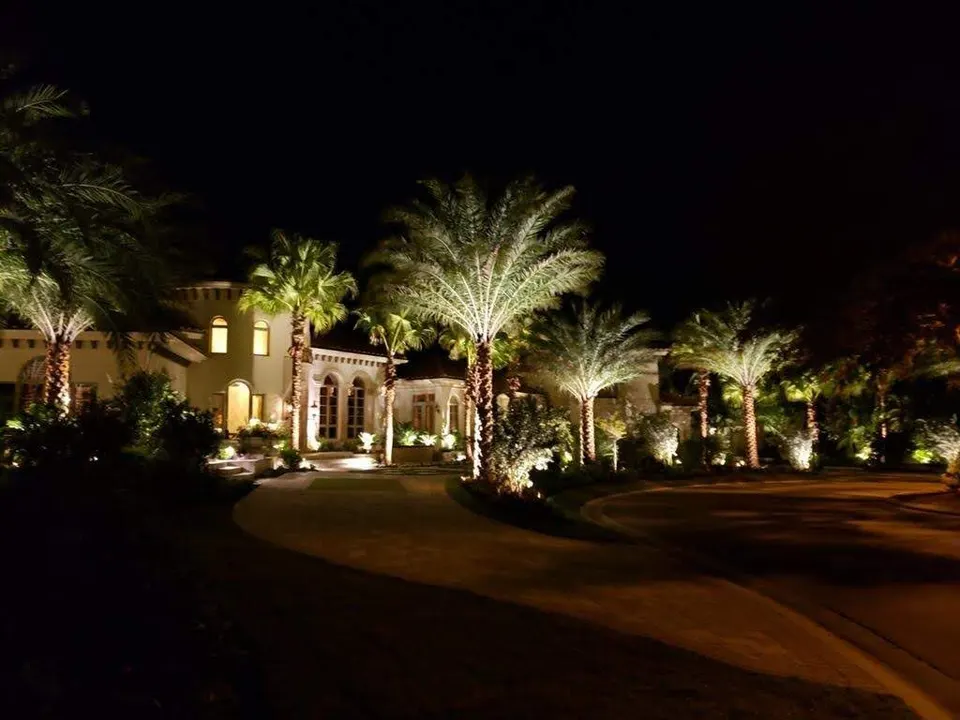
Last, the edges: the wings of the house and the planting along them. By now the system is complete, every phase matches the last, and it was never a patchwork, because it was always one plan.
- Added
- Both wings and their planting.
- Fed from
- Runs and capacity planned in phase one.
We have been gradually adding landscape lights for a few years now. We have used Nightscapes for all.
Old and new
Making new fixtures match the old ones
An addition should be impossible to spot as one. New fixtures are matched to the old for color of light, beam and brightness, and for finish, since brass and copper darken with age. Where the older lamps have faded, they are replaced in the same visit, so the new area does not look newer than the rest.
All of it is judged as one system, old and new together.
Ask about adding to your systemMatchingNightScapes Landscape Lighting
- The color of the light New lamps or fixtures in the same color temperature as the old, checked side by side.
- The beam The same spread on the same kind of subject, so new palms match old palms.
- The brightness New fixtures set to the levels already on the property.
- The finish Brass and copper darken; new fixtures stand out until they weather or are chosen to match.
- Old lamps Where the older lamps have faded, they are replaced in the same visit.
- Checked together Old and new looked at together before anyone calls it done.
Old and new, side by side.
The bigger question
Add, rework or start again
Not every system should simply be added to. Add when the design works and the property has grown. Rework when the planting has outgrown the layout or additions were made by several hands. Start again when the original design never did what was wanted. Each keeps whatever is sound. Choose one to compare.
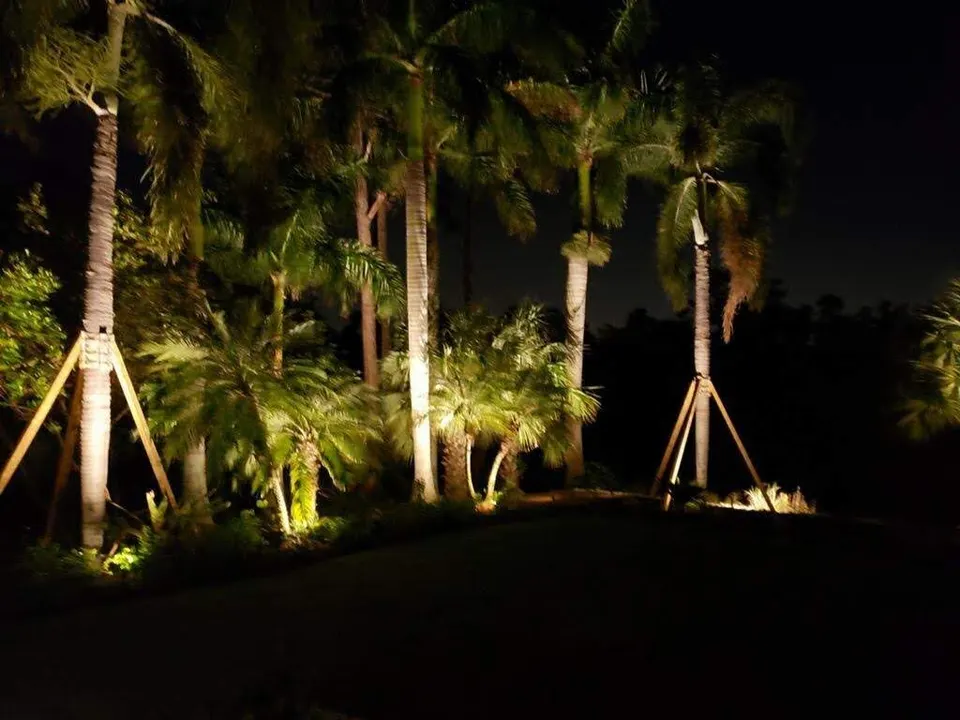
Add
- It fits when
- The existing design works and something has been added to the property.
- What changes
- New fixtures, a new run or a new zone, matched to what is there.
- What stays
- Everything else.
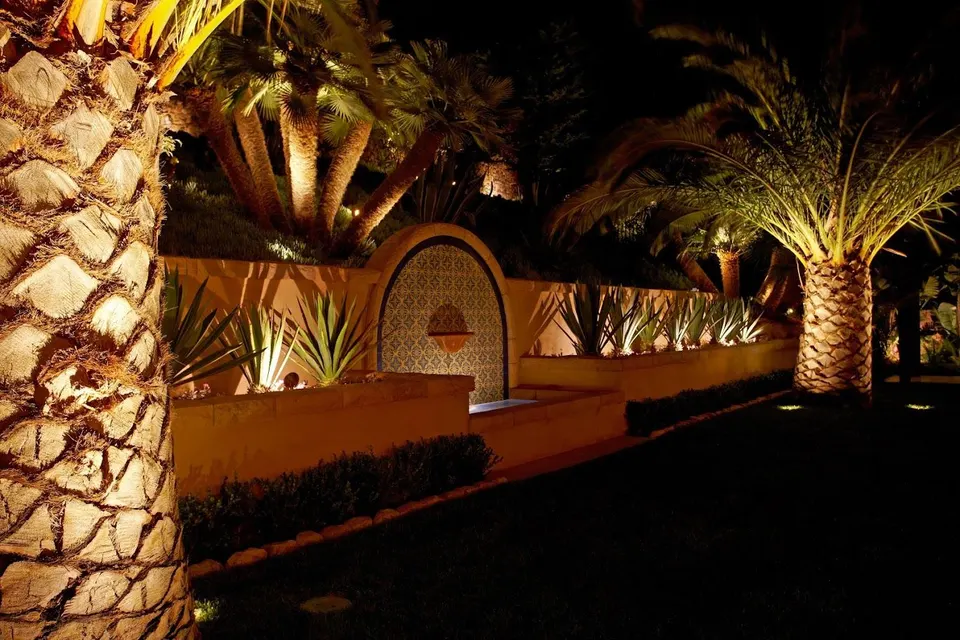
Rework
- It fits when
- The planting has outgrown the layout, or additions were made by several hands.
- What changes
- Fixtures moved, re-aimed, removed or replaced; runs tidied; zones redrawn.
- What stays
- The sound parts: positions that work, cable that is good, fixtures worth keeping.
Start again
- It fits when
- The original design never did what was wanted, or the property has changed completely.
- What changes
- A new design for the whole property, reusing anything that fits it.
- What stays
- Anything the new design can use.
Control
Zones and control once the system has grown
A new area usually wants its own zone and its own schedule. A pool deck, a patio or a dock is used at different times from the front of the house, and on its own zone it can be switched, dimmed or scheduled without touching anything else. It is planned in as each phase goes in.
If each addition simply joins the nearest run, the pool ends up coming on with the front and the dock with the drive. Giving each added area its own zone at the time it is added avoids that, and it is simpler than unpicking it later.
How a property is divided into zones is covered under giving the new area its own zone, and schedules and the app under our smart lighting control page. If the additions have grown to the point of a rethink, start with a new full-property lighting design.
- Its own zone
- Switched and dimmed without touching the rest.
- Its own schedule
- On when the area is used, not when the front is.
- When
- Planned in as each phase goes in.
Who does the work
Who adds to the system: NightScapes Landscape Lighting, Naples
NightScapes Landscape Lighting has designed and extended landscape lighting in Naples since 1998. Todd and Sherry own and run it, outdoor lighting is the only work it does, and its Google Business Profile shows 63 reviews at 5.0. Additions are measured at the cabinet and matched to what is there.
We work across Naples, Port Royal, Pelican Bay, Grey Oaks, Old Naples and Marco Island, and through Lee and Collier counties, on properties that have grown over years: a pool added, a kitchen built, palms that have finally reached the height they were planted for.
If you are planning hardscape, tell us early. A sleeve laid before the pour is the cheapest part of any future lighting.
Ask about adding to your systemI also appreciate that even our “small job” is not too trivial for them.
- Since 1998
- Lighting properties in Naples and Southwest Florida.
- Todd and Sherry
- Family and locally owned. The owners are the people you deal with.
- 63 Google reviews
- Rated 5.0 on the NightScapes Google Business Profile.
- Lee and Collier counties
- Naples, Marco Island, Bonita Springs, Fort Myers, Sanibel and Captiva.
Questions we hear
Questions Naples homeowners ask about adding to a lighting system
Whether lights can be added, whether a system installed by someone else can be extended, whether the transformer can take a longer run, what wire to use, whether branching off a run is a problem, and how to light a new pool, patio or kitchen. Voltage figures are FX Luminaire's, quoted.
 NightScapes Landscape Lighting Outdoor lighting only, Naples since 1998
Choose a question
- Can more lights be added to an existing system?
- Can you add to a system I installed myself, or that another company installed?
- Will my current transformer support a longer run?
- What gauge of wire should a new run use?
- Is it a problem to branch a new line off an existing run?
- We added a pool, patio or outdoor kitchen. Can the lighting be extended to it?
Ask us about adding to your system. Choose a question, or call and we will answer it on the phone.
Can more lights be added to an existing system?
Usually. Three things decide it: whether the transformer has capacity left, whether the voltage at the far end of the run will stay in range, and whether the new fixtures will look like part of the same system at night. We check all three before recommending anything.
Can you add to a system I installed myself, or that another company installed?
Ask us about your system. Whatever installed it, the first visit is the same: find the transformer, see what is on it, measure the runs and look at the fixtures. That tells us what can be added and what would need to change first.
Will my current transformer support a longer run?
It depends on what it already carries and on the length and size of the cable. Voltage falls along a run; FX Luminaire says the input at each LED fixture "should always be between 10-15 VAC." A long new run may need heavier cable, its own tap, or its own transformer nearer the new area.
What gauge of wire should a new run use?
The one that keeps the far fixture in range for the distance and the load. FX Luminaire names 16/2, 14/2 and 12/2 as the common sizes, and warns that "incorrect wire size may result in voltage dropping past 10 VAC." The size is worked out for the run and checked with a meter.
Is it a problem to branch a new line off an existing run?
A branch joined partway along a run puts more load on the cable between the transformer and the join, and that section loses more voltage. On a short, lightly loaded run it can be fine. On a long or busy one, a separate run from the transformer is the better answer.
We added a pool, patio or outdoor kitchen. Can the lighting be extended to it?
Yes, and it is easiest if cable sleeves were laid under the new hardscape before it went down. If they were not, there are other routes, and we find the one that disturbs the least. The new area usually gets its own zone and schedule.
Free Consultations and Estimates
Ready to add to the system as if it were always planned?
Tell us what you want to add and what is already there: the transformer, roughly how many fixtures, and anything built since the lighting went in. We measure first and plan for the finished property.
- Capacity measured, not guessed
- New matched to old
- Free consultation and estimate
Tell us what you want to add