Home security lighting in Naples that lets you see
A floodlight makes one patch of the yard very bright and everything around it invisible. Lighting for security is the opposite: low, even, shielded light across the whole property, so there is nowhere your eye cannot reach.
If you have a bright light on the house and still cannot make out the side yard or the end of the drive, the light is the reason. The eye adapts to the brightest thing in view. Everything outside the cone goes black, and the same thing happens when you look out through a lit window.
Your pupil closes down for the brightest thing in front of it. Put one strong, unshielded source on a wall and the eye sets itself for that. The lawn inside the beam is clear. The hedge beside it, the path round the corner and the gate beyond it are now darker to you than they were before the light went on.
DarkSky International, which campaigns on outdoor lighting, puts it this way: "Glare from bright, unshielded lights actually decreases safety because it shines into our eyes and constricts our pupils." That is its position as an advocacy group, and the effect it describes is one anyone can check by standing in their own yard.
So the aim of this page is narrow. It is not about brightness, and it makes no claim about crime. It is about being able to see your own property, from inside the house and from outside it.
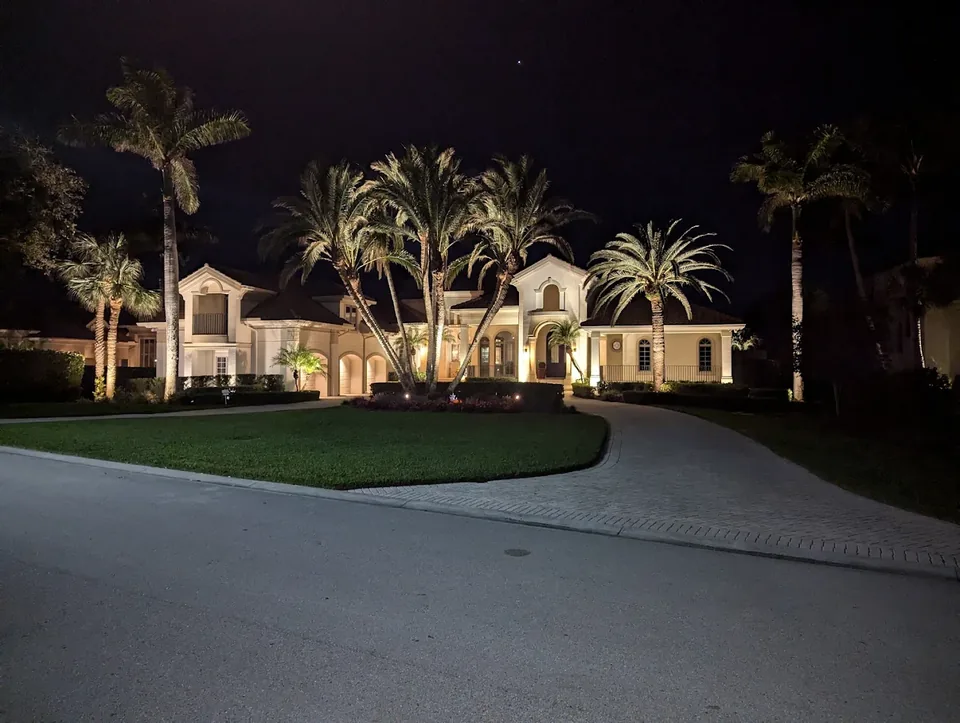
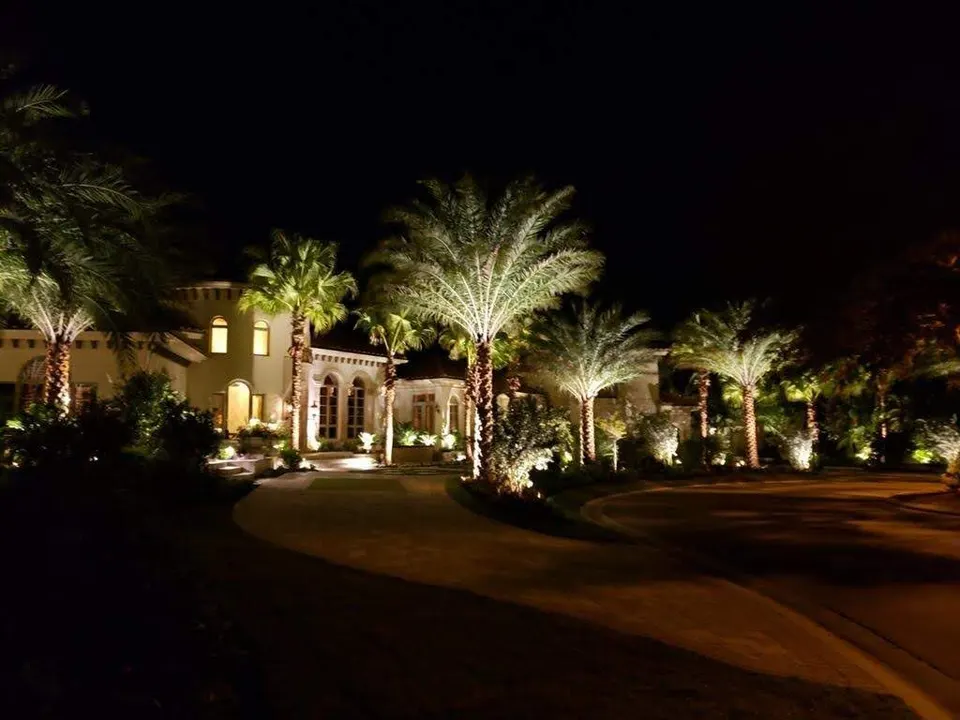
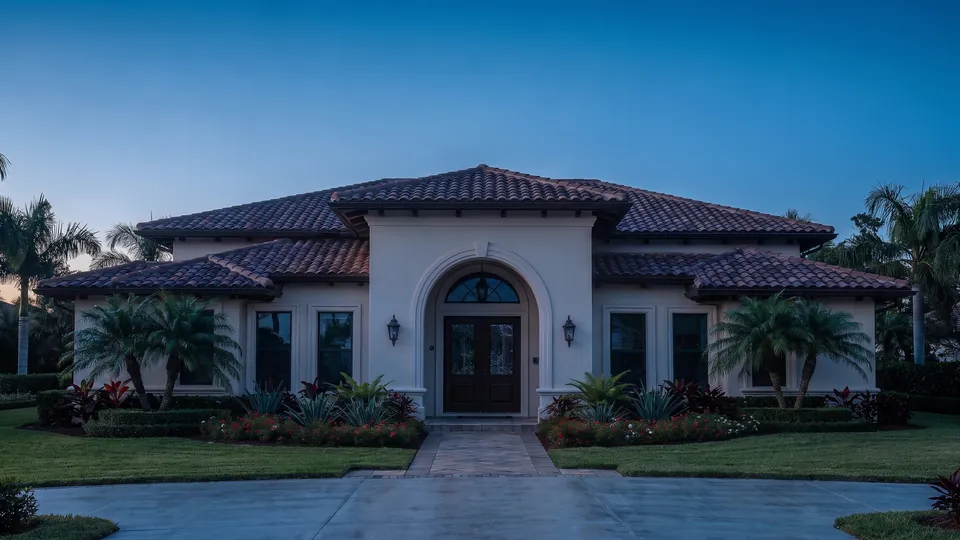
A property lit evenly: you can see all of it at once.
The eye
Adapts to the brightest thing in view and loses everything dimmer.
A flood
Creates one bright cone and deep shadow at its edges.
The aim
Low, even, shielded light, so nothing is glaring and nothing is black.
Flood light or landscape lighting
One flood versus many low sources
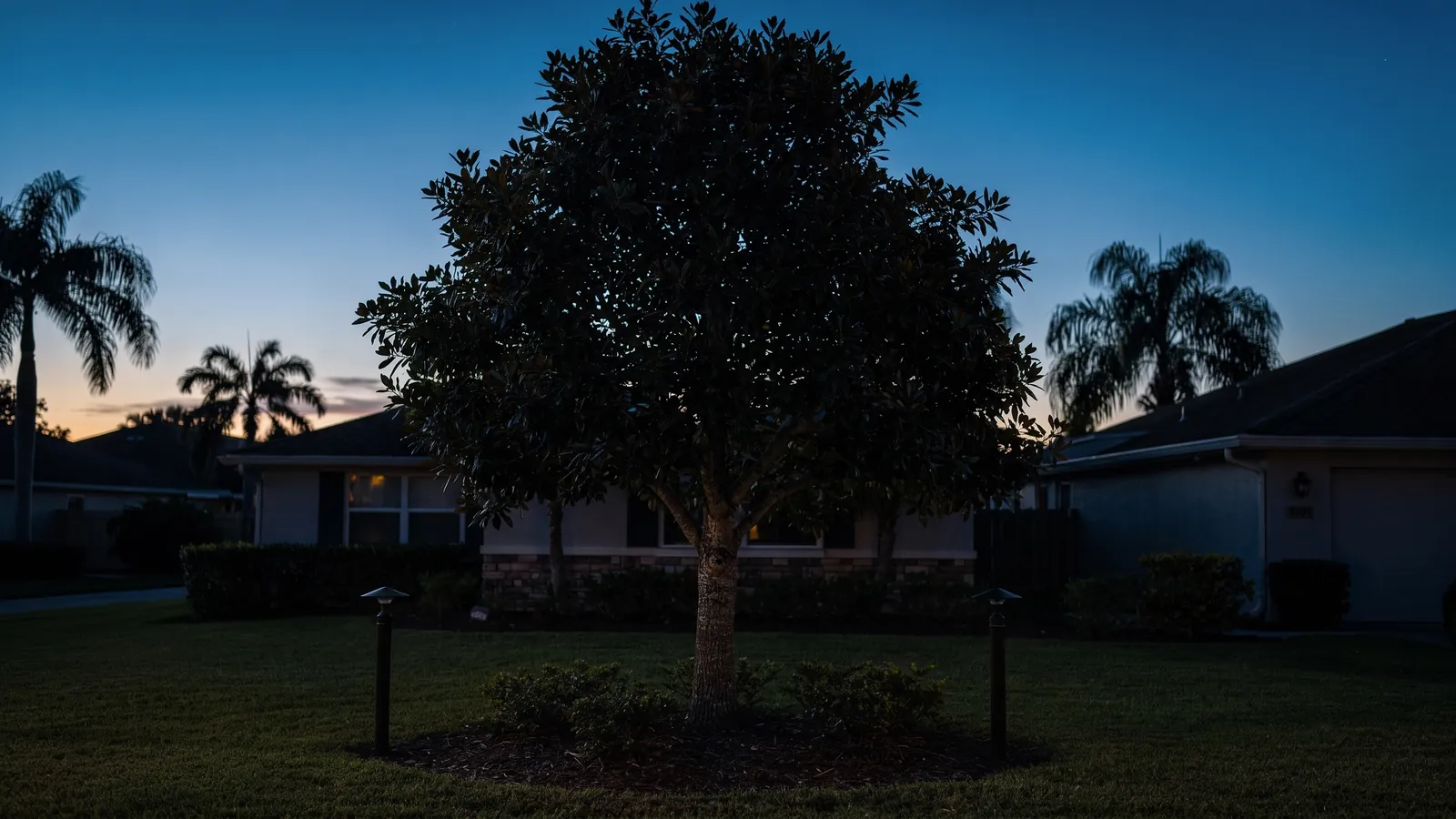
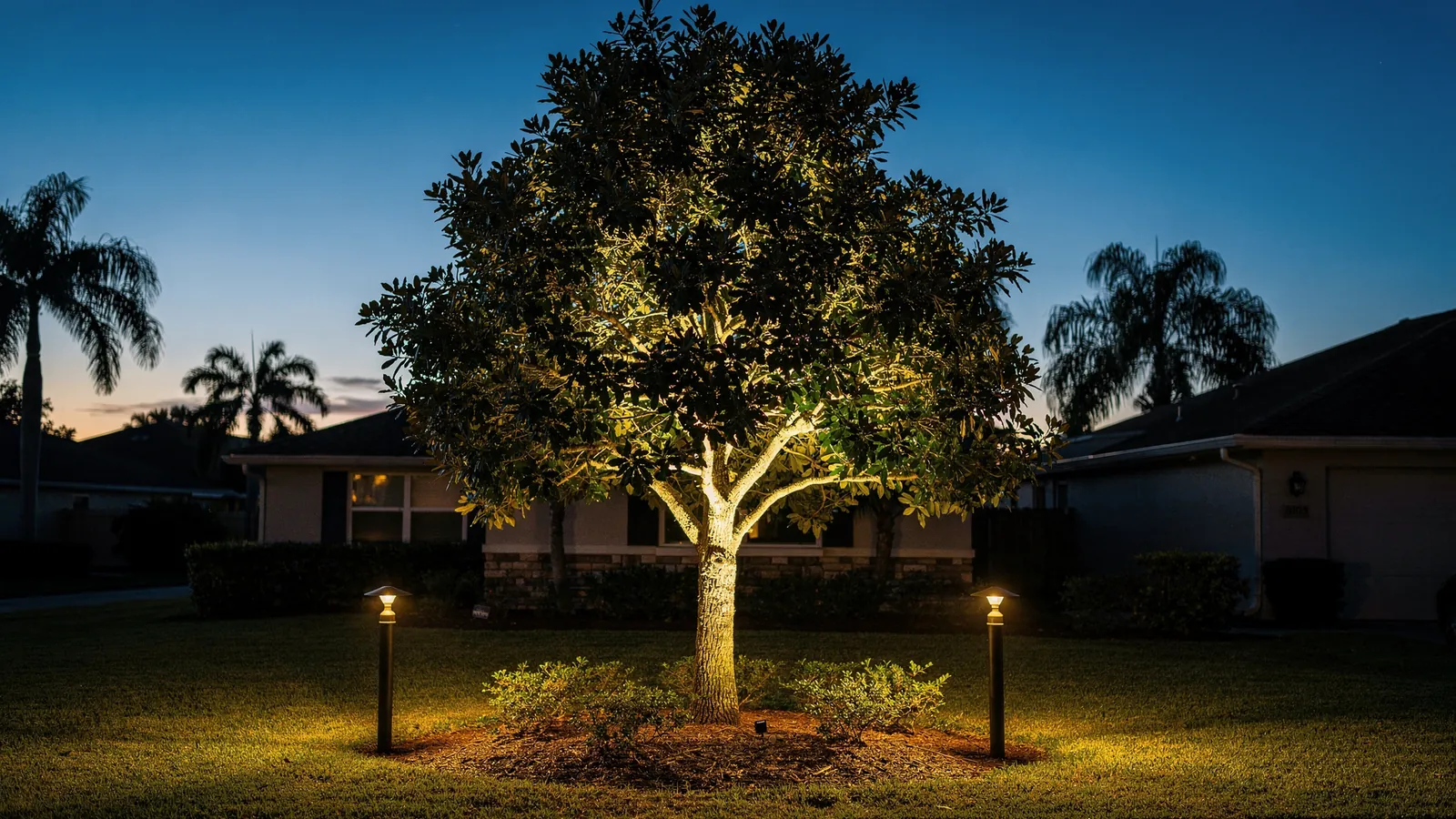
Even, low light across a whole area gives more usable vision than one bright source, because the eye never has to shut down for it. Drag the handle from a single wall flood, through the same flood dimmed, to many low shielded sources. Watch the parts of the house you could not see at the start.
One flood
Turned down
Many low sources
One bright flood on the wall
The center of the picture is washed out and everything outside the cone has gone black. Your eye has adapted to the brightest thing in view, so the side of the house, the planting and the edge of the drive are harder to see than they would be with no light at all.
The flood turned down
Dimming the flood helps a little. The glare eases and some of the surroundings come back. But it is still one source in one place, so there is still a bright middle and dark edges, and the lamp is still in the eye line.
Many low, shielded sources
The same property with light spread across it at a low level. Nothing is glaring, so the eye stays open, and you can see the door, both wings, the planting and the paving at once. Less light, placed in more spots, shows more.
Drag from one flood to many
Illustration. The glare at the left-hand end is drawn to show what the eye does; no measurements are implied.
Coverage
Where the dark pockets are on a Naples lot
Every lot has places that light from the front and back never reaches: the side yard between house and hedge, the gap beside the garage, the gate, the equipment pad, and any bed where summer growth has closed over a fixture. Coverage is found by walking the property. Light the lot below two ways and see which pockets go dark.
Drawing: a typical lot from above, and a simple model of what the eye can make out. Not a measurement of any real property.
Of the lot you can make out
0%
Dark pockets
0 of 6
Tap a numbered pocket on the plan, or below, to read what is there.
The strip between the house and the hedge or fence is the darkest place on most Naples lots. It is narrow, it is planted, and no light from the front or the back reaches into it. It is also where the gate, the trash and the air handler usually are.
Why it is dark
Walls on both sides and nothing aimed along it.
What works
Low, shielded light at intervals along its length, aimed at the ground.
A bright garage door light makes the corner next to it look blacker than it is. The path round the side, the side door and the hose bib all sit in that shadow. A second, much lower source beside the building fills it in.
Why it is dark
It is right next to a bright light, which is the worst place to be.
What works
Lowering the door light and adding a soft one round the corner.
From the house this is the furthest point and the one you most want to be able to see. From the street it is where glare does the most harm. It is lit low and evenly, with nothing aimed outward.
Why it is dark
Distance. Light from the house does not carry that far.
What works
Its own low sources. See our driveway and entrance page.
Summer growth closes over lights. A bed that was evenly lit two years ago can have a fixture buried in it and a patch of black where its pool used to be. Coverage has to be walked again after every growing season.
Why it is dark
The light is still on. It just cannot get out.
What works
Raising or moving the fixture, and cutting back around it.
Every door that is used after dark, and the walk to it, should be readable from inside before you open it and from outside as you approach. That means light on the ground and on the person, from the side, and no lamp shining at the peephole.
Why it is dark
Entry lights are often aimed out, which blinds the person looking through the door.
What works
Shielded light from beside and above, aimed down.
The pump, filter and heater usually sit on a slab at the back corner of the lot, screened by a hedge or a fence. Nothing is aimed at it, and it is somewhere people go after dark with a flashlight when something sounds wrong.
Why it is dark
It is screened on purpose, and behind the house from every other light.
What works
One low, shielded source on the path to it, aimed at the ground.
How the light is delivered
Shielding, aim and color: seeing the ground, not the lamp
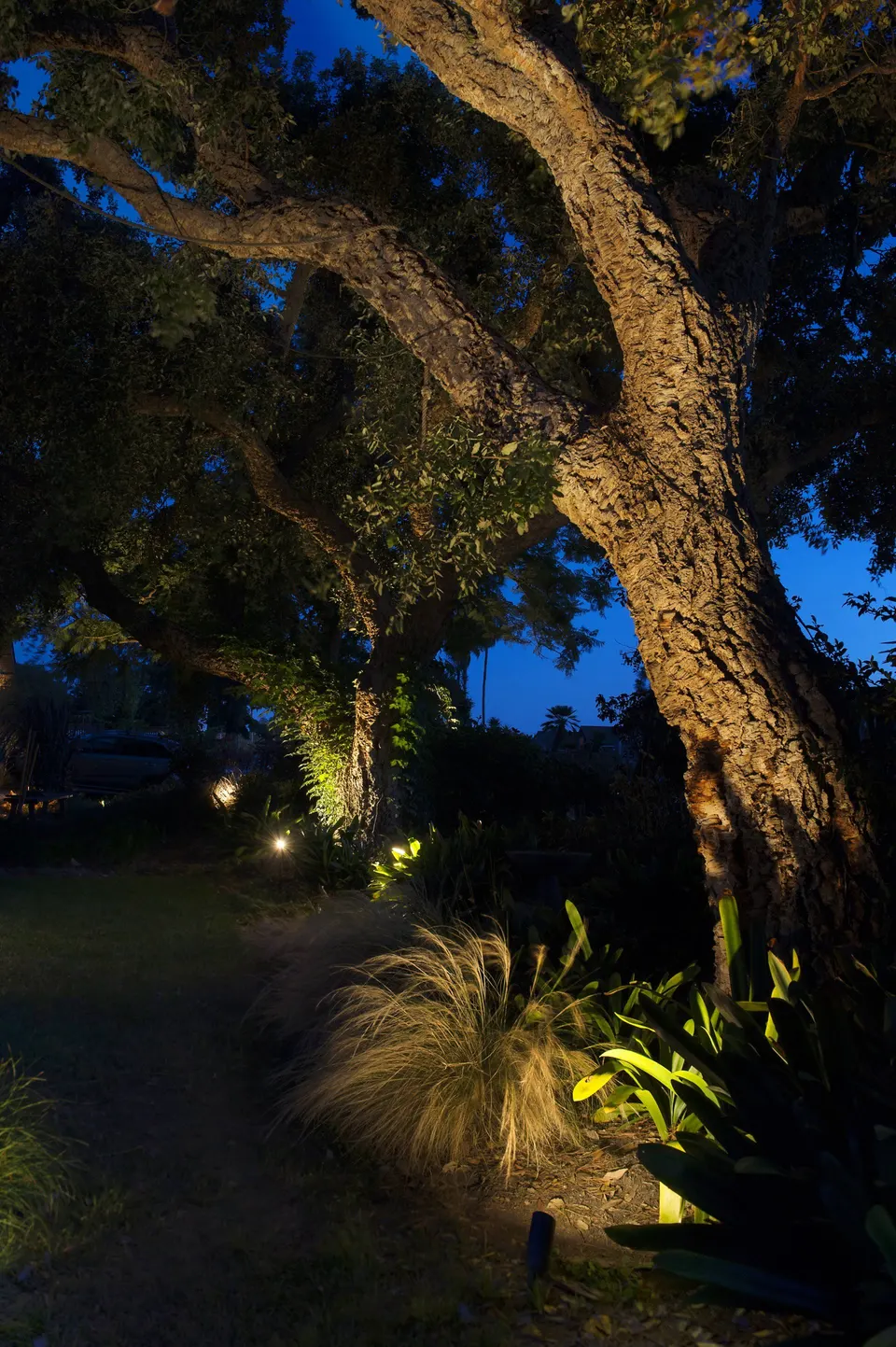
A security light works when you see what it lights and never the lamp. Sources are fully shielded, aimed down or across, and mounted out of the eye line from windows, doors and the street. Warm color is easier on adapted eyes. Downlight from a tree canopy can replace a wall flood altogether.
Light from within a canopy covers ground that a wall flood would only glare across.
Five principles, from the people who wrote them
DarkSky International and the Illuminating Engineering Society jointly published five
principles for responsible outdoor lighting. They were written about light pollution,
and they happen to describe good security lighting exactly: "Use light only if it is
needed", "Direct light so it falls only where it is needed", "Light should be no
brighter than necessary", "Use light only when it is needed", and "Use warmer-color
lights where possible". DarkSky sums them up as: "Light where you need it, when you
need it, in the amount needed, and no more."
Shielded and aimed
A shielded fixture hides its lamp from the side, so the light leaves in one direction
only. Aimed down at the ground or across a wall, it lights the surface and nothing
else. The test is the same from every direction you might look: the front door, the
kitchen window, the street. If the lamp is visible, it is glare.
Low, and in more places
The same total amount of light does more good spread thinly than concentrated. Six
small sources along a side yard light all of it. One strong one at the corner lights
the first third and blinds you to the rest.
If you can see the lamp, it is working against you.
From above, where there is a tree
A canopy tree near the house can carry a soft downlight that covers a wide area of
ground with no source in sight. It is the most comfortable security light there is, and
it is covered under downlight from the canopy
instead of a wall flood. How the same fixtures make the house look is a separate
question: lighting the house for how it looks.
A camera is blinded by the same things an eye is. Light the scene from beside or behind the camera and never into the lens. Steady, even, low light lets it hold one exposure all night. A bright light that snaps on makes it readjust. We light for cameras; we do not supply them. Point at each.
Light from beside the camera
Point here to see why
The idea
Light the scene from the same side as the camera, or from behind it.
Why
A camera, like an eye, is blinded by a source in its view. Light aimed toward the lens washes the picture out.
In practice
We ask where the cameras are before we place a fixture, and aim across their view.
Steady, low light
Point here to see why
The idea
A constant low level across the area the camera covers.
Why
The camera settles to one exposure and holds it, so the picture stays consistent all night.
In practice
Even light matters more than bright light. Hot spots and black corners are both lost detail.
Motion-triggered jumps
Point here to see why
The idea
A light that snaps on when something moves.
Why it is tricky
Owners report a camera switching modes when a bright light comes on, with a moment of poor picture as it adjusts.
In practice
Where both are used, the triggered light is modest and the steady level is already there.
Schedules
All night, motion, or a late low level
Whether security lighting runs all night is a choice between seeing out at any hour, using power and affecting the neighbors. The usual answer is a full scene through the evening and a low level late at night on the doors, side yards and drive, with motion added only at particular doors. Answer three questions about yours.
Question 1 of 4
Do you look out of the windows late at night?
Question 2 of 4
Is the house empty for part of the year?
Question 3 of 4
How close are the neighbors?
Question 4 of 4
Is there a door or gate you use after dark?
Where each answer leads
Our answer
A late, low level
The better answer for most homes. The full scene runs through the evening. Late at night it drops to a quiet level on the zones that matter: doors, side yards, the drive. You can still see out, the house is not lit up at three in the morning, and it is all on a schedule.
All-night light lets you look out at any hour and see the property. It uses power, which with low-voltage LED fixtures is small, and darkness, which belongs to your neighbors and to the sky as well. If lights run all night they should be low, shielded and warm.
Our answer
A steady low level, with motion at particular doors
Motion is a supplement. It is useful at a side door, a gate or the trash enclosure, where you want more light for the half minute you are there. As the only lighting it leaves the property dark until something is already close, and it tells you nothing when you look out of a window.
Light that crosses the lot line is glare for someone else. Every fixture is placed so its lamp cannot be seen from next door or from the street, nothing is aimed outward or upward, and a lower late-night level is set. Many communities have their own lighting rules, and those are read before the design, not after.
From next doorEvery fixture looked at from the lot line. If the lamp can be seen, it is shielded or moved.
From the streetNothing aimed outward at drivers or at people walking past.
Above the rooflineNo light leaving upward. It lights nothing you need to see.
Into windowsYours and theirs. A light in a bedroom window is the commonest complaint.
The community rulesRead before design. Many associations have their own lighting standards.
Late at nightA lower level set for the hours when everyone is asleep.
Walked from the lot line.
Walked
Who does the work
Who lights the property: NightScapes Landscape Lighting, Naples
NightScapes Landscape Lighting has lit homes in Naples since 1998. Todd and Sherry own and run it, outdoor lighting is the only work it does, and its Google Business Profile shows 63 reviews at 5.0. Coverage is found by walking the whole property, including the sides nobody looks at.
We light property. We do not sell or install cameras, alarms or monitoring, and we make
no promise about what lighting will prevent. What we can show you, on your own lot after
dark, is what you can and cannot see now and what you would be able to see afterward.
We work across Naples, Marco Island and Bonita Springs, and through Lee and Collier
counties, including homes that stand empty for part of the year. The gate and the drive
are covered on their own page: the gate and the
drive as seen from a car.
Lighting properties in Naples and Southwest Florida.
Todd and Sherry
Family and locally owned. The owners are the people you deal with.
63 Google reviews
Rated 5.0 on the NightScapes Google Business Profile.
Outdoor lighting only
No side trades, this is the whole business.
Questions we hear
Questions about security lighting
The kinds of security lighting, whether it should run all night, what the evidence says about burglars, the most common mistakes, where motion lights go, whether lights can be too bright for cameras and why you cannot see out of a window at night. Every answer here is about visibility.
NightScapes Landscape LightingOutdoor lighting only, Naples since 1998
Ask us about seeing your property at night. Choose a question, or call and we will answer it on the phone.
What are the types of security lighting?
Broadly three. Wall floods, which are bright and cheap and create glare. Motion lights, which come on when triggered. And low, shielded landscape and architectural lighting that covers a property evenly all evening. The third is what we install. It is the only one of the three designed around what you can actually see.
Should security lights be on all night?
That is a choice, and we would frame it around visibility. All-night light means you can look out at any hour and see. It also uses power and affects neighbors and the night sky. A common middle course is a full scene in the evening and a low level late at night on the zones that matter, set on a schedule.
Does leaving outdoor lights on all night deter burglars?
We do not make claims about crime, because the evidence is disputed. DarkSky International states there is no clear scientific evidence that increased outdoor lighting deters crimes, while a review hosted by the U.S. Department of Justice found reductions after public street lighting was improved, by day as much as by night. What lighting reliably does is let you see.
What are the most common outdoor security lighting mistakes?
Brightness and aim. A flood that is too bright creates glare and deep shadow beside it. A fixture aimed outward lights the eyes of whoever is looking toward the house, including you at the window. And lighting only the front leaves the sides and back, which are the parts you cannot otherwise see, in the dark.
Where should motion sensor lights be placed?
Where you want more light for a short time on arrival: a side door, a gate, the trash enclosure, the path from the garage. They work best as an addition to a steady low level, not as the only light. Placement and wiring depend on the equipment, so we look at what is there before suggesting it.
Can outdoor lights be too bright for security cameras?
Yes. A bright source in or near the frame washes out the picture, the same way it dazzles an eye. Owners also report cameras changing mode when a strong light snaps on. Cameras do best with steady, even, moderate light that comes from beside or behind them. Tell us where yours are and we will light for them.
Why can I not see out of my windows at night?
Because the room is brighter than the yard, so the glass acts as a mirror. Turning the indoor lights down helps. So does a low, even level of light outside, close to the house and beyond it. A single bright light outside does not, because it gives the eye a glare source and still leaves the rest black.
Tell us where you cannot see now: the side yard, the gate, the back corner. We walk the lot with you and explain what low, even light does for each of them.