The rest of the year
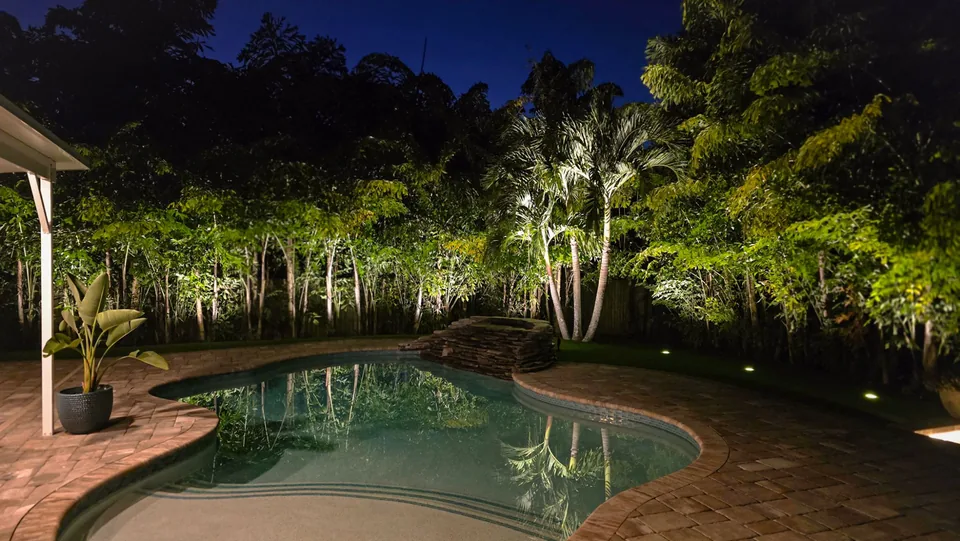
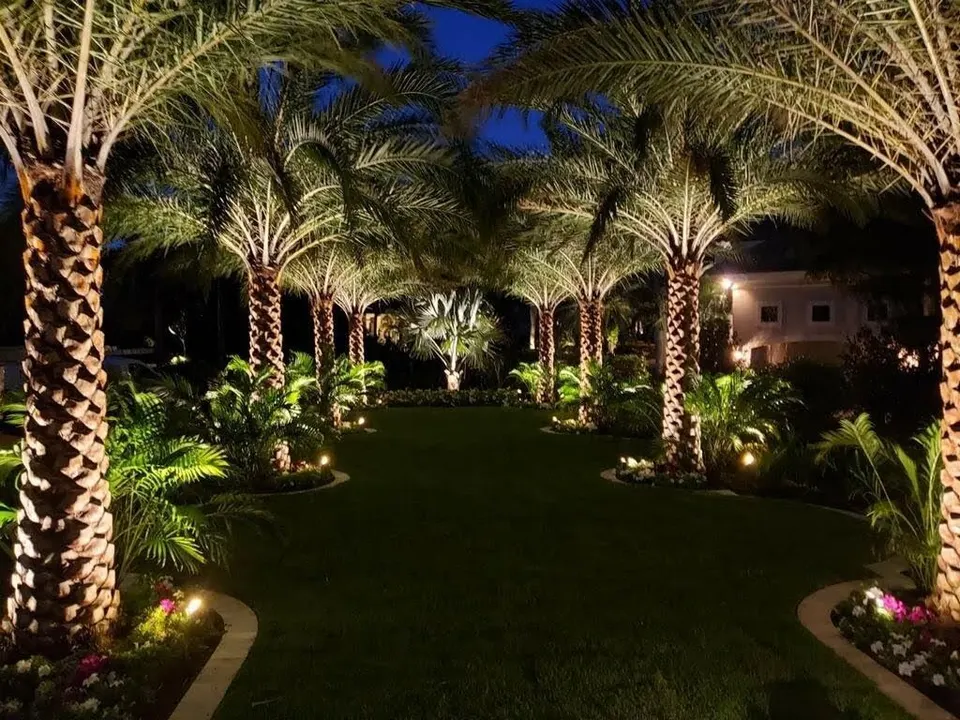
A color-capable fixture spends eleven months doing exactly what a warm white one does. This is the palm as it looks every other night: trunk and crown in warm light, nothing seasonal about it.
- Crown
- Warm white.
- Trunk
- Warm white.
Specialty
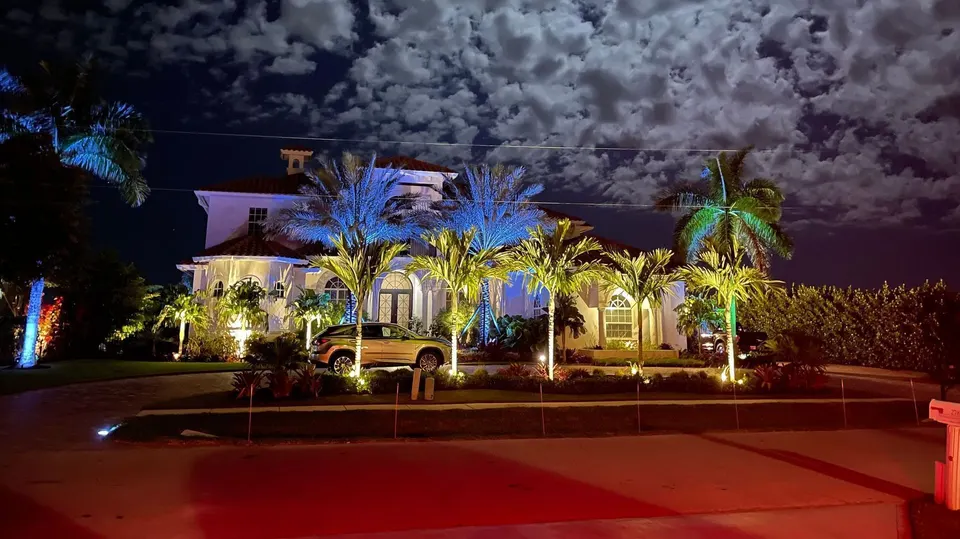
There are two ways to light a home for the season. Put color into lighting that is already in the ground and let a calendar run it, or hang strings for a few weeks and take them down. Each does something the other cannot.
Tell us about the property
If you are planning the season
If you want the house lit for the holidays without a ladder every December, there are two routes. A landscape system with color-capable fixtures can switch the palms and the water to holiday colors on a date and back again on another. Temporary strings outline rooflines and wrap trunks, and come down after.
In Naples the season is short, the house may be empty for some of it, and the roof is often tile. Those three facts push more owners toward the first route than in colder places: color that lives in the landscape lighting, runs on a calendar and never needs anyone on a roof.
But a ground-based system lights things from below. It cannot draw the edge of a roof or put a line of lights up a trunk, which is what strings do and what many people picture when they think of holiday lights. The honest comparison is in the middle of this page.
We design and install landscape lighting. If your system is ours, or one we look after, holiday color is part of that conversation.
Holiday color on palms
If a palm is lit by a color-capable fixture, it can be any color for the season and warm white the rest of the year. The crown and trunk can even differ. Nothing is added to the tree, and nobody goes up it. Point at a color to put it on this palm, which is an illustration.
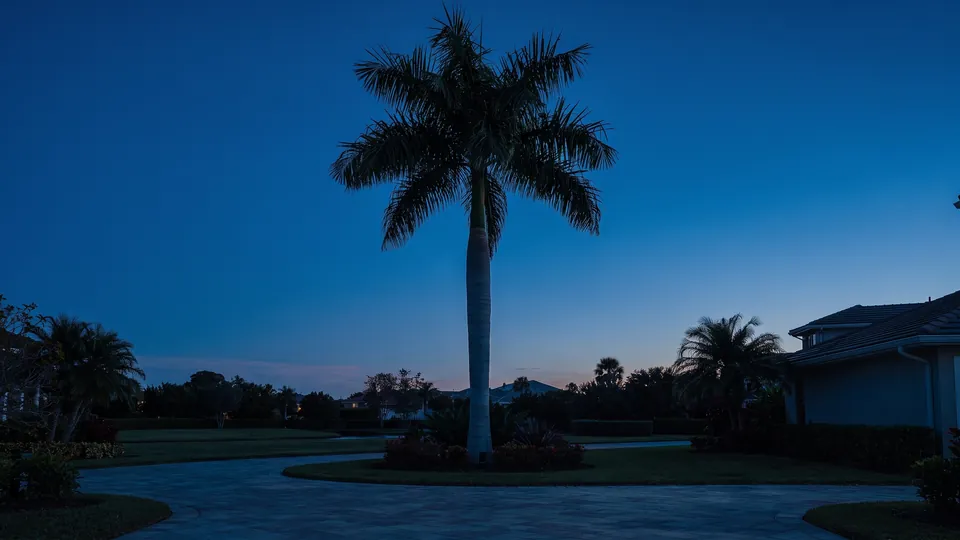
A color-capable fixture spends eleven months doing exactly what a warm white one does. This is the palm as it looks every other night: trunk and crown in warm light, nothing seasonal about it.
Red on a crown reads as festive from the street, and it is the most common holiday color on palms. It is strongest when the trunk below stays warm, so the palm still looks like a palm.
On a row of palms, red and green alternate from tree to tree. On one palm, a deep green crown over a warm trunk is subtler than red and can be left on for the whole season.
A cool, bright white on the crown reads as frost and sparkle and suits the last week of the year. Then the schedule puts the palm back to warm white on its own.
Illustration of one royal palm on a color-capable zone.
Holiday lighting schedule
A permanent color system does not need anyone to remember the holidays. The season is set once as a date range, with its colors, and the controller runs it and then returns to normal. FX Luminaire describes Luxor’s scheduling as including "event-based scheduling options." Pick the occasions below and run the year.
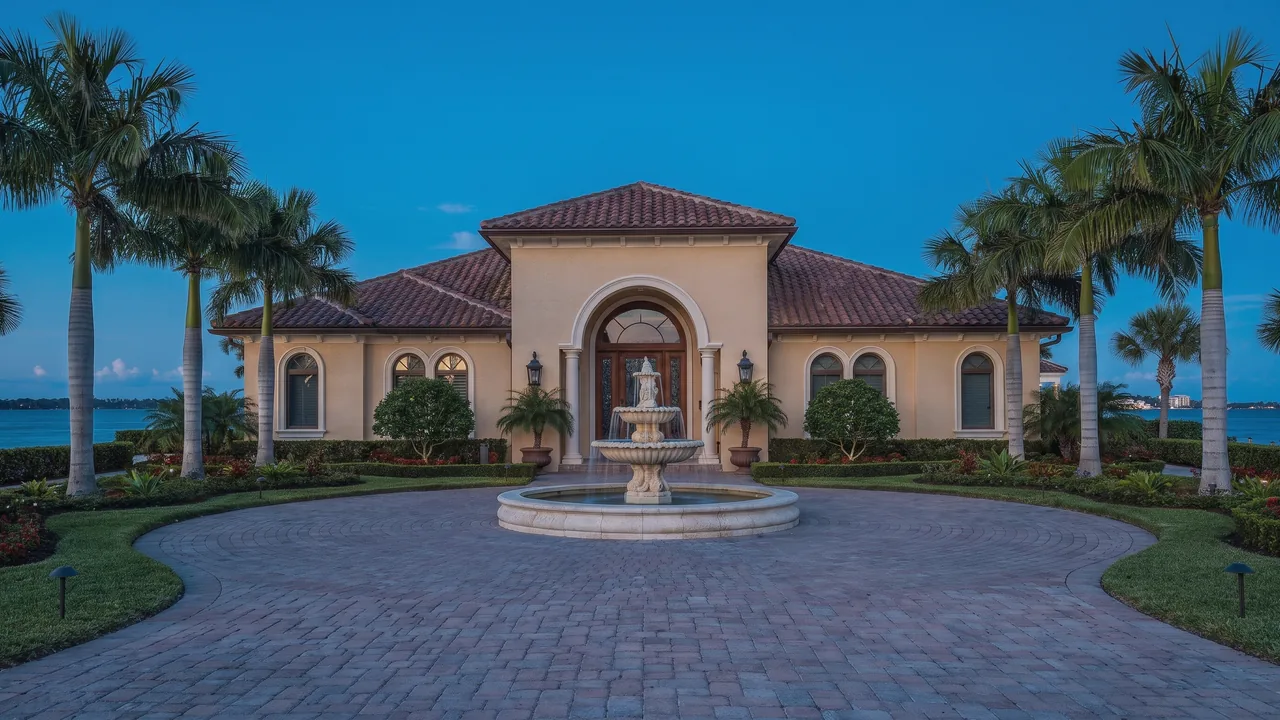
Outside any date range the color zones do what warm white fixtures do. The palms, the fountain and the house look exactly as they were designed to, every night, with nothing seasonal about them.
On the first evening of the range, the palms on their color zone come up in the holiday colors at dusk. The house, the drive and the walks stay in their usual warm white. Nobody climbed a ladder.
For a party, a stored scene adds the fountain in white and lifts the palms. It runs for the evening and the season schedule takes over again the next night.
When the range ends, the controller returns to its everyday program on its own. In January the palms are warm white again, exactly as before, whether you are home or not.
String lights
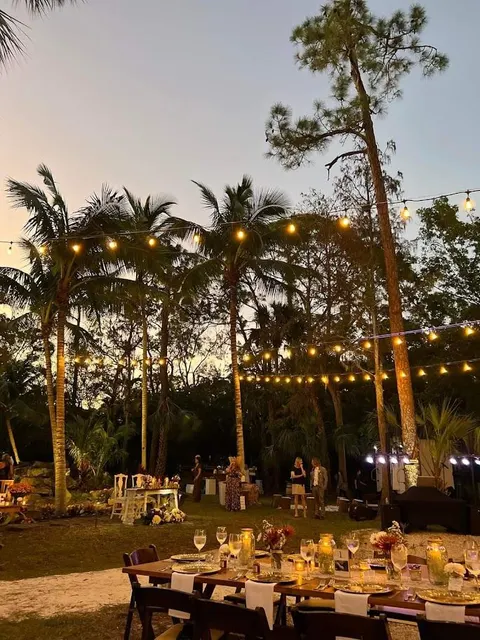
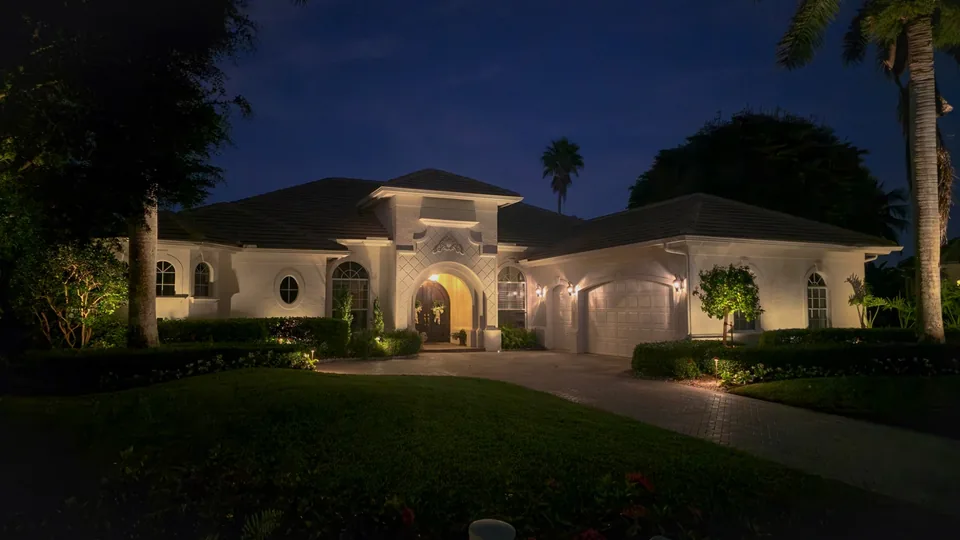
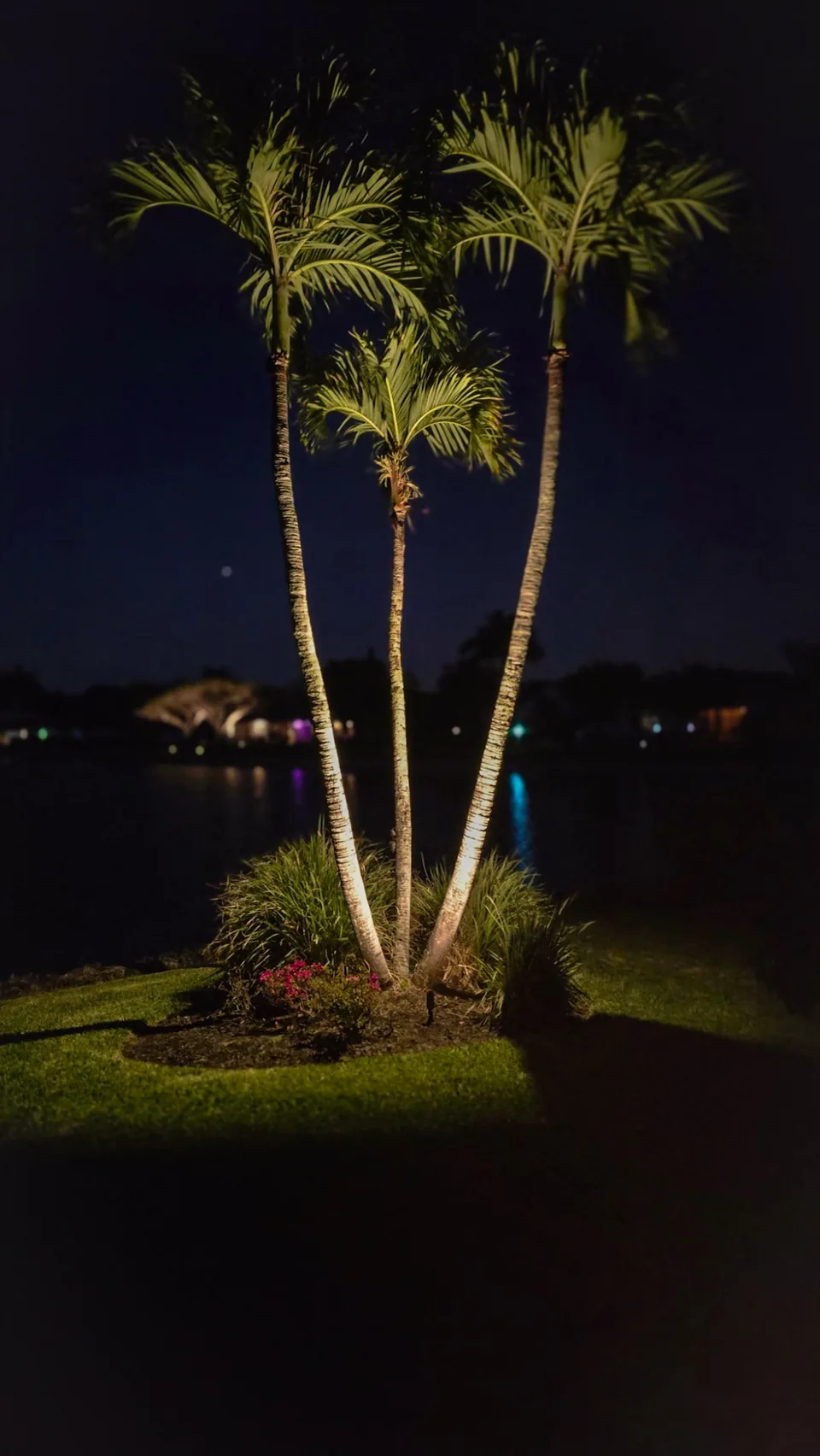
A landscape system lights things from the ground and from trees. It cannot outline a roofline, wrap a trunk in points of light or hang a canopy of bulbs over a terrace. Those are what temporary strings are for. Point at each to see what it takes, especially on a Naples house.
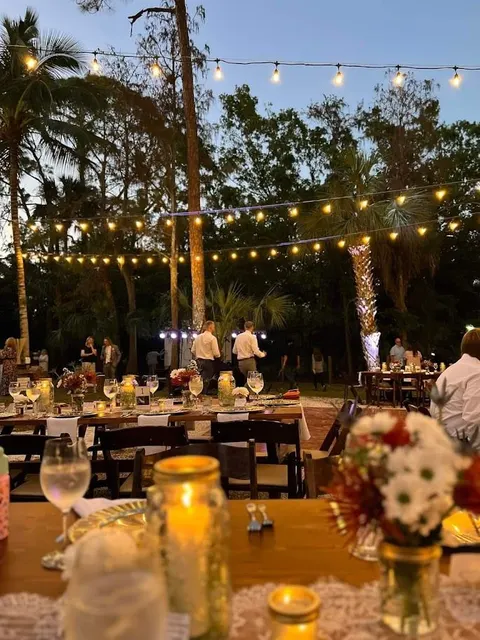
In Southwest Florida
A Naples holiday install is shaped by three things. Palms are tall and their crowns are hard to reach. Tile roofs are not made to be walked on. And salt air is hard on anything electrical left outside. Each points toward lighting from the ground, which is how a permanent color system works.
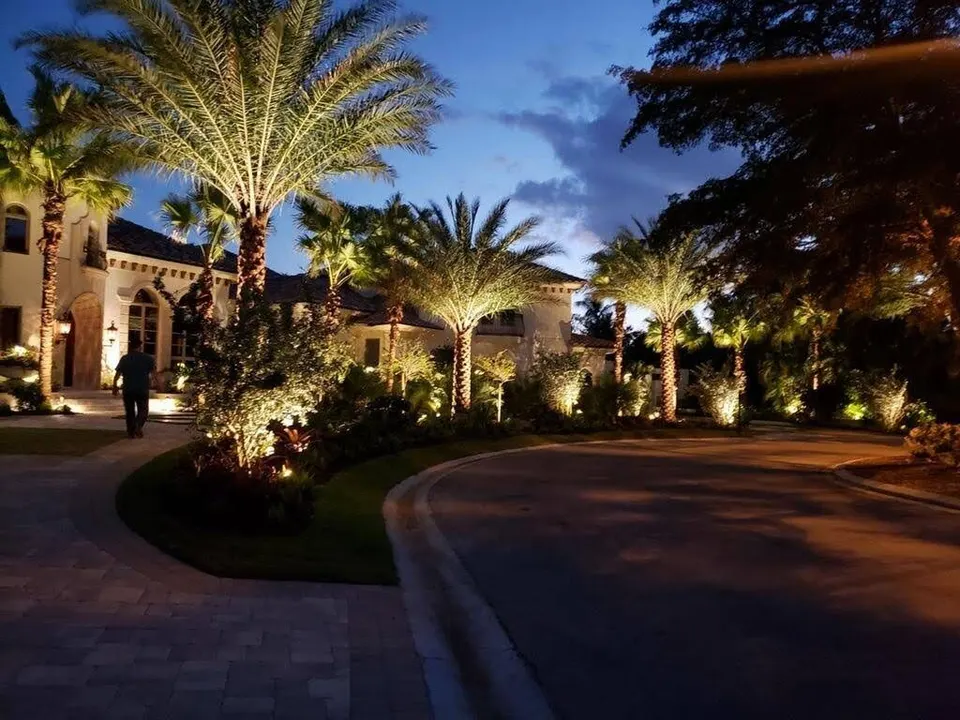
A row of palms is the most Naples of holiday pictures, and the hardest to dress by hand. Wrapping a trunk is achievable; putting lights in a crown means working at height in a tree. Uplighting the same palms in color from fixtures at their bases gets the crowns glowing red and green with nobody off the ground. For palm lighting in general, see uplighting palms and specimen trees.
Barrel and flat tile cracks underfoot, and many Naples roofs are tile. A roofline install on a tile roof has to be done from ladders and lifts at the eave, not by walking the roof, which limits what can be reached. It is one more reason the color on many local homes comes from the landscape rather than the gutters.
Color from the ground needs nobody on the roof and nobody in the tree.
Temporary sets, plugs and extension cords are rarely made for salt air. A few weeks is usually fine; a set left up into spring often is not. Permanent fixtures are chosen for the coast in the first place, which is a quiet advantage of the permanent route close to the Gulf.
The gate, drive and entry often carry the holiday look too, and they are planned as part of the gate, drive and front entry.
Through the season
Anything added for the season draws power, sits outside through rain and wind, and has to switch itself on and off. Temporary strings plug into outdoor outlets and timers; a permanent color system runs on the controller it already has. Either way, the same few things decide whether the season goes smoothly. Tick what is true of yours.
0 of 6
Power, ratings, timers and weather are all covered. What is left is choosing the colors and the dates.
The lines you left unticked are the ones that end a season early: an overloaded circuit, a wet connection, a string the wind took.
Most of these are solved once and for all by color on a permanent system, where the season is a date range on the controller. Color-capable zones are the place to start.
With a permanent system most of these are already handled: the fixtures are rated and sealed, and the schedule runs the season and ends it on its own.
Before you plan
Many Naples communities have their own rules on holiday lighting: when it may go up, when it must come down, and sometimes what colors or kinds of display are allowed. Those rules are in your community's governing documents and with your association, and they are the first thing to check before planning.
What to look for. Dates are the most common rule: a first day lights may go on and a last day they must be off. Some communities also limit color, brightness, inflatables or lights on certain parts of a building. A permanent color system makes date rules easy to follow, because the range is programmed and the controller keeps to it.
What we do with it. We ask what your community’s rules say before we suggest anything, and we program the season to fit them. We do not interpret association documents or state law for you; your association and its manager are the people to ask.
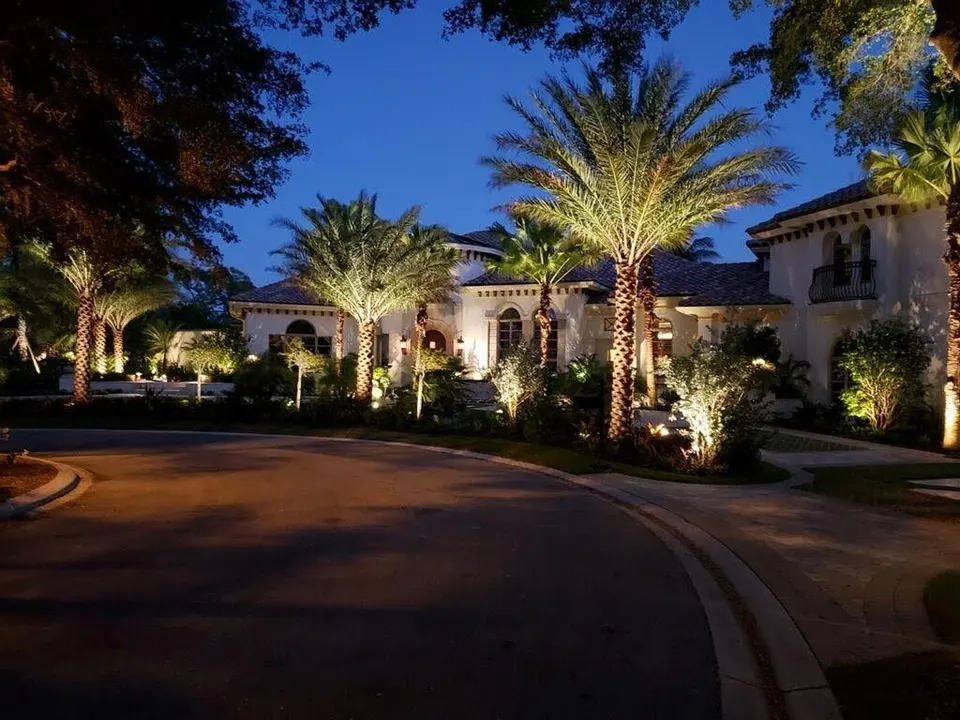
Timing
Permanent holiday color has to be planned before the season, because the color-capable fixtures and their zones have to be in the ground. After that, each year is a date range and a set of colors, which runs whether or not you are in residence and can be changed from the app.
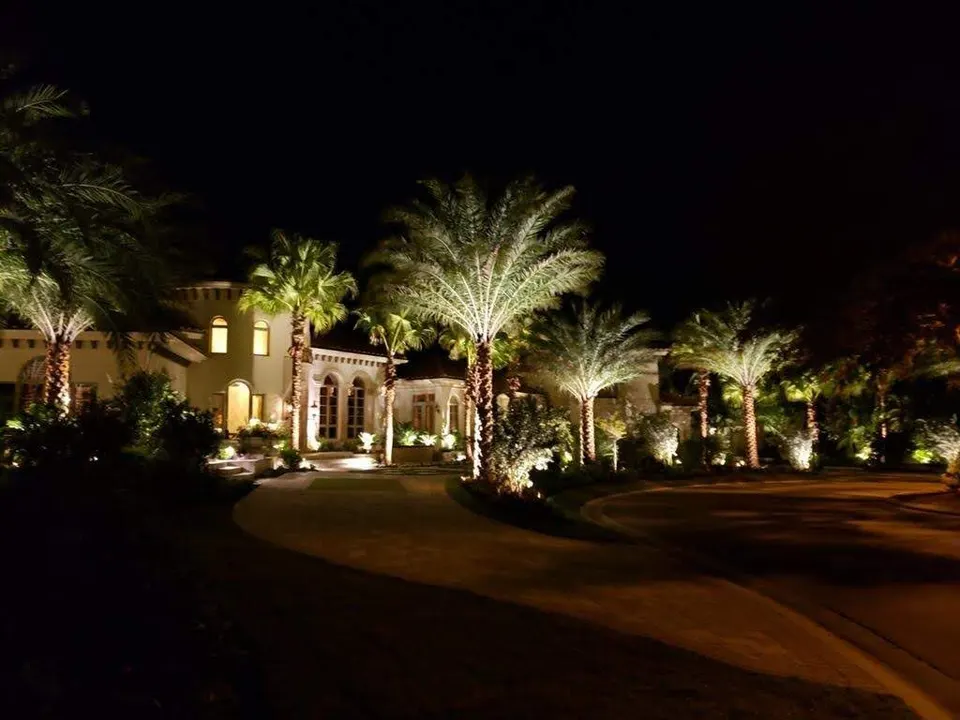
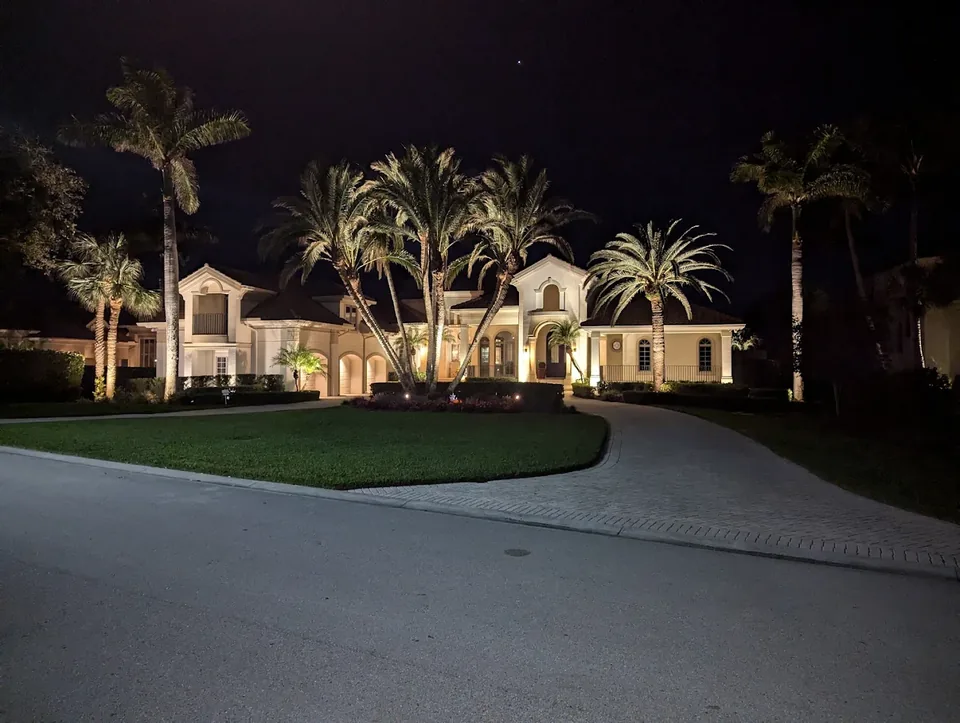
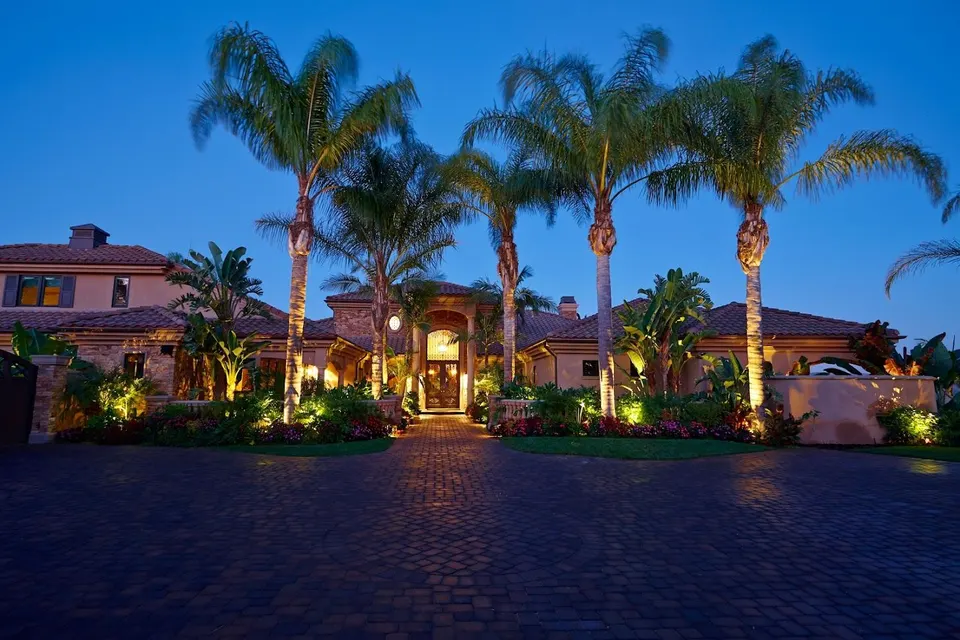
Permanent color on palms or a fountain needs color-capable fixtures on their own zones, and that is best planned well before the season, ideally as part of other lighting work. Once it is in place, each year is just a date range and a choice of colors.
Many Naples homes are empty until after the holidays, or the owners arrive just before them. A season programmed into the controller runs whether you are here or not, and it can be changed from the app. A neighbor or manager can confirm it from the drive at dusk.
With a permanent system, nothing comes down: the end date returns everything to warm white. With strings, the season ends with taking them down before the weather warms, the sun degrades them and storm season comes round. Either way, January should look like the rest of the year.
Who does the work
NightScapes Landscape Lighting has designed and installed landscape lighting in Naples since 1998. Todd and Sherry own and run it, outdoor lighting is the only work it does, and its Google Business Profile shows 63 reviews at 5.0. Holiday color on a permanent system is designed in with the rest of the lighting, zone by zone.
We work across Naples, Marco Island and Bonita Springs, and through Lee and Collier counties. Ask us what is possible on your property this season, and we will tell you plainly what your system can do, what it would need, and what it cannot do at all.
How a property is divided so color can go on the palms while the house stays warm is on our page about color-capable zones already in the ground. For strings over a terrace through the year, see string lights over a patio or outdoor kitchen.
Ask about holiday color
Questions we hear
The difference between permanent and temporary holiday lights, whether a landscape system can do Christmas, whether it suits a second home, when to plan, whether lights on palms are safe, and how long holiday lights stay up. These are the questions people ask before the season, with our answers.
 NightScapes Landscape Lighting Outdoor lighting only, Naples since 1998
Choose a question
Ask us about holiday lighting. Choose a question, or call and we will answer it on the phone.
Permanent lighting stays installed all year and changes with the calendar: warm white most of the time, color for the season. Temporary Christmas lights go up for a few weeks and come down. The permanent route needs color-capable fixtures on their own zones; the temporary route needs installing and removing every year.
If it has color-capable fixtures, yes. FX Luminaire’s design guide describes Luxor themes "ranging from every-night living to holidays, parties, and special events." Fixtures without color boards can only give white, so a system has to be designed with the color zones in place.
It is one of the best reasons for it. A season set as a date range runs and ends on its own, whether anyone is at the house or not, and it can be adjusted from the app. Temporary strings on an empty house need someone to put them up, look after them and take them down.
For permanent color, in the fall at the latest, because fixtures and zones have to be in place before the season. For a programmed season on a system that already has color, the dates and colors can be set any time before the first night.
Wrapping a trunk is a common look here and can be done with care for the bark and with outdoor-rated sets. Climbing into a palm crown is a different matter and a job for people equipped for it. Uplighting a palm in color from the ground needs nobody in the tree at all.
With a permanent system, exactly as long as the date range says, then the lights go back to warm white. With temporary strings, until someone takes them down, which in Naples is best done before the sun, the warmth and the start of storm season are hard on them.
Free Consultations and Estimates
Tell us what you have now, whether any of it can change color, and what you picture for the holidays. We will tell you what your system can do and what it would take.
Tell us about the property