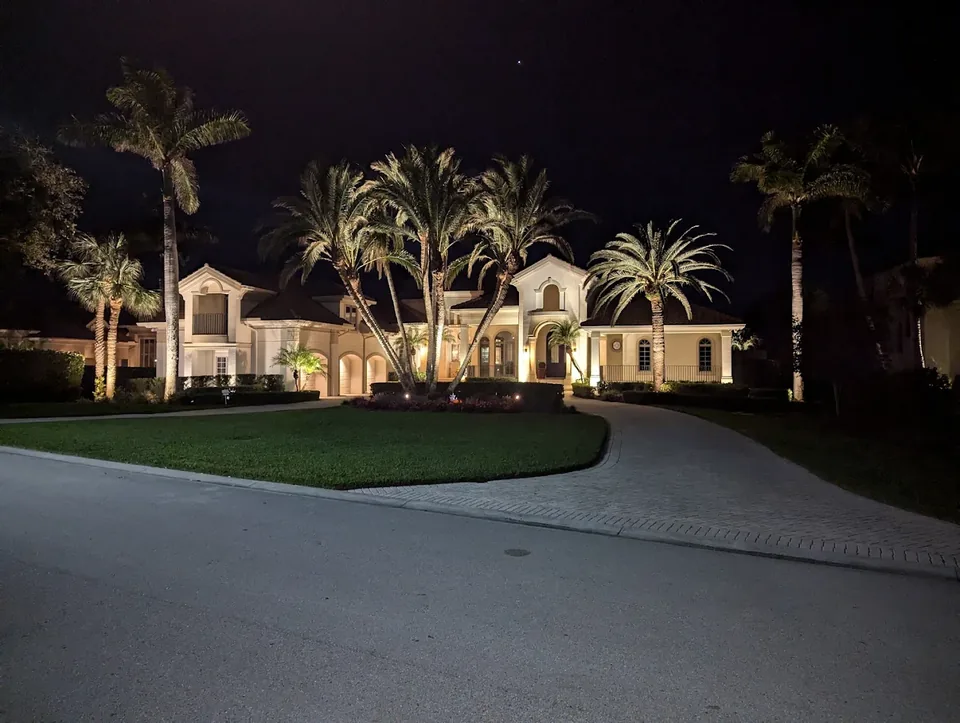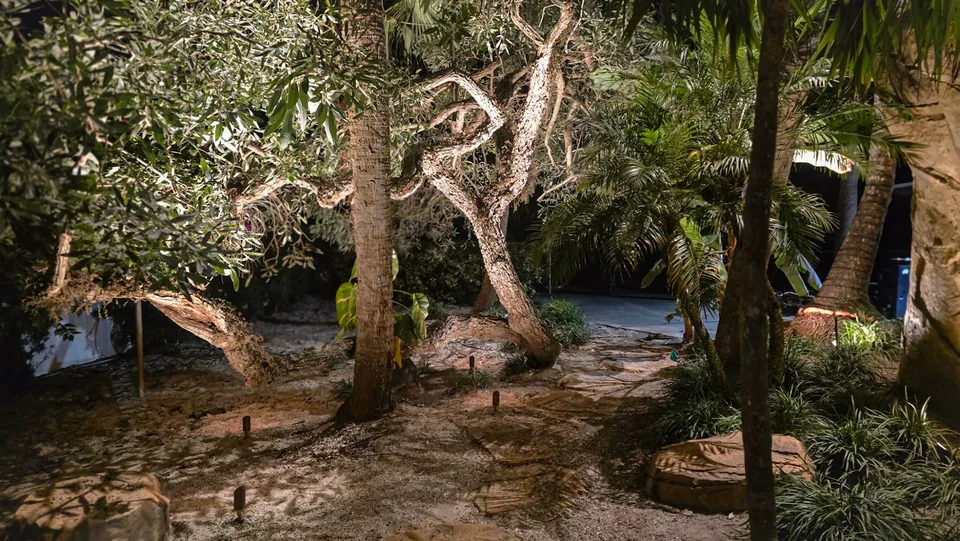
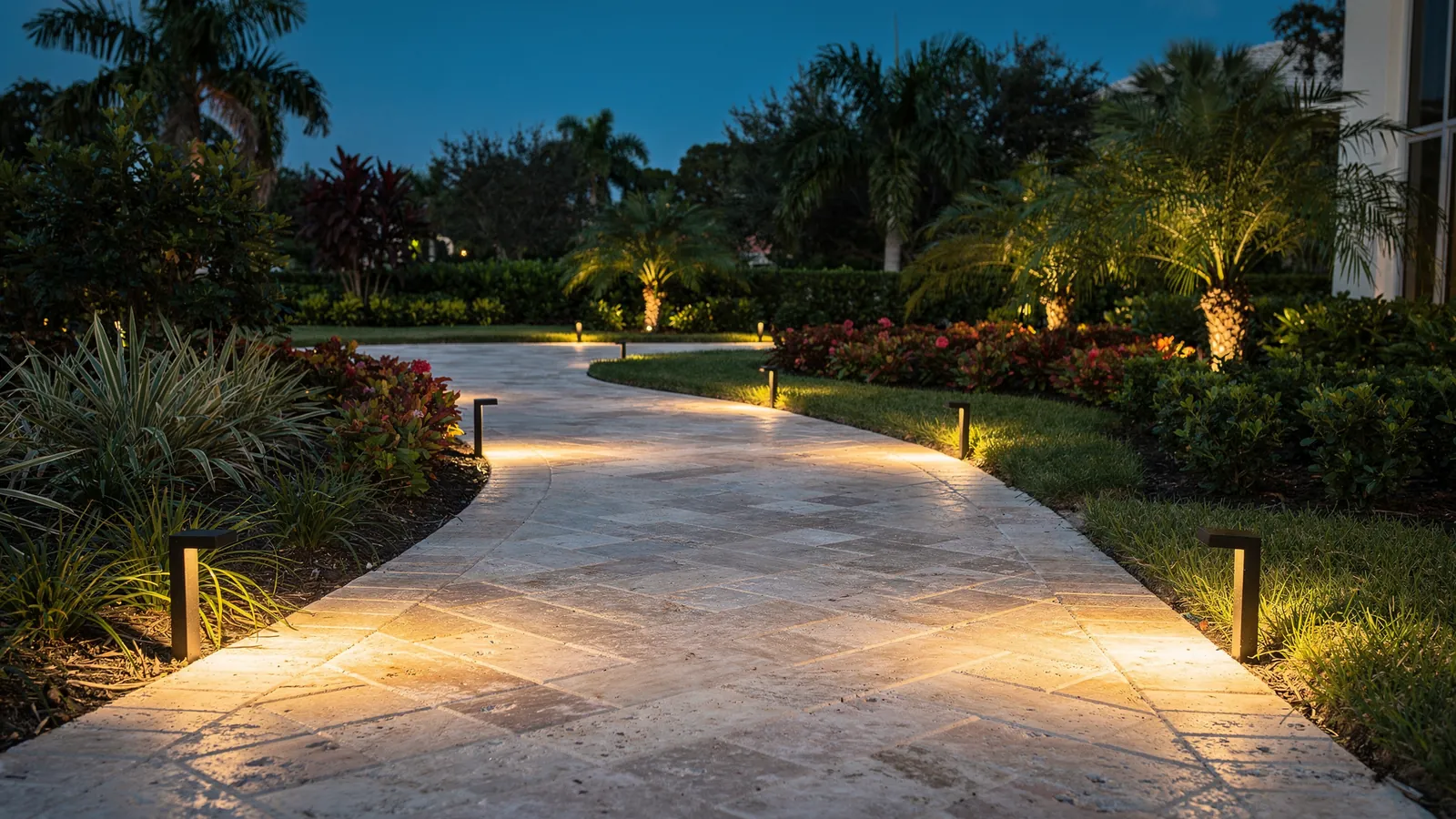
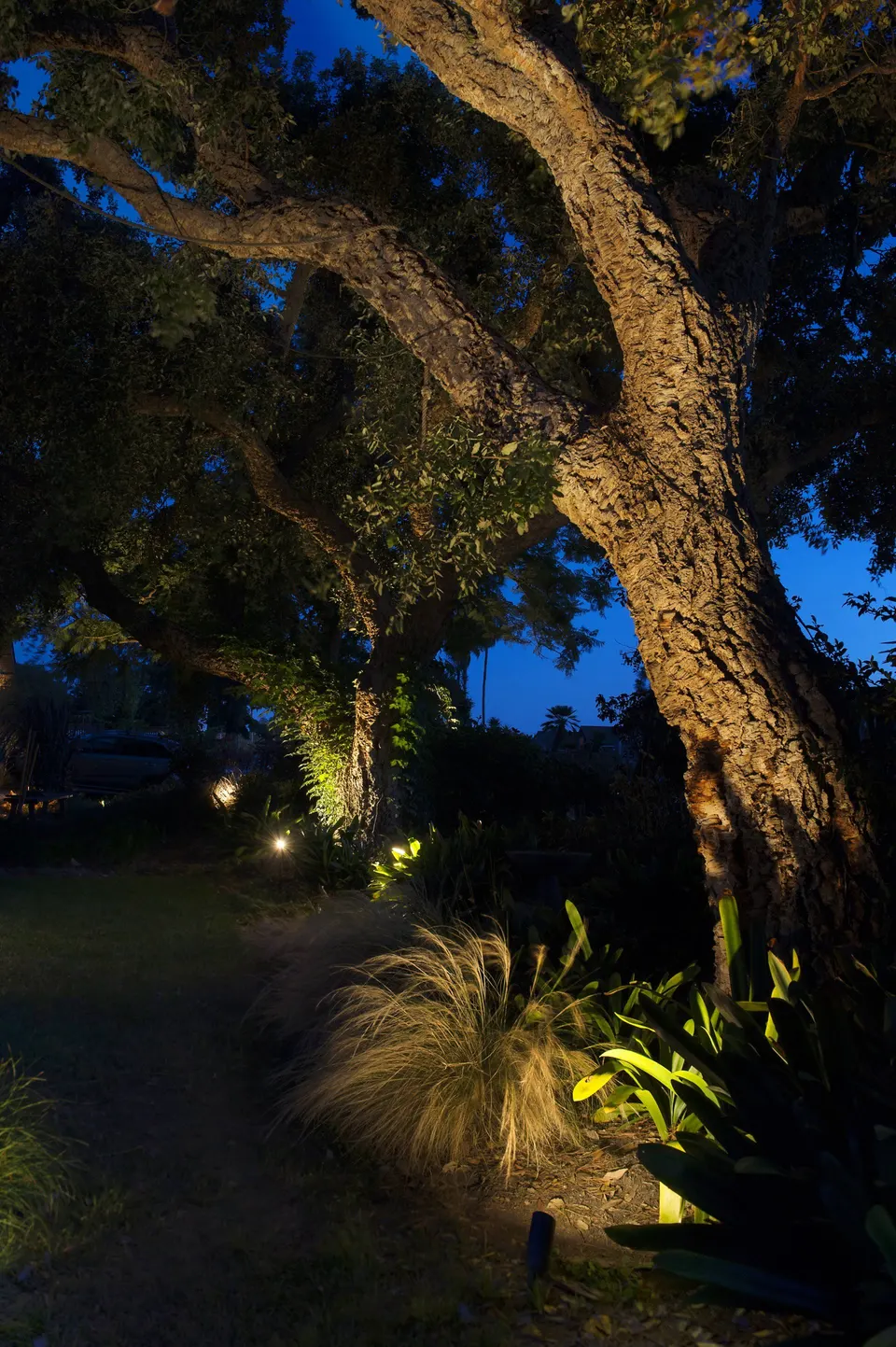
Aimed in daylight
In daylight you can see where a fixture points but not what its light does. The beam falls a little high, a little to one side, catches the back of a shrub. The tree is lit, sort of. Set in daylight, it is a guess.
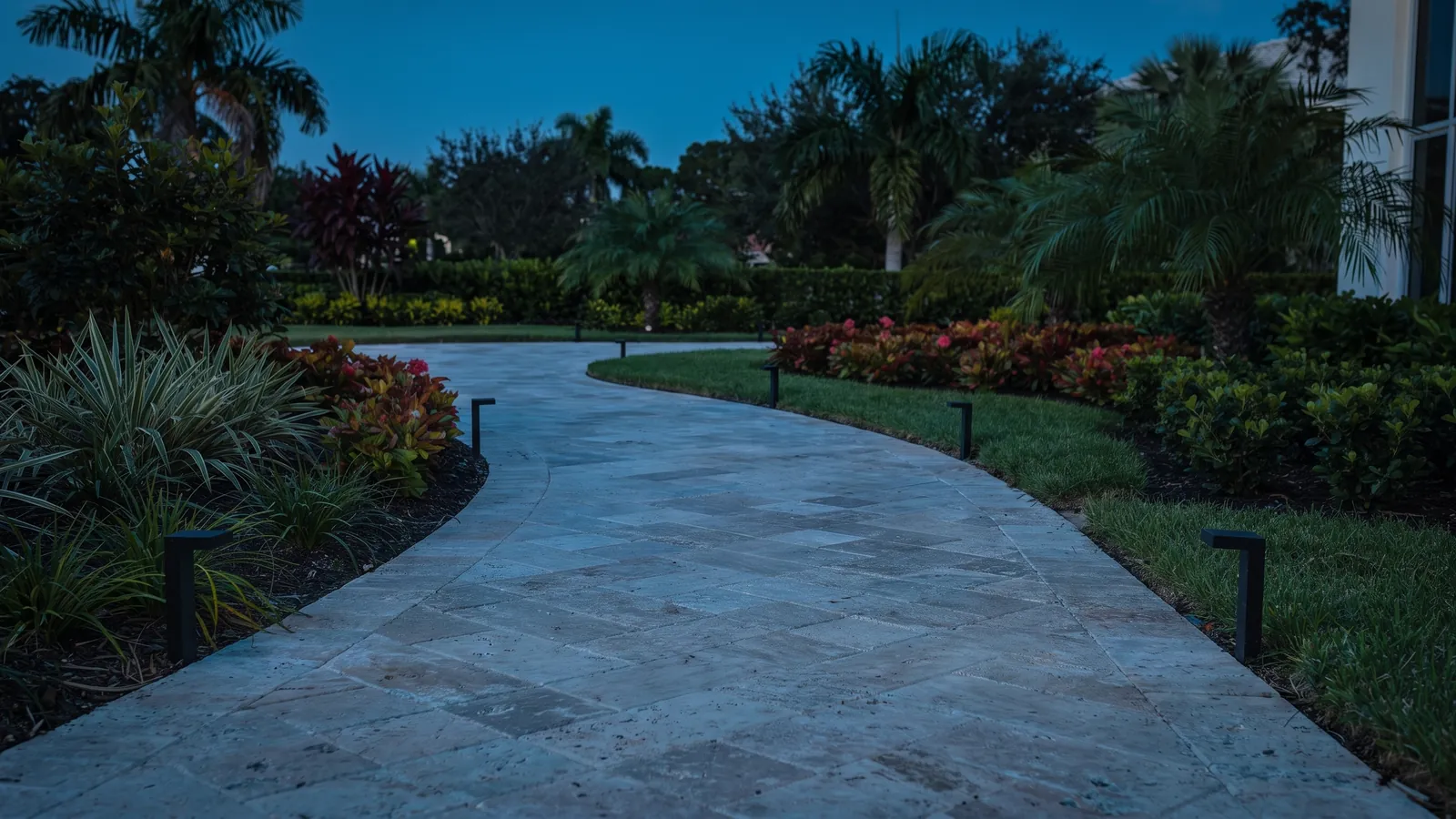
Service and repair
Nothing has to break for landscape lighting to look worse. Palms grow, beds fill in, salt settles and the clock changes. A yearly visit, after dark, puts back what the year moved.
Tell us about your system
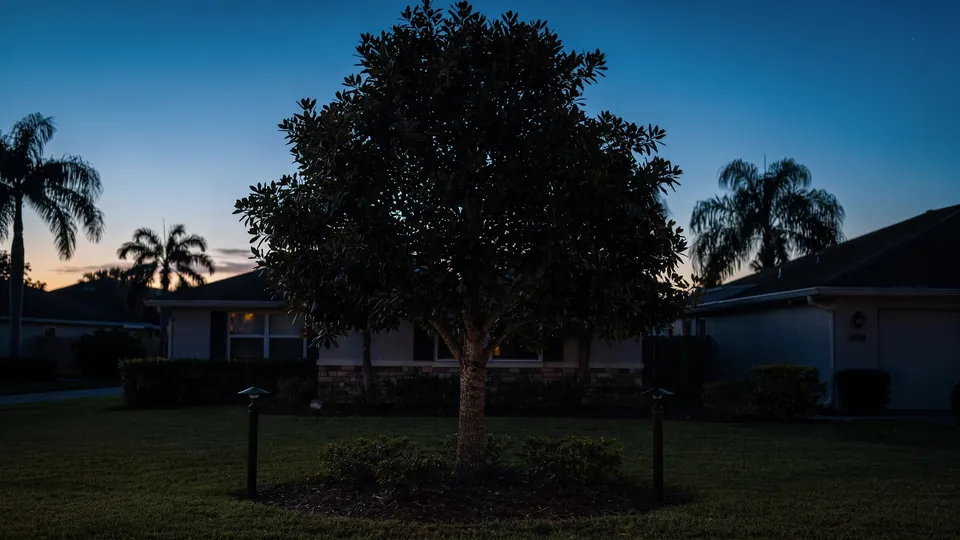
Landscape lighting maintenance
If you come back in the fall and the lighting looks tired, nothing may have broken. Palms grew out of their beams, planting swallowed fixtures, salt filmed the lenses and the clock changed under the timer. A Naples year does four different things to a lighting system. Scroll through them.
From fall into spring the sunsets are early, the clocks have changed, and owners and guests are back. This is when the lighting is seen most, so it is set right just before: schedule and timer checked against the new sunset, aim reset after a summer of growth, lenses cleaned.
Before the wet season starts, everything that will be overgrown by summer is cleared: planting cut back from fixtures, lights that beds have swallowed raised or reset, mulch pulled off lenses, spray heads turned away from glass. It is the last chance before many seasonal owners leave.
The ground stays wet, irrigation runs, and plants grow faster than at any other time, often around a house nobody is living in. A manager or neighbor can check from the drive at dusk that the system came on. Anything more waits for a visit, unless something is plainly wrong.
NOAA puts the Atlantic hurricane season at June 1 to November 30. Before a storm, three things help: knowing where the transformer is and how to switch it off, a record of where every fixture was aimed, and loose fixtures re-set so wind cannot take them. What happens after a storm is a separate job.
And round again
The visit before the season puts back everything the summer moved: aim, levels, schedule and lenses. The property looks the way it did on the night it was installed, which is the whole point of doing this every year.
Ask about maintenanceGuys were punctual, knowledgeable and quick. Look forward to seeing them in the spring.
The craft
A beam set in daylight is a guess. You can see where a fixture points, but not where its light lands, where it glares or where it spills. At night all of that shows, and a growing palm or a filling canopy moves the target every season. Drag the handle from a daytime aim to the same fixtures set after dark.
In daylight you can see where a fixture points but not what its light does. The beam falls a little high, a little to one side, catches the back of a shrub. The tree is lit, sort of. Set in daylight, it is a guess.
At night the light shows exactly where it lands, where it glares and where it spills. The fixture is moved until the canopy is lit and the path lights pool where they should. Glare and spill only exist at night, so that is when they are fixed.
Illustration of one tree and two path lights. The difference on a real property is usually larger, because there are more fixtures to drift.
On a visit
A maintenance visit does six things, the same six this page has always listed: re-aim every fixture after dark, clean lenses and clear growth, check connections, replace lamps that have shifted, check the transformer and timer, and note fixtures that are starting to corrode. Together they are what keeps a system looking new.
Lamp detail is on our relamping page, and the cabinet on the timer and photocell at the transformer.
Ask about maintenanceMaintenance visitNightScapes Landscape Lighting
Done after dark, every fixture.
Over the years
Visit after visit, the record builds up: voltage readings, which lamps went in when, which fixtures were replaced and why. Read together, it shows a connection failing before a light goes dark, tells you when a view should be relamped as a group, and marks the point where maintenance stops being the answer.




Voltage at the transformer and at the ends of the runs, written down each visit. A reading that creeps from one year to the next is a connection starting to go, found before a single light is dark.
Which lamps went in where and when. When the lamps in one view have aged together, they are replaced together, so the view stays one color. See group relamping once the lamps have aged together.
Every fixture replaced, and why. A pattern in that list, such as one run losing fixtures every year, says something a single visit cannot. It is often the point where maintenance stops being the answer.
Some things a visit cannot fix: a halogen system that keeps failing, a layout the planting has outgrown, a transformer at its limit. The record makes that call clear. Then it is a fault that needs a repair visit, a conversion, or a rework.
Between visits
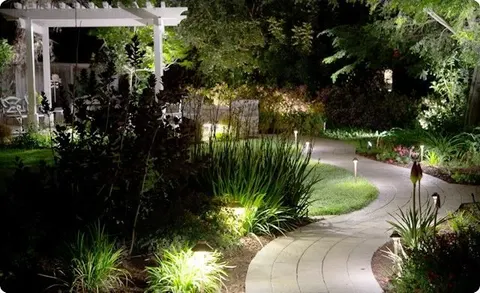
Between visits, five minutes at dusk tells you most of what a system is doing. Walk or drive the property just after the lights come on and look for four things: a fixture leaning or knocked flat, one dimmer than its neighbors, one buried by mulch or planting, and a place where light used to fall and now does not. All four are in the garden below.
Found 0 of 4
Four things are wrong in this garden at dusk. Tap where you see one.
For a house that is empty for the summer, the person who checks on it can do the same from the car: did the lights come on at dusk, is any whole area dark, is anything on that should not be. A whole zone dark is usually a fault on its run; one fixture dark is usually the fixture or its connection. Either is worth a call, with a photograph.
Do not reset a tripped outlet over and over, push a leaning stake back into wet ground with the system on, or dig around a fixture to find its cable. Note it, photograph it, and leave it for the visit. If a fixture is plainly damaged or a cable is showing where people walk, call sooner.
A visit goes further when it starts from a list. A note that the second palm on the left went dim in August tells us to look at its connection and its lens before anything else, and it often means a problem is caught while it is still a small one.
Who does the work
NightScapes Landscape Lighting has looked after landscape lighting in Naples since 1998. Todd and Sherry own and run it, outdoor lighting is the only work it does, and its Google Business Profile shows 63 reviews at 5.0. Customers mention the yearly maintenance program by name in their reviews, which is the best description of it we have.
The people who look after a system are, in most cases, the people who put it in, which is why the visits are short: we know where everything is and why it was aimed there. We work across Naples, Port Royal, Pelican Bay, Grey Oaks, Old Naples and Marco Island, and through Lee and Collier counties.
What the program includes for your property, and when the visits fall, we set out with you. Palms are usually the biggest reason for it: see uplights set against royal and coconut palms. After a named storm, see what is done after a named storm.
Ask about maintenanceI especially recommend taking the yearly maintenance program.

Questions we hear
How often maintenance is needed, whether LED still needs it, whether a visit disturbs the planting, why aim is checked at night, what to look for between visits and whether a one-time visit can be booked. These are the questions owners ask, especially those who are away for part of the year.
 NightScapes Landscape Lighting Outdoor lighting only, Naples since 1998
Choose a question
Ask us about maintenance. Choose a question, or call and we will answer it on the phone.
At least once a year, timed for the season the lighting is used most, which in Naples is the dry season from fall into spring. Properties where planting grows fast or palms are the main event benefit from more than one look a year. What the program includes for your property is something we set out with you.
Yes. LED changed the lamp, not the garden. Palms still grow out of their beams, beds still swallow fixtures, salt still films the lenses, and connections still corrode. An LED system needs fewer lamps replaced and the same attention to aim, cleaning and connections.
It should not. Most of the work is at the fixtures themselves: aiming, cleaning and checking connections. Where planting has grown over a fixture, the fixture is moved or raised rather than the plant cut hard, and anything that would change your planting is talked through first.
Because light only shows what it does in the dark. In daylight you can see where a fixture points, not where its light lands, where it glares or where it spills onto the house next door. A system aimed by day is a guess; aimed after dark, it is set.
Walk the property at dusk now and then. Look for a fixture that is tilted or knocked over, one dimmer than its neighbors, one covered by mulch or planting, and any place where light used to fall and now does not. Note them, and they get dealt with on the next visit or sooner if something is out.
Ask us. If a system needs setting right once, for example before the season or before selling a house, we can look at what it needs. If something is not working, that is a repair visit, which is covered on our lighting repair page.
Free Consultations and Estimates
Tell us about the system: how old it is, who installed it, and what has changed since. We will look at it with you and tell you what a yearly program would do for it.
Tell us about your system