
Pre-Wiring Landscape Lighting on a Custom Home Build: The Builder's Sequence
Pre-wiring landscape lighting on new construction comes down to three jobs done before the slab and the pavers: lay empty sleeves under every drive, walk, pool deck and lanai slab a cable will cross, put a dedicated outlet where the transformer will sit, and leave the fixtures for last. The transformer is the hinge. It converts 120-volt household current to the 12 volts the fixtures run on [1].
Published Last updated
Free Consultations and Estimates
Most of a pre-wire isn't wire. It's a few lengths of pipe, one outlet and some marks on the plans, and all of it rides on work the builder is already doing. Skip it, and the same crossing later means lifting pavers, boring under concrete or running cable the long way round. This guide lays out the sequence stage by stage for a Southwest Florida custom build, where the slab, lanai, pool deck, pavers, irrigation and hurricane season all set the timing.
Cost driver checker
What lighting needs at this stage of your build
Shows what landscape lighting needs at that stage. It is not a quote or an electrical plan.
Nothing picked yet.
1. Plans
- Mark on the site plan
- Every place a lighting cable will cross hardscape, the transformer location, and the areas to be lit.
- Zones
- FX Luminaire's Luxor controller puts zoning, dimming and color control in one system over a simple two-wire path, so decide on zones before the runs are laid out.[4]
2. Before the slab pour
- Sleeves
- Lay sleeves under the lanai slab and any other slab a lighting run will cross.
3. Electrical rough-in
- Outlet
- The electrician on your permit sets a dedicated 120-volt, GFCI-protected outlet at the transformer location; FX tells installers to put a corded transformer next to it.[1]
- Location
- Central to the lighting load, well ventilated, out of plain sight, away from irrigation spray, and where a photocell can see outdoor light (FX Luminaire design guide).[1]
4. Pool deck
- Sleeves
- Lay sleeves under the pool deck base before pavers or concrete; your electrician confirms pool clearances under the electrical code.
- Transformer
- Near a pool or spa, FX's PX transformer carries a UL-379 rating for added safety.[3]
5. Drive, walks and pavers
- Sleeves
- Lay a sleeve at each crossing, leave a pull string inside, and stake and photograph both ends before the base is covered.
6. Grading, irrigation and planting
- Cable
- Lighting cable is trenched after the grade is final, so it isn't buried under fill or cut by a later trench.
7. Fixtures and aiming
- Fixtures
- Fixtures are set and aimed at night, after the planting is in.
- Later
- In trees, FX says fixtures need regular adjustment as branches and trunks grow.[1]
General information for planning, not a quote or an electrical plan. Code questions go to your permit and your electrician. Sources: FX Luminaire, UF/IFAS, NOAA National Hurricane Center.
Key takeaways
- Pre-wiring landscape lighting means sleeves, an outlet and a plan, set before the slab, pool deck and pavers; the fixtures go in last, after planting.
- FX Luminaire's design guide tells installers to check for "adequate conduit sleeving" and, where it's missing, to tunnel under walkways [1].
- Put a corded transformer next to a 120-volt, GFCI-protected outlet, where its photocell can "see" outdoor light and away from irrigation spray [1].
- Size wire and transformers for the trees you'll have, not the trees you planted: UF/IFAS puts royal palms at 50 to 70 feet and live oaks at 60 to 80 feet [6][8].
- Southwest Florida builds often run through hurricane season, June 1 to November 30, which is one more reason to set fixtures after the landscape is finished [5].
01Before the slab
Why lighting belongs on the plans before the slab
Landscape lighting belongs on the plans before the slab because the hard part of any lighting system is getting cable from the transformer to each fixture, and slabs, pavers and pool decks block that path. FX Luminaire's design guide tells installers to check whether "adequate conduit sleeving is present." If it isn't, "you will need to tunnel under walkways" [1].
A sleeve and a conduit run are different things. A conduit run carries cable inside pipe along its whole length. A sleeve is a short, empty pipe laid only where cable has to cross under hardscape. Low-voltage lighting rarely needs the first, because FX notes 12-volt wire "can be buried without conduit in most applications" [1]. A new build needs the second at every crossing.
| Crossing | Before it's built | After it's built |
|---|---|---|
| Paver drive or walk | Lay a sleeve under the base before the pavers go down | Lift and relay pavers over a new sleeve, or route around |
| Poured concrete drive or walk | Lay a sleeve before the pour | Bore underneath, or find another route |
| Paver pool deck | Lay a sleeve under the deck base | Cross at a paver joint or along an edge, or go around |
| Lanai slab | Lay a sleeve before the pour | Bore underneath, or run around the slab |
NightScapes says it plainly on its page about adding to a system later: "A sleeve laid before the pour is the cheapest part of any future lighting."
02Stage by stage
The sequence, stage by stage
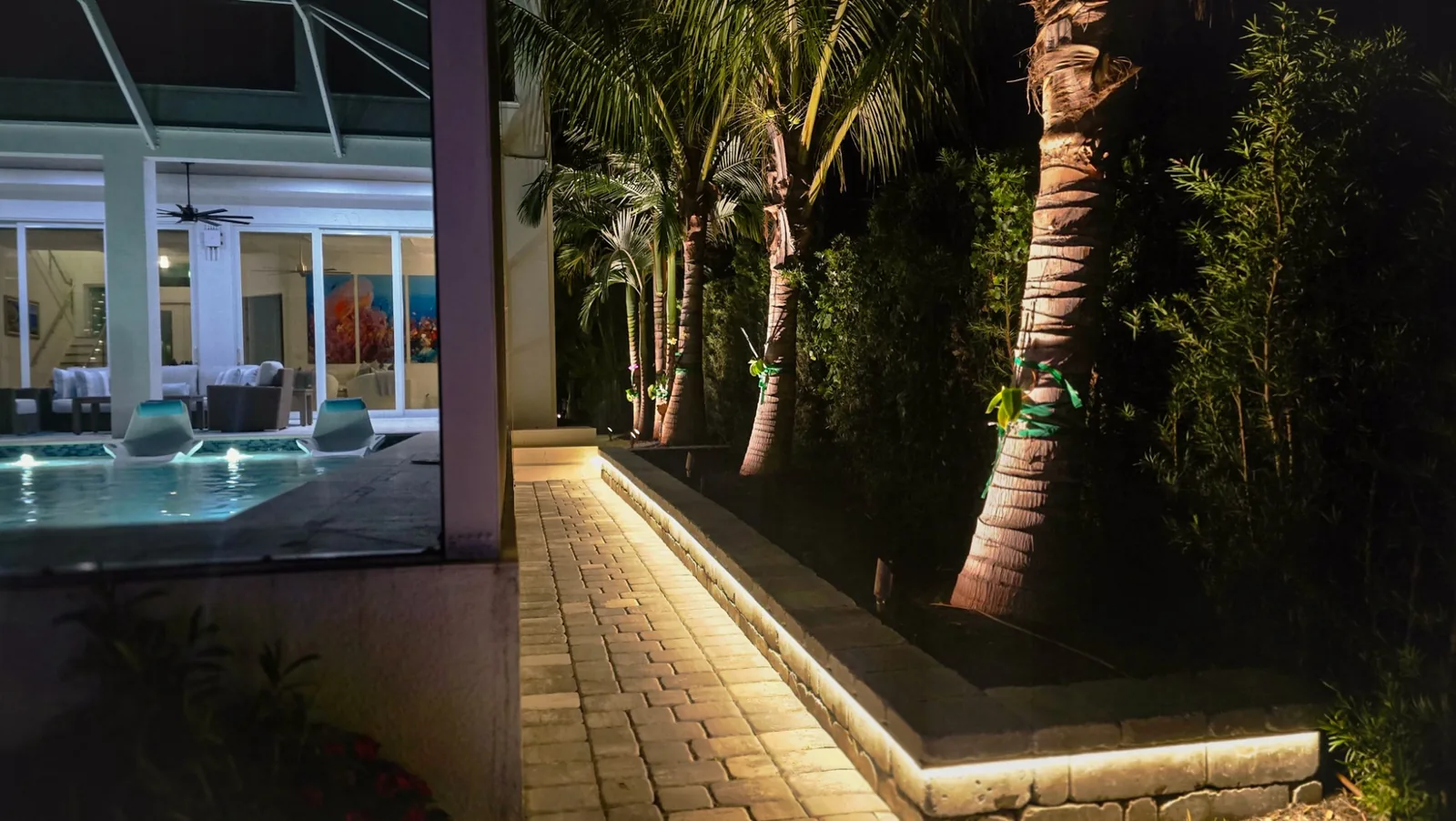
On a custom home build, landscape lighting is decided across seven stages, and only the last two involve fixtures. Sleeves, the transformer outlet and the zone plan are settled while the slab, pool deck and pavers are still on paper. Cable goes in after grading, and fixtures go in after planting, so they're aimed at what actually grew there.
- Plans. Mark three things on the site plan: every place a cable will cross hardscape, the transformer location, and the areas you want lit. Decide now whether you want zones and dimming. FX's Luxor controller puts "zoning, dimming, and color control capabilities into a single control system using a simple two-wire path installation" [4], and that choice shapes how the runs are laid out.
- Before the slab pour. Lay sleeves under the lanai slab and any other slab a lighting run will cross.
- Electrical rough-in. The electrician on your permit sets a dedicated 120-volt, GFCI-protected outlet at the transformer location. FX tells installers to put a corded transformer "adjacent to the 120 V, GFCI-protected receptacle that it will be plugged into" [1].
- Pool deck. Lay sleeves under the deck base before pavers or concrete. Your electrician confirms pool clearances under the electrical code.
- Drive, walks and pavers. Lay a sleeve at each crossing, leave a pull string inside, and stake and photograph both ends before the base is covered.
- Grading, irrigation and planting. Lighting cable is trenched after the grade is final, so it isn't buried under fill or cut by a later trench. Trees and palms go in.
- Fixtures and aiming. Fixtures are set and aimed at night, after the planting is in.
Timing matters on this coast. NOAA's National Hurricane Center dates the Atlantic season June 1 to November 30 and puts the peak on September 10 [5]. A Southwest Florida build often reaches its landscape stage inside that window, and fixtures set after planting spend less time standing in an unfinished yard.
Building in Naples? Plan lighting with your build, while the slab is still on paper. NightScapes offers free consultations and estimates: request a free estimate or call (239) 649-6940.
03Sleeves
Sleeves under slabs, pavers and the pool deck
A lighting sleeve is an empty plastic pipe laid under the base of a slab, drive, walk or pool deck before it's built, so cable can be pulled through at any time. Lay one at every place a run from the transformer will cross hardscape, including crossings to areas you might only light later. After the pour, that crossing means cutting, boring or going the long way round.
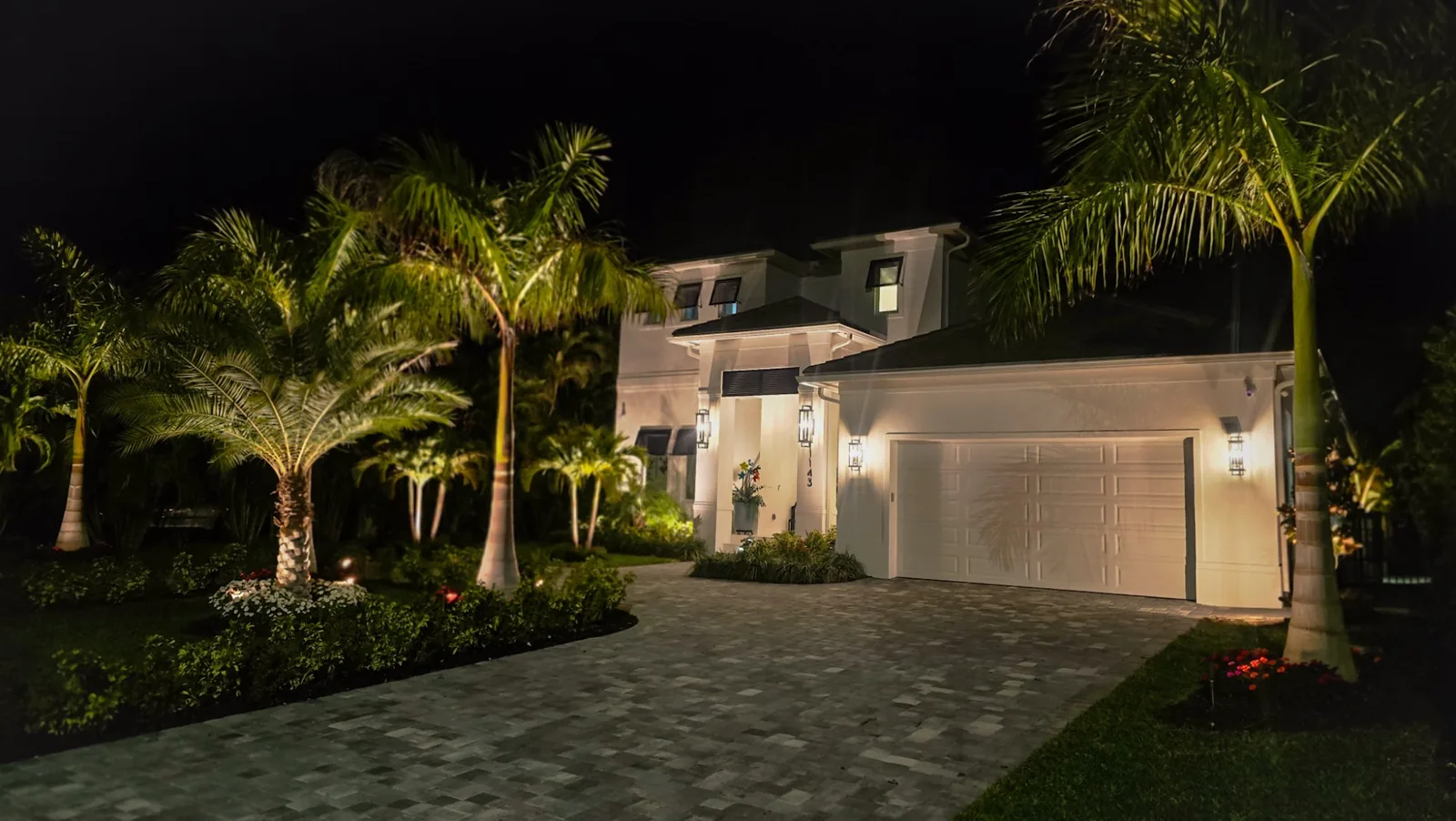
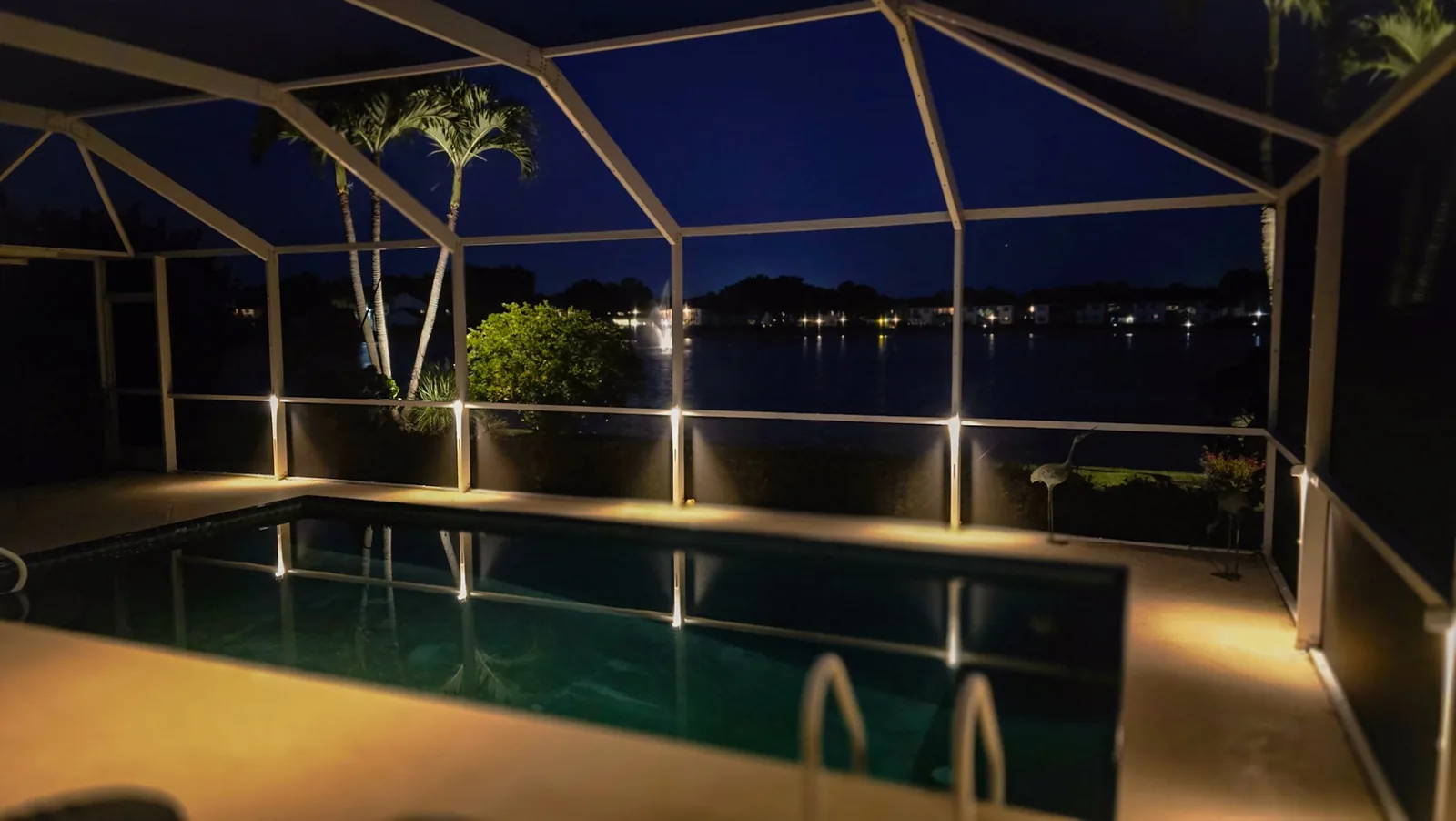
Three crossings to look for on a Naples custom home plan: the drive between the house and the front beds, the walk to the entry, and the pool deck between the house and the planting beyond the screen cage. NightScapes' driveway and entry lighting page puts the drive rule in one line: "If the drive is being laid or relaid, a sleeve put under it now saves cutting it later."
The pool deck needs the most thought. Most pool and lanai lighting goes in the planters and beds outside the cage, which can be reached at any time. Getting cable there is the problem. On its pool and lanai lighting page, NightScapes notes that "it is easier to plan the runs before the pavers go down."
A sleeve is only useful if someone can find it. Run each sleeve past the hardscape edge into soil on both ends. Leave a pull string inside. Then stake the ends and photograph them against the forms, so the lighting crew isn't digging blind a year later.
Don't stop at one per crossing. A spare sleeve toward the back of the lot, where the big trees will go, is cheap insurance for a scheme that will grow.
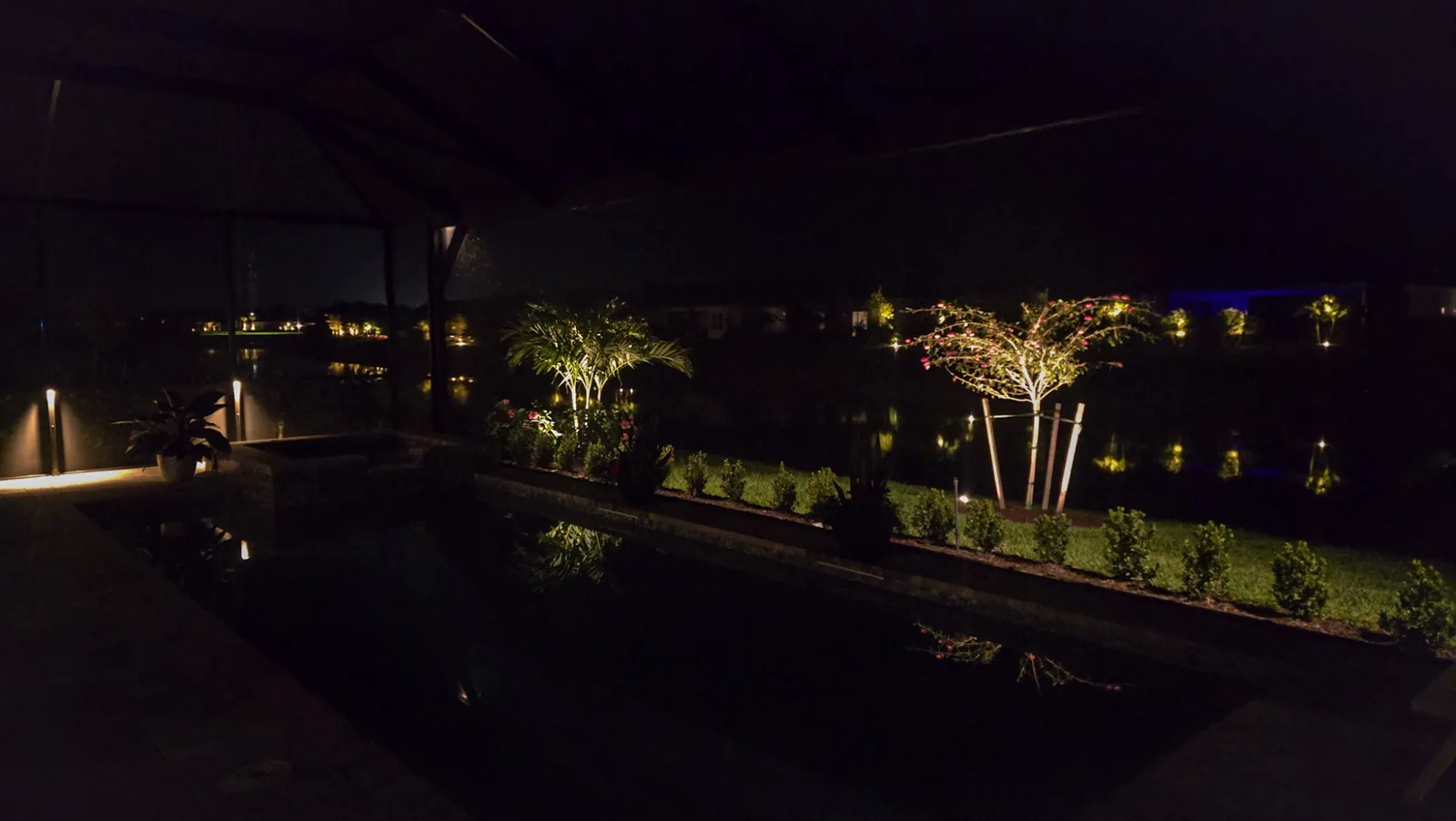
04Transformer and outlet
The transformer and its outlet
The transformer converts 120-volt household current to the 12 volts landscape fixtures run on, so its outlet belongs in the electrical rough-in, not after move-in [1]. "Today, a majority of landscape lighting systems operate on 12 V," FX Luminaire's design guide says [1]. Plan the transformer's location and its dedicated GFCI-protected outlet together, on the plans, before the walls close.
Where to put a landscape lighting transformer, from FX's own guidance [1]:
- Next to a dedicated 120-volt, GFCI-protected outlet, if the transformer has a power cord.
- Central to the wattage load of the fixtures, which keeps cable runs short.
- Where a photocell can work: "the photocell needs to 'see' the ambient outdoor light level."
- In a well-ventilated spot, out of plain sight and away from irrigation spray.
- Not "landlocked by a sea of concrete," so runs can leave it in more than one direction.
Size it for later. FX tells installers not to load a transformer "beyond 80% of its rated capacity," to leave room for future lights and upgrades [1]. On a large lot, the center of the load may call for two transformers and two outlets, which is far easier to decide at rough-in than after the stucco.
Near the pool, the rating matters. FX's stainless steel PX transformer carries a "UL-379 rating" that "provides added safety when installing near pools and spas," and it takes an optional photocell or mechanical timer [3]. FX Luminaire designs its products "for installation by professional contractors" [9], and siting the transformer is a good example of why.
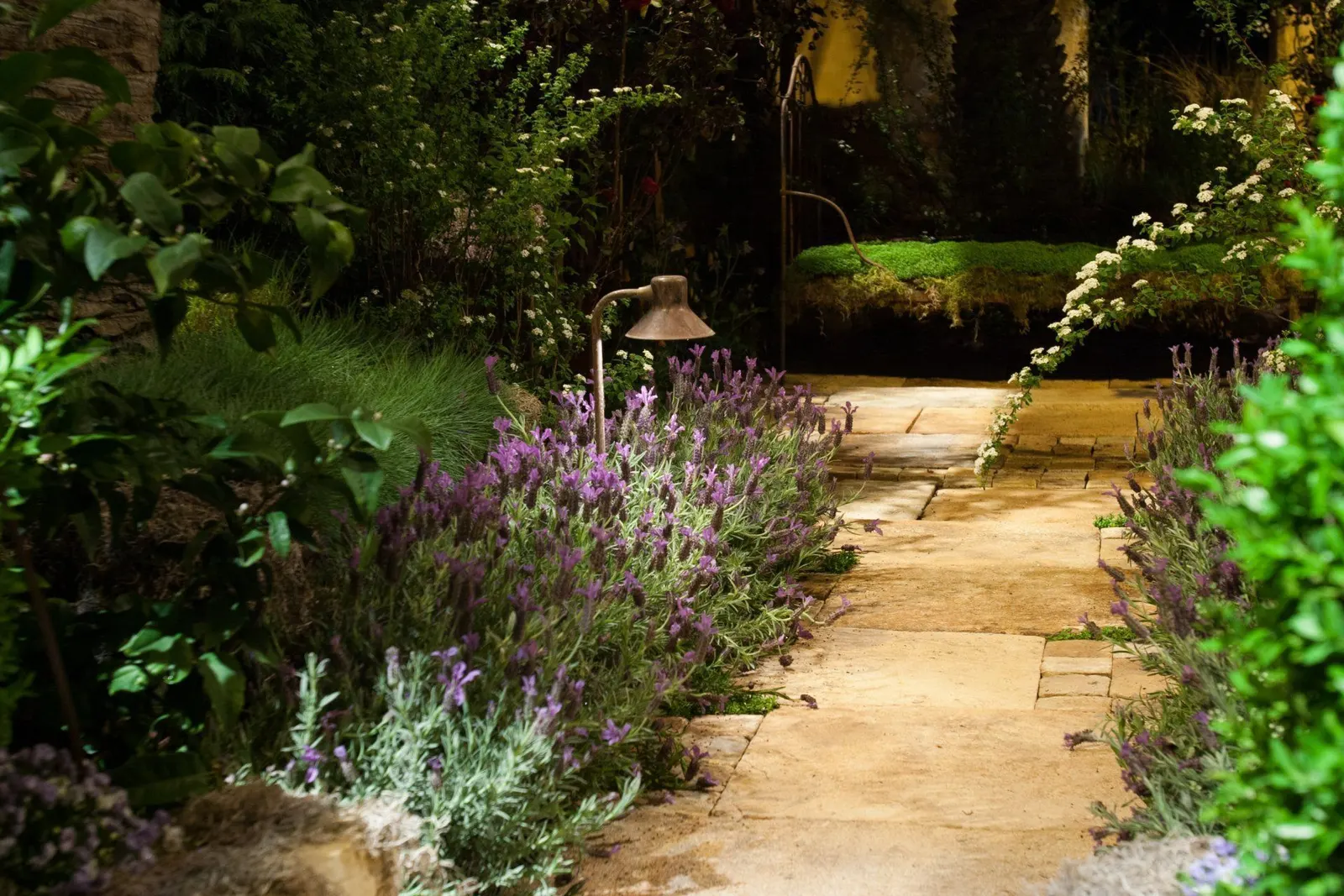
05Wire runs and zones
Wire, runs and zones
Landscape lighting runs on low-voltage two-conductor cable, most commonly 16/2, 14/2 or 12/2, sized for the load and the distance so each LED fixture still gets 10 to 15 volts [2]. On a new build, that means planning a home run from the transformer to each lit area before the hardscape closes the routes.
A home run is a cable that goes straight from the transformer to one area of the property, with nothing tapped off it on the way. NightScapes' redesign page describes a new home run as "A new cable from the transformer straight to the new area, sized for the distance." Each home run that crosses hardscape needs its own sleeve, or room in a shared one.
Voltage drop is why the plan matters. "It is imperative to take voltage drop into account even when designing an LED lighting system," FX's support team writes. It adds: "Incorrect wire size may result in voltage dropping past 10 VAC" [2]. A palm at the back of a deep Naples lot sits at the end of the longest run on the property. Put the transformer near the middle of the load and that run gets shorter.
Zones are the other reason. FX's Luxor controller runs zoning, dimming and color over a "simple two-wire path installation" [4], and zoning, dimming and color options are easiest to plan when nothing has been built yet. NightScapes' page on a full-property design calls new construction "the easiest case to get right," because "the zones, the runs and the transformer position are decided together."
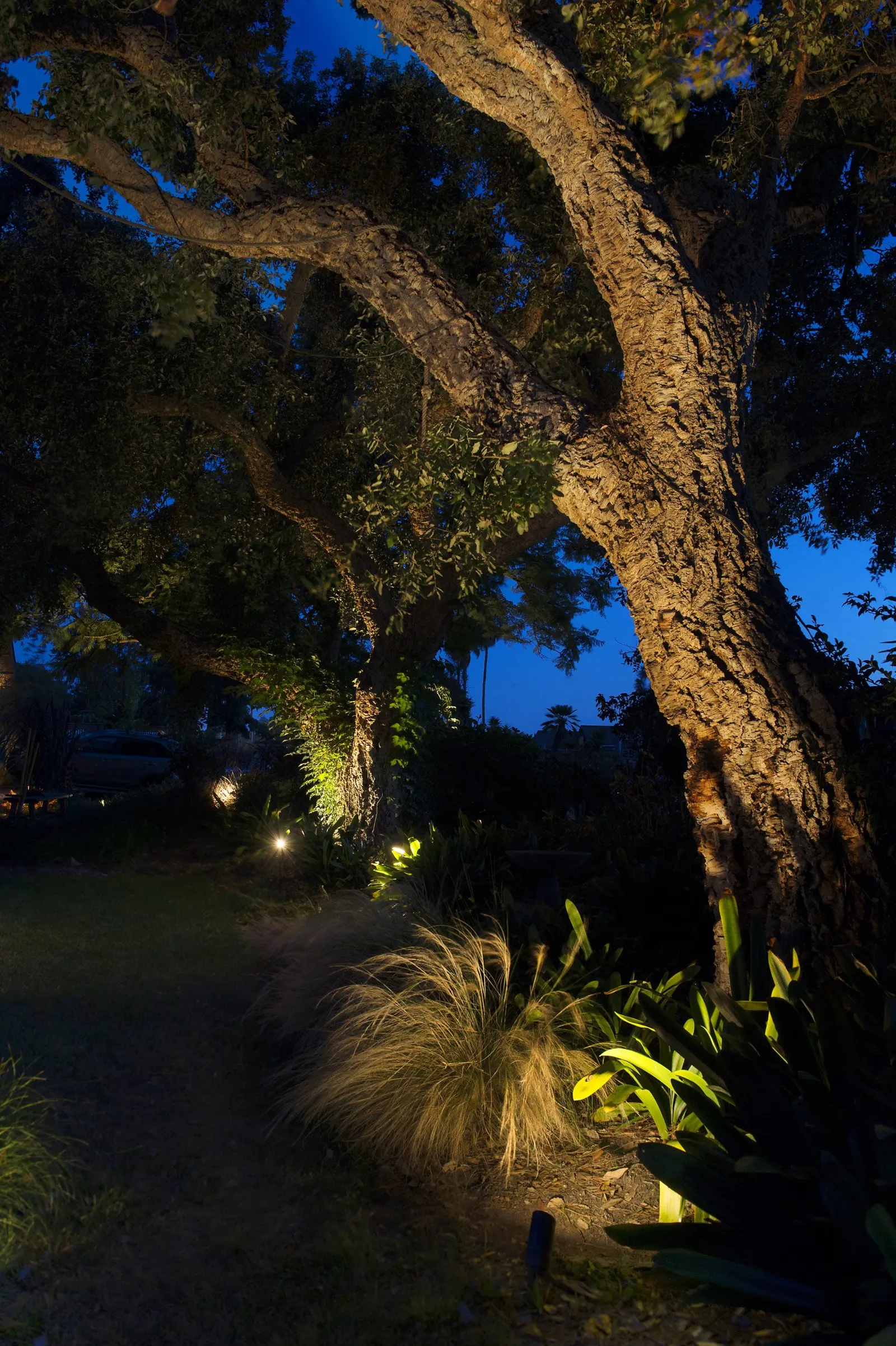
06Room to grow
Leaving room for trees that grow
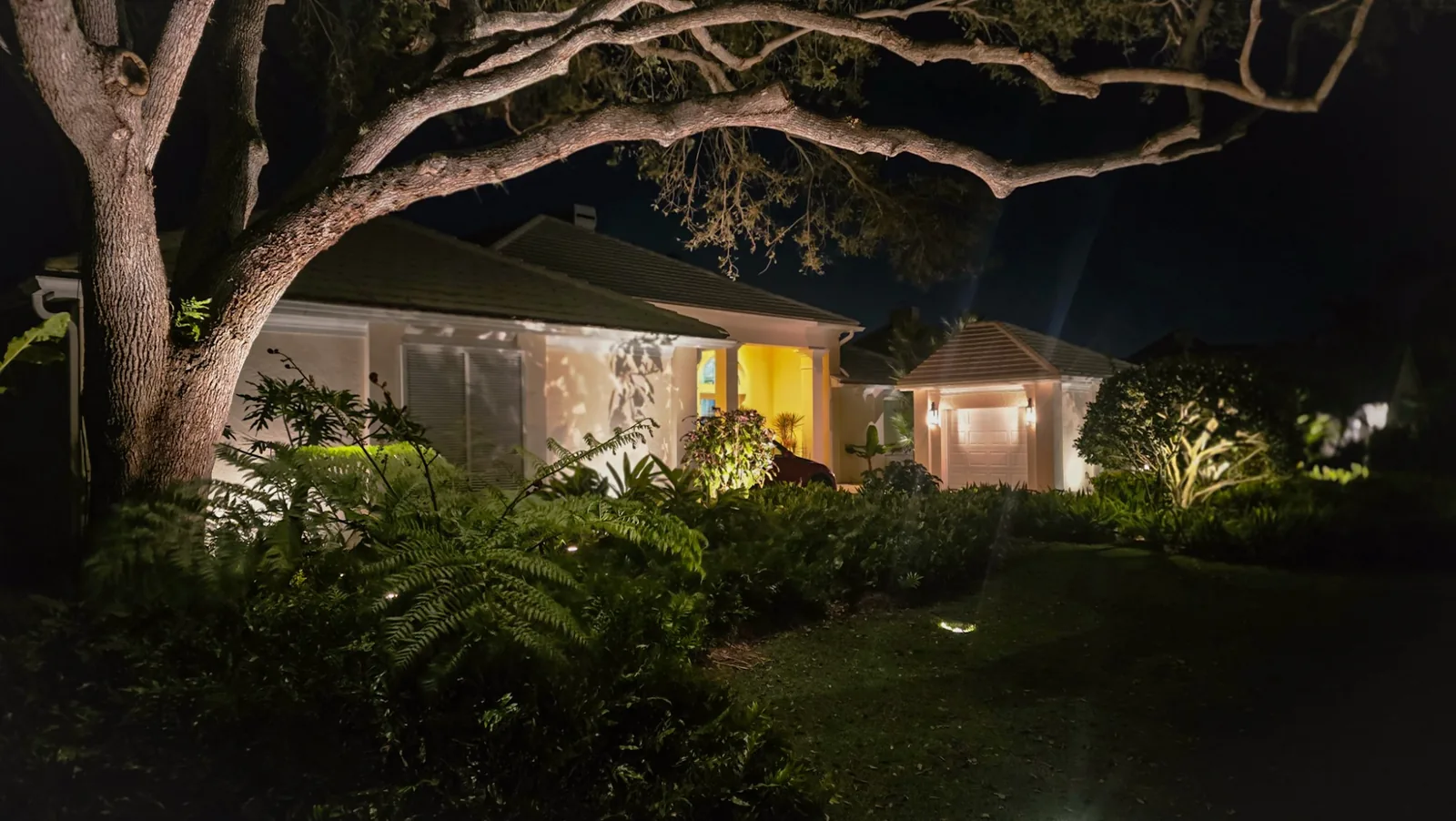
Plan landscape lighting for the size trees and palms will reach, not the size they're planted at. UF/IFAS puts royal palms at 50 to 70 feet, coconut palms at over 80 to 100 feet, and southern live oaks at 60 to 80 feet tall with a 60 to 120 foot spread [6][7][8]. A new build's sleeves, cable and transformer have to carry that future load.
Plan landscape lighting for the size trees and palms will reach, not the size they're planted at.
Height at maturity
Coconut palm spread not stated by UF/IFAS. Ranges are published reference sizes, not measurements of any one tree.
| Tree (UF/IFAS) | Height at maturity | Spread |
|---|---|---|
| Royal palm | 50 to 70 feet | 20 to 25 feet |
| Coconut palm | over 80 to 100 feet | not stated |
| Southern live oak | 60 to 80 feet | 60 to 120 feet |
FX's guide makes the point with a single nursery tree. It notes that a 15-gallon specimen tree "will one day have a canopy of 30' (9 m) or more," and that where one fixture works today, "the same tree may require two or more fixtures" [1]. Its instruction follows: "Always properly size cables and transformers to accommodate the capacity that will be needed to illuminate the tree over time" [1].
Mounted fixtures need the same foresight. In trees, FX says, "fixtures require regular adjustment to accommodate the growth of the branches and trunk" [1]. That's why tree and palm uplighting is designed around the mature tree.
07
Questions we hear
Frequently Asked Questions About Pre-Wiring Landscape Lighting on New Construction
 NightScapes Landscape Lighting Outdoor lighting only, Naples since 2006
Choose a question
When should landscape lighting be installed on new construction?
In two parts. The preparation goes in early: sleeves under the lanai slab before the pour, a dedicated 120-volt GFCI-protected outlet at the transformer location during electrical rough-in, and sleeves under the pool deck, drive and walks before their base is covered. The cable and fixtures go in late. Cable is trenched after final grading, and fixtures are set after the trees, palms and beds are planted, then aimed at night. That way nothing is buried under fill, and every fixture is aimed at a plant that's actually there.
Do I need conduit under pavers for landscape lights?
You need a sleeve under pavers, not conduit along the whole run. FX Luminaire notes that 12-volt landscape wire can be buried without conduit in most applications, so the pipe is only needed where cable has to cross hardscape. Lay an empty plastic sleeve under the paver base at each crossing before the pavers go down, run it past both edges into soil, and leave a pull string in it.
Where should the landscape lighting transformer go?
Put the transformer near the middle of the lighting load, next to a dedicated 120-volt, GFCI-protected outlet if it plugs in. FX Luminaire's design guide adds three conditions: a well-ventilated spot out of plain sight, away from irrigation spray, and, if the system uses a photocell, a place where the photocell can "see" the ambient outdoor light level. Near a pool or spa, ask for a transformer with a UL-379 rating, such as FX's PX.
What size wire does landscape lighting use?
Low-voltage landscape lighting most commonly uses two-conductor 16/2, 14/2 or 12/2 cable, according to FX Luminaire. The right gauge depends on the load (the total wattage on the run) and the length of the run. The goal is to keep every LED fixture between 10 and 15 volts; FX warns that the wrong size "may result in voltage dropping past 10 VAC". On a new build, shorter runs from a central transformer, laid out before the hardscape goes in, make that easier to hit.
Can lighting be added after the pool deck and lanai are finished?
Yes, but the route gets harder. Most pool and lanai lighting goes in the planters and beds outside the screen cage, which can be reached at any time. The problem is getting cable there. Over a finished paver deck, cable can cross at a joint or along an edge; across poured concrete, it usually means boring or going around. NightScapes' advice on its pool and lanai page is that if the deck or the cage is about to be built or redone, it is easier to plan the runs before the pavers go down.
Related services
- Redesign and Expansion Extend what you already have View service
-
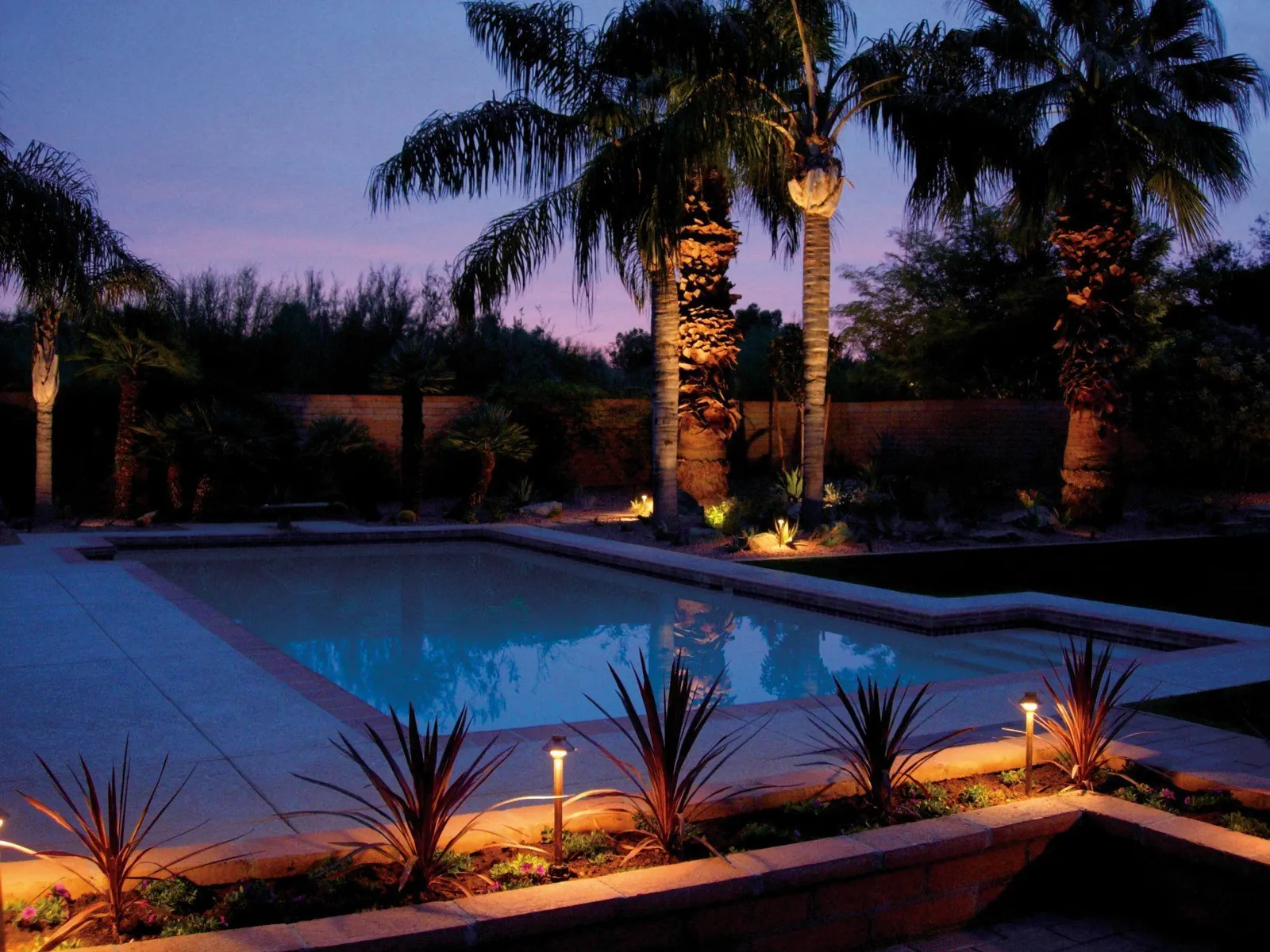
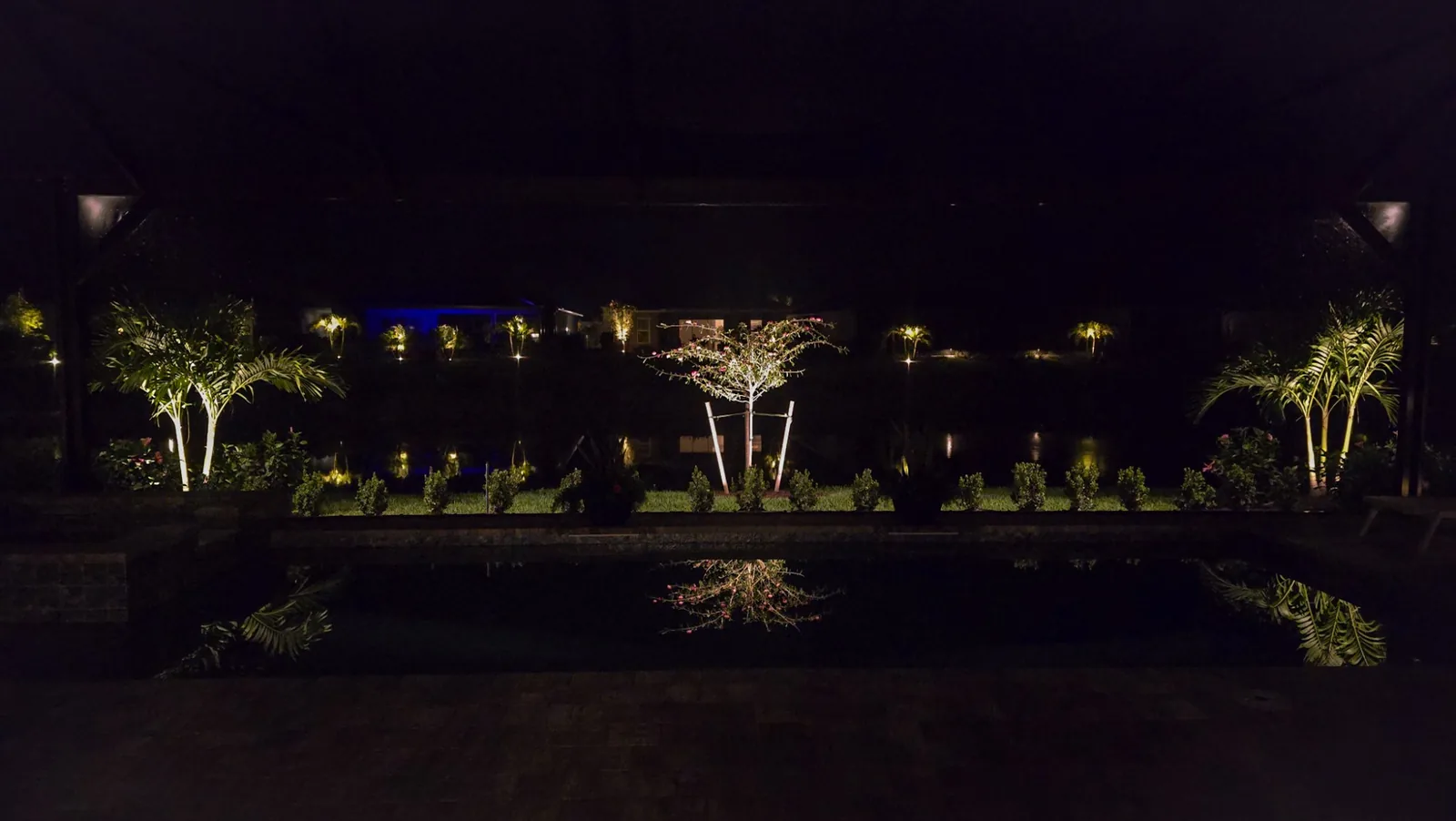 Pool and Lanai Lighting Screened enclosures and pool decks View service
-
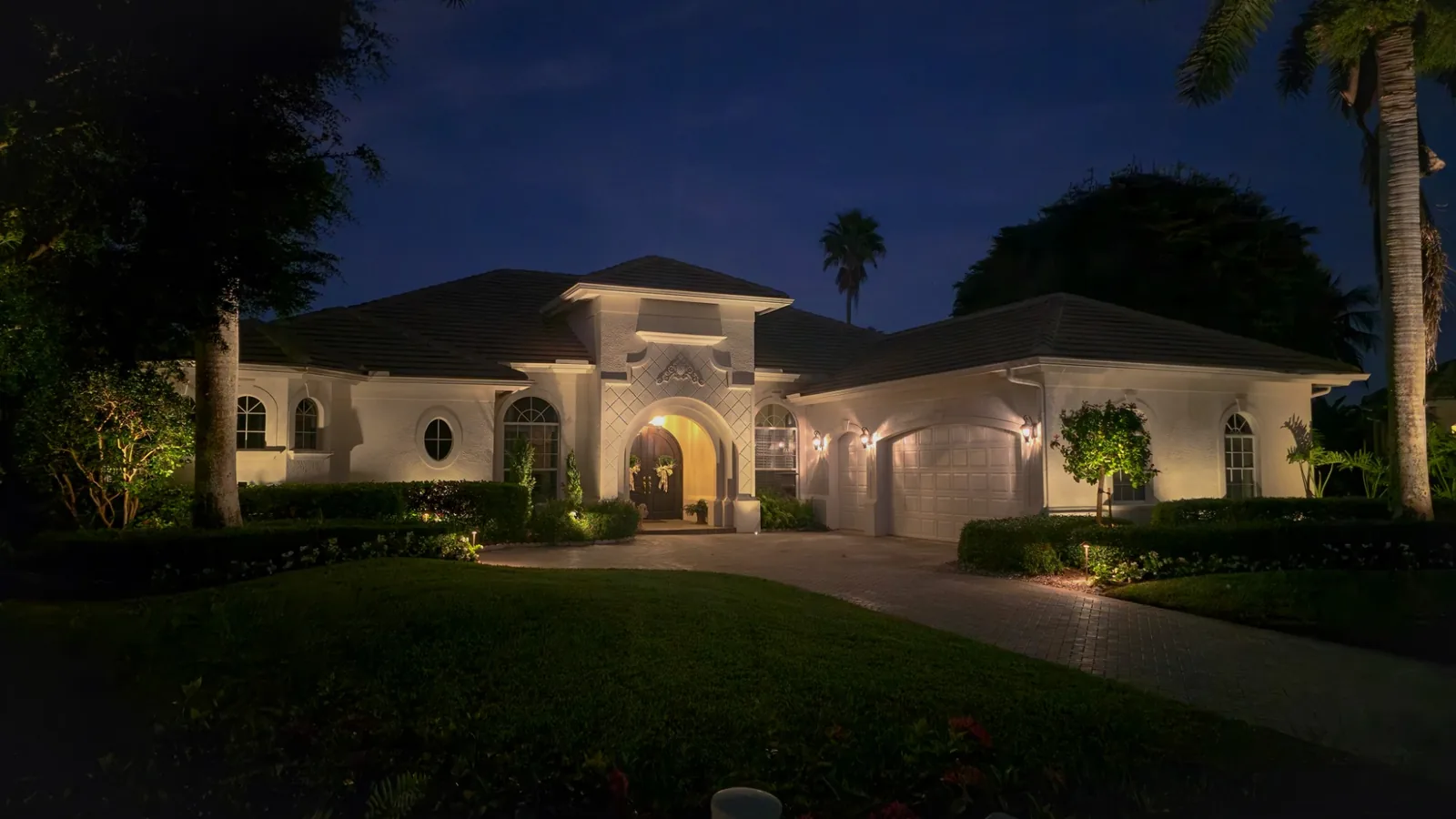 Landscape Lighting Full-property design and install View service
-
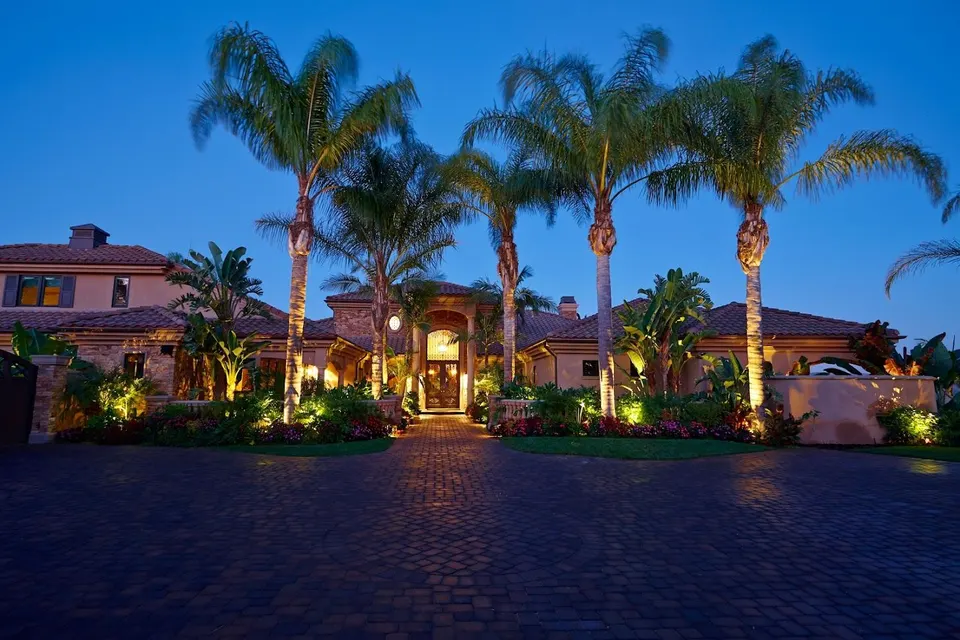 Driveway and Entrance Arrival and entry sequence View service
-
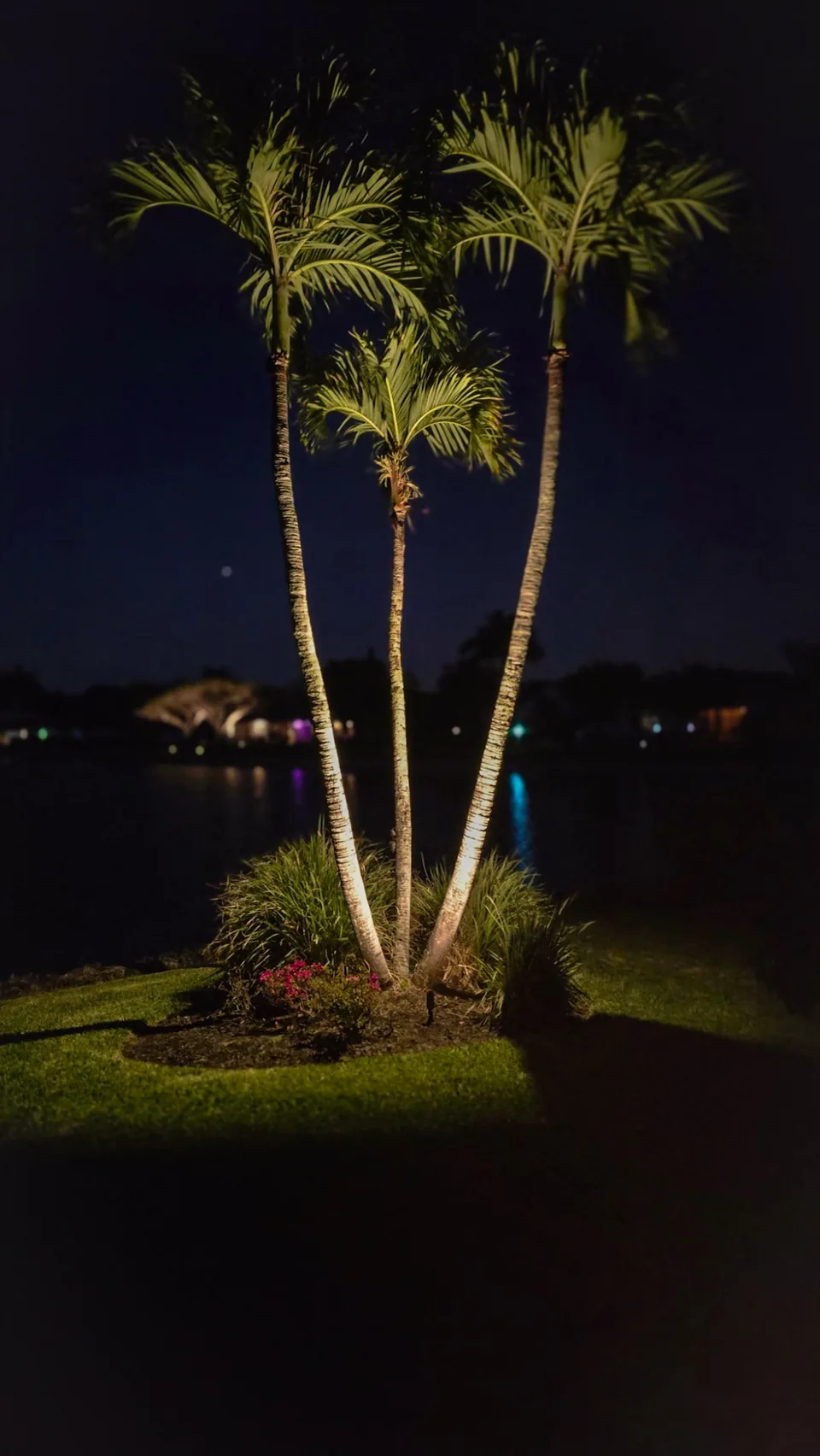 Tree and Palm Uplighting Royal, coconut and canopy palms View service
08Next step
Plan the lighting before the pour
Pre-wiring landscape lighting on a custom home is mostly about timing. Sleeves go under every slab, drive, walk and pool deck a cable will cross. The transformer outlet goes in at rough-in, where the photocell can see the sky. Cable follows the final grade, and fixtures follow the planting, sized for trees that will grow to 50 feet and more [6][8].
Bring the lighting plan to the table while the slab is still on paper. That's when every one of these decisions is cheapest.
NightScapes has designed and installed outdoor lighting in Naples since 2006 (Todd since 1998). Owners Todd and Sherry run it, and outdoor lighting is all we do. The consultation and the estimate are free. Call (239) 649-6940 or request a free estimate.
09Sources
References
- FX Luminaire (Hunter Industries). Landscape Lighting Design Guide (FX-229). 2021. The live fxl.com file returned HTTP 403 to automated access on October 23, 2026; read from the Internet Archive copy captured October 1, 2021 (original: https://www.fxl.com/sites/fxl.com/files/fx-229-dg-lightingtraining-us-web.pdf). web.archive.org/web/20211001141619/https://www.fxl.com/sites/fxl
- FX Luminaire (Hunter Industries). Luxor LED Fixture Flashing (support article). Live page returned HTTP 403 on October 23, 2026; read from the Internet Archive copy captured August 12, 2025 (original: https://www.fxl.com/support/luxor-led-fixture-flashing). web.archive.org/web/20250812190152/https://www.fxl.com/support/l
- FX Luminaire (Hunter Industries). PX transformer, product page. Live page returned HTTP 403 on October 23, 2026; read from the Internet Archive copy captured May 15, 2025 (original: https://www.fxl.com/product/transformers/standard/px). web.archive.org/web/20250515071332/https://www.fxl.com/product/t
- FX Luminaire (Hunter Industries). Luxor. Live page returned HTTP 403 on October 23, 2026; read from the Internet Archive copy captured August 16, 2025 (original: https://www.fxl.com/luxor-2). web.archive.org/web/20250816102638/https://www.fxl.com/luxor-2
- NOAA National Hurricane Center. Tropical Cyclone Climatology. 1991 to 2020 climate period. Read October 23, 2026. nhc.noaa.gov/climo/
- University of Florida IFAS Extension. Roystonea regia: Royal Palm (ENH-732). 2024. Read October 23, 2026. edis.ifas.ufl.edu/publication/ST574
- University of Florida IFAS Gardening Solutions. Coconut Palm. Read October 23, 2026. gardeningsolutions.ifas.ufl.edu/plants/trees-and-shrubs/palms-an
- University of Florida IFAS Extension. Quercus virginiana: Southern Live Oak (ENH-722). Read October 23, 2026. edis.ifas.ufl.edu/publication/ST564
- FX Luminaire (Hunter Industries). About FX Luminaire. Live page returned HTTP 403 on October 23, 2026; read from the Internet Archive copy captured October 11, 2026 (original: https://www.fxl.com/about). web.archive.org/web/20261011072530/https://www.fxl.com/about