
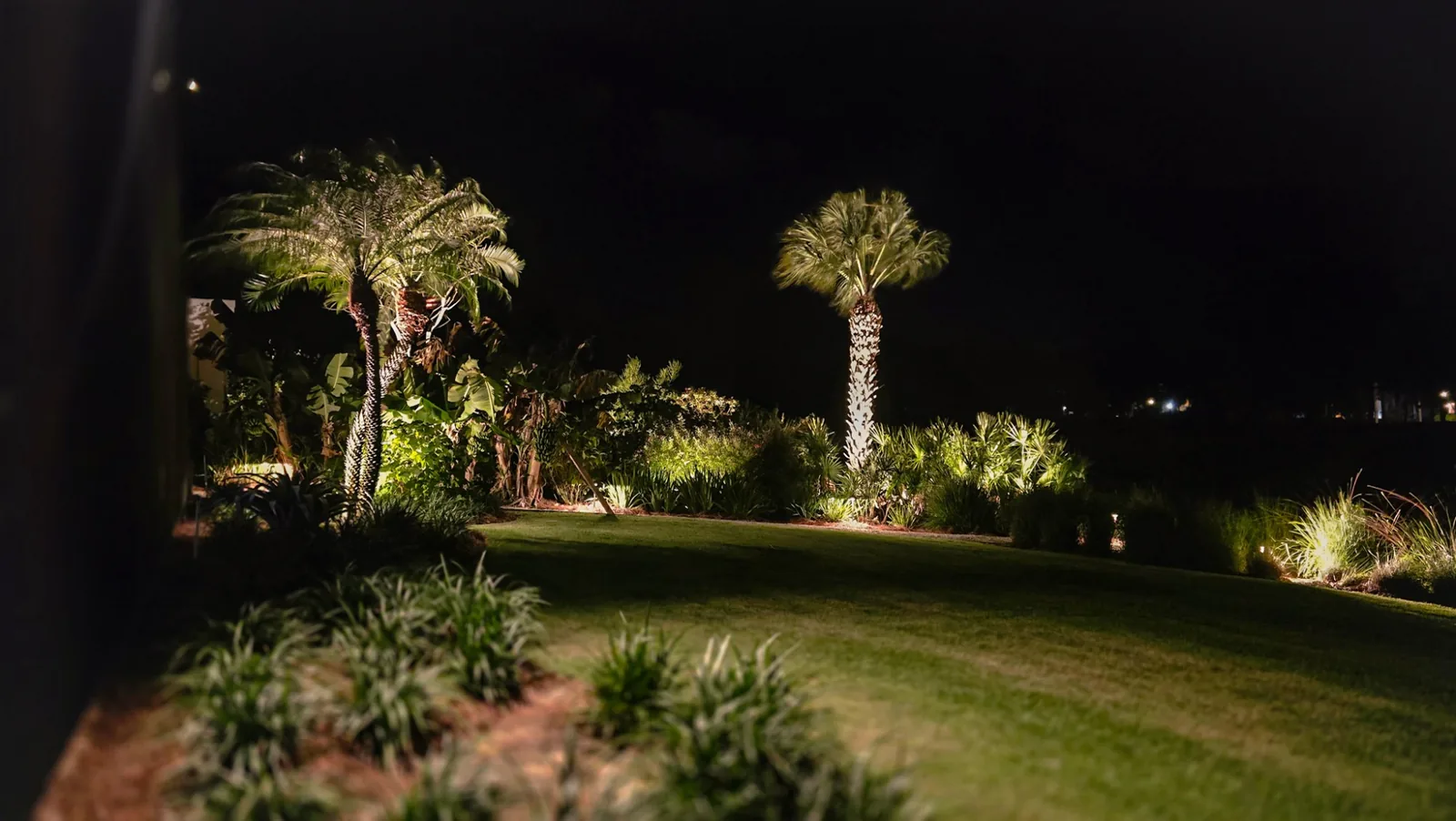
Back in Naples for the Season: A Landscape Lighting Check for Your First Week
In your first week back in Naples, check the landscape lighting in this order: the timer against the new sunset, a walk at dusk for dark or dim fixtures, plant growth, storm damage, then the transformer and its outlet. Daylight saving time ends at 2:00 a.m. on Sunday, November 1, 2026, and Naples sunset that day is 5:45 p.m. by the clock [1][2]. Reset what is yours to reset, and call for the rest.
Published Last updated
Free Consultations and Estimates
This landscape lighting check is written for a seasonal home: the house closed in May and opened in October or November. While you were away, the sun set at 8:22 p.m. on June 21, hurricane season ran from June 1, and South Florida's wet season brought most of the year's rain [2][3][4]. Each leaves its own mark on a lighting system. The checks run from the minute fixes to the ones that need a professional.
Cost driver checker
Your first-week lighting check
Sorts what you find into reset it yourself or call for service. It does not diagnose a fault or estimate a price.
Nothing picked yet.
1. Set the timer
- Reset it yourself
- Compare the timer's clock with your phone and set the on time after the new sunset: 5:45 p.m. on November 1, 2026 in Naples (USNO).[2]
- Call for service
- The clock won't hold its time.
2. Clear the photocell
- Reset it yourself
- Trim anything over the photocell and keep lanai and security lights off it; the Department of Energy places light sensors with a non-obstructed view of the sky.[6]
- Call for service
- The photocell fails the cover test: you cover it at dusk and the lights don't come on.
3. Walk at dusk
- What to do
- Walk the property just after sunset and list every dark, dim or misaimed fixture; civil twilight lasts about 24 minutes after a Naples sunset in late October and early November (USNO).[2]
- Outcome
- A list, no repair yet.
4. Clear the growth
- Reset it yourself
- Cut planting back, pull mulch off, wipe lenses with a damp cloth, turn spray heads away.
- Call for service
- Re-aiming a palm or tree light, or a fixture still dim after cleaning.
5. Check the storm damage
- Reset it yourself
- Standing a path light back up in loose soil.
- Call for service
- Cut cable, crushed fixtures and anything in water. Hurricane season runs from June 1 to November 30 (NOAA National Hurricane Center).[3]
6. Look at the outlet and transformer
- Reset it yourself
- Nothing. Look for water, a damaged cord or a tripped ground fault outlet without touching.
- Call for service
- Anything wrong here. Don't reset a tripped ground fault outlet to see what happens; if the transformer or its outlet got wet, leave the system off.
General information, not a diagnosis. Sun times from the U.S. Naval Observatory for Naples, 2026. Sources: USNO, U.S. DOE, NOAA NHC, NightScapes service pages.
Key takeaways
- Daylight saving time ends on Sunday, November 1, 2026 [1]. A photocell follows the sky and needs nothing; a timer that keeps clock time needs checking.
- Naples sunset moved from 7:59 p.m. on May 1 to 5:45 p.m. on November 1, 2026, by the clock [2]. A timer set to come on at 8:00 p.m. when you left now switches on more than two hours after sunset.
- Walk the property once at dusk and list every dark, dim or misaimed fixture before you touch anything.
- NWS Miami puts South Florida's wet season at May 15 to October 15 [4]. A fixture that looked fine in May can be under a hedge or under mulch by October.
- A tripped outlet, a wet transformer, or a whole system that stays dark is a service call, not a reset.
01The clock change
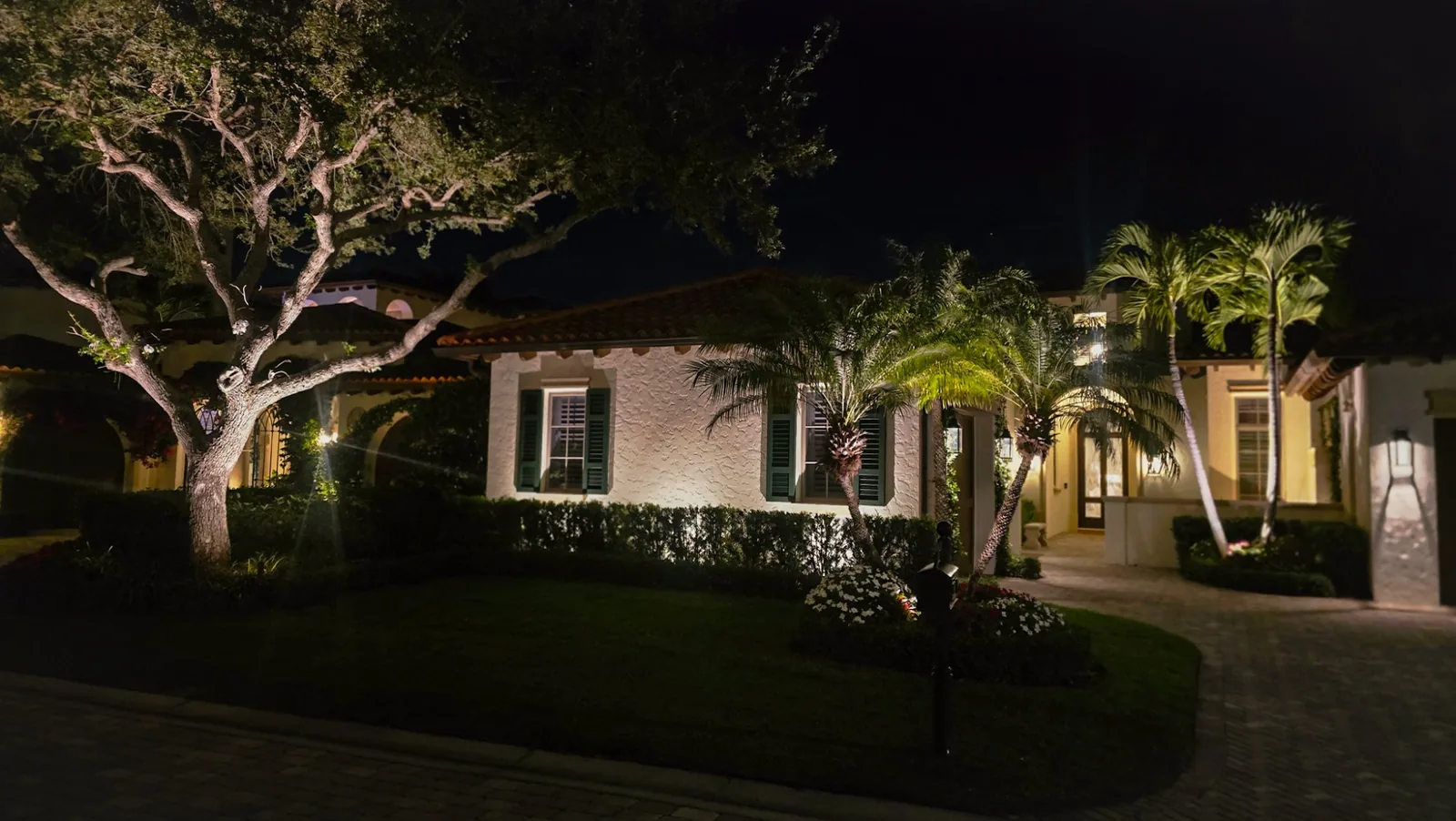
The clock changed on November 1 and the timer may not have
Federal law ends daylight saving time "at 2 o'clock antemeridian on the first Sunday of November of each year," which in 2026 is November 1 [1]. On October 29, Naples sunset is 6:47 p.m.; on November 1 it is 5:45 p.m. by the clock [2]. A photocell switches on when the sky gets dark, so it needs nothing. A timer that keeps clock time needs its clock and its on time checked.
- May 1: sunset 7:59 p.m., timer on at 8:00 p.m.
- November 1: sunset 5:45 p.m.
- Same timer: on 2 hours and 15 minutes after sunset
The clock change is only the last hour of a bigger shift. Between early May and early November, Naples sunset moves more than two hours earlier on the clock. These are the U.S. Naval Observatory's 2026 figures for Naples, in local clock time [2].
Between early May and early November, Naples sunset moves more than two hours earlier on the clock.
Sunset
These are the U.S. Naval Observatory's 2026 figures for Naples, in local clock time.
| Date (2026) | Sunrise | Sunset | Clock |
|---|---|---|---|
| March 20 | 7:31 a.m. | 7:38 p.m. | Daylight time |
| May 1 | 6:50 a.m. | 7:59 p.m. | Daylight time |
| June 21 | 6:36 a.m. | 8:22 p.m. | Daylight time |
| September 22 | 7:16 a.m. | 7:23 p.m. | Daylight time |
| October 29 | 7:34 a.m. | 6:47 p.m. | Daylight time |
| November 1 | 6:36 a.m. | 5:45 p.m. | Standard time |
| December 21 | 7:10 a.m. | 5:40 p.m. | Standard time |
Here's what that does to a clock timer. Set it in early May to come on at 8:00 p.m., one minute after the May 1 sunset. On November 1 the sun sets at 5:45 p.m., so the same timer comes on 2 hours and 15 minutes after sunset [2]. If its clock also missed the change, it comes on at 7:00 p.m., still 1 hour and 15 minutes late. Either way, the house sits dark through the early evening, the part of the night you actually see.
Which control you have decides what to check. The U.S. Department of Energy notes that "an astronomical timeclock can adjust the on and off times of the luminaire with the change in seasons and for daylight savings time" [5].
| Control | How it keeps time | What a summer away does to it | What to check this week |
|---|---|---|---|
| Mechanical dial | A motor turns a dial with pins or tabs | Stops when the power blinks and runs late afterward; never follows the season | Set the dial to the actual time and move the on pin to after the new sunset |
| Digital timer | An electronic clock, usually with a backup battery | A dead battery plus a power cut, or a missed clock change, puts the clock off | Compare its clock with your phone; reset the time and the on and off times |
| Astronomical controller | Calculates sunset from the date and location | Follows the seasons and the clock change on its own [5] | Confirm the date, time and location are right |
| Photocell | No clock; switches when the light it sees falls | Not affected by the clock change; fooled by anything that blocks or lights it | Make sure it can see open sky |
02Walk it at dusk
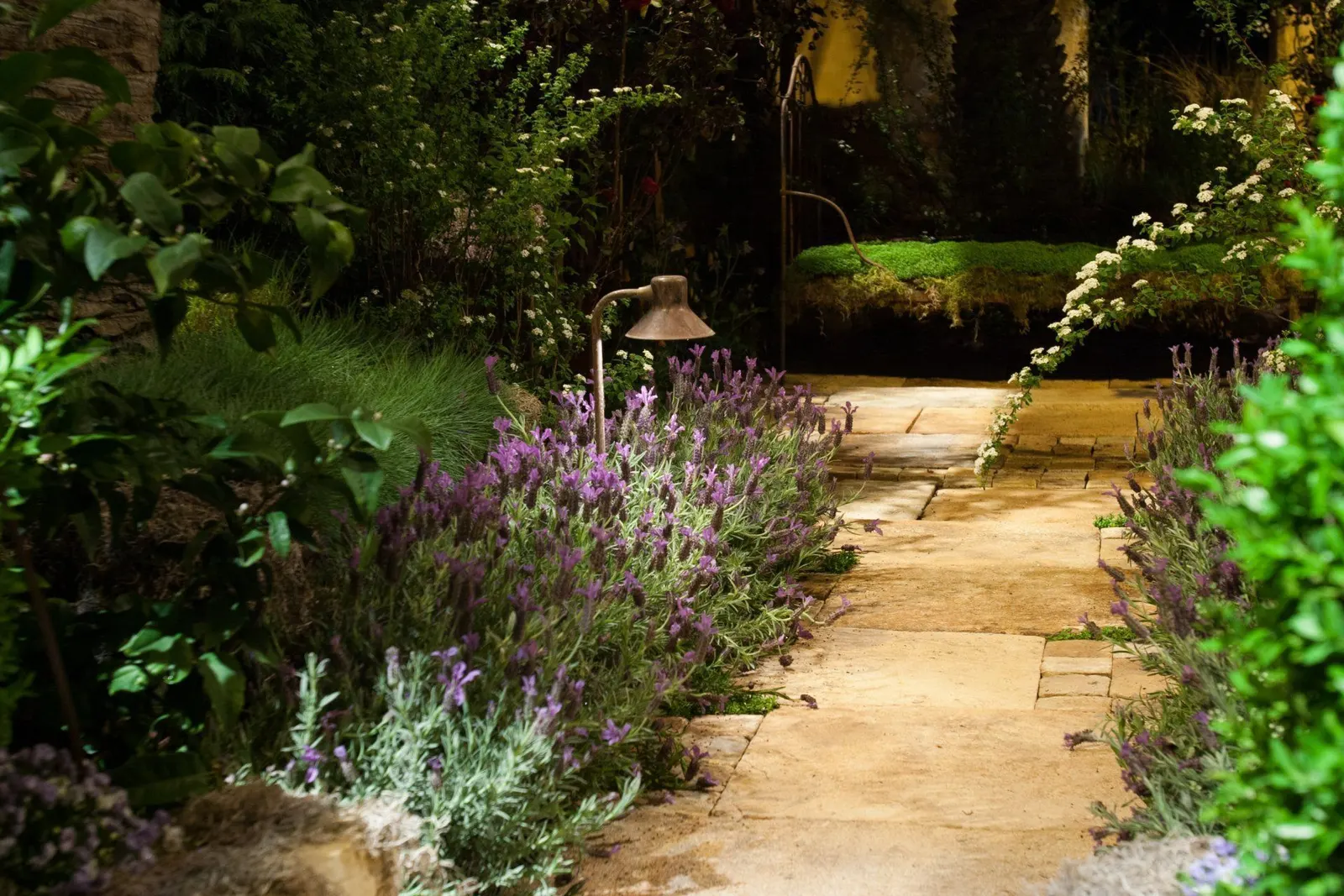
Walk the property once at dusk
Walk the whole property once, starting just after sunset, and write down every fixture that is dark, dim or aimed at the wrong thing. In Naples, civil twilight ends at 7:11 p.m. on October 29 and at 6:09 p.m. on November 1, 2026 [2]. Walk in that window: there is still enough light to see the ground, and the lights already read the way they will at night.
Go in the order a guest would: the drive, the front of the house, the side paths, the lanai and pool, the back lawn, the dock or seawall. Bring a flashlight, because civil twilight in Naples lasts only about 24 minutes after sunset in late October and early November [2]. Don't fix anything yet. The pattern on your list points to the fault.
- Nothing lights at all. The fault is on the power side: the outlet, the transformer or the timer. As NightScapes explains on its transformer page, if the ground fault device on the outlet "has tripped, or the outlet has failed, nothing downstream gets power, and the transformer is not the problem."
- One area is dark and the rest is fine. That points to one wire run. On a zoned controller, NightScapes' own guidance is that a dark zone with the schedule running "is a fault on the run, not in the controller."
- One fixture is dark. Look at that fixture: buried, knocked over, or a failed lamp or connection.
- A fixture is dim or lighting the wrong thing. Look at what is in front of it first.
- Every fixture works, at the wrong time. The fault is the control: the timeclock or the photocell, the two typical static controls in the Department of Energy's outdoor lighting guide [5].
Want someone to walk it with you? NightScapes offers free consultations and estimates in Naples. Request a free estimate or call (239) 649-6940.
03Overgrowth
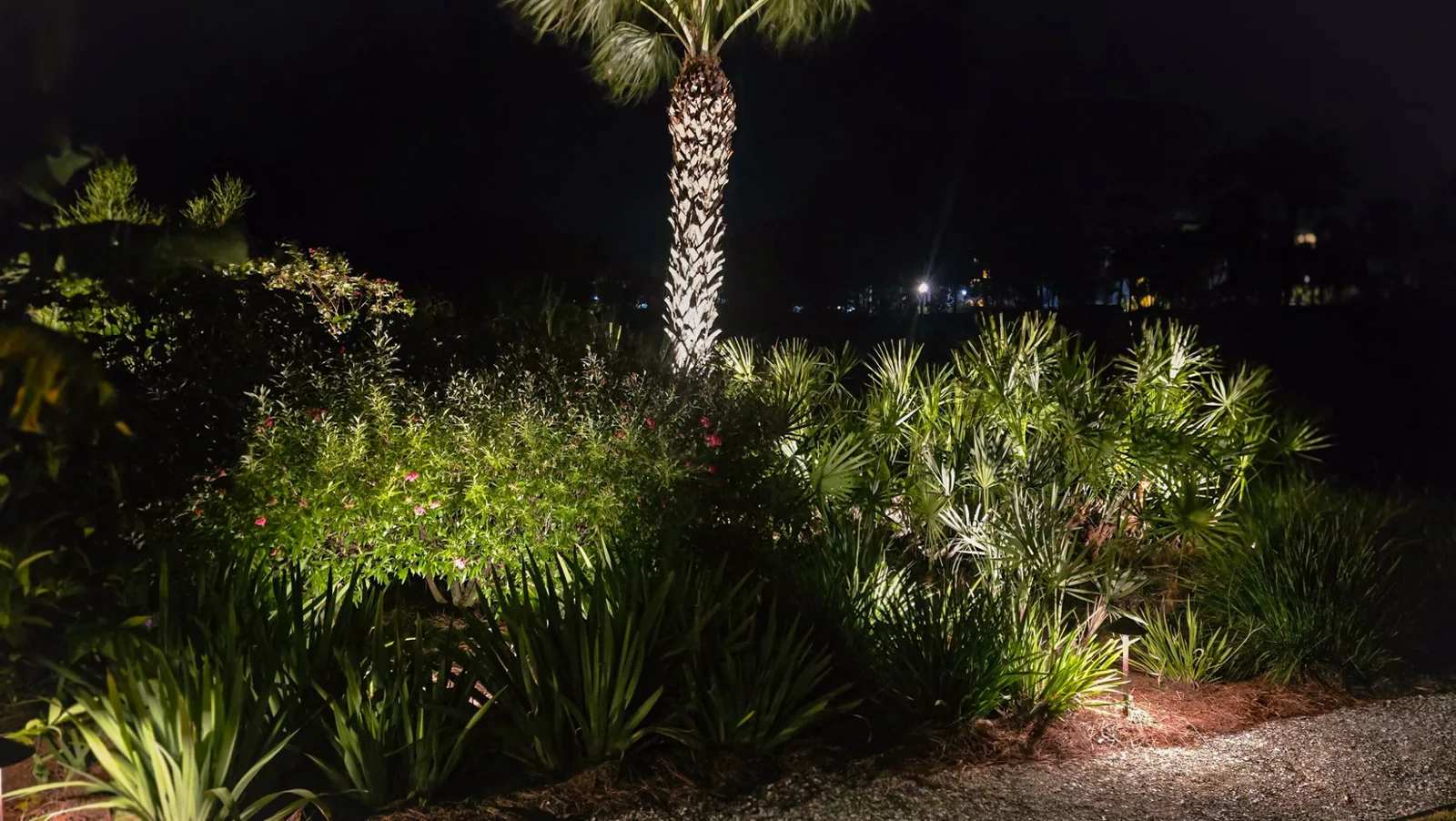
Plants grew over the lights
Naples plants do most of their growing while seasonal owners are away. The National Weather Service in Miami defines the South Florida wet season as May 15 to October 15, the time of year "when 60-70% of the average yearly rainfall occurs" [4]. A fixture that lit a palm trunk in May can be lighting the inside of a hedge by October. Before deciding a fixture failed, look in front of it.
University of Florida IFAS Extension says young live oaks "grow three feet each year" under nursery conditions [7]. A yard isn't a nursery, but a hedge or a bed of ground cover doesn't need three feet to cover a lens. It needs a few inches. NightScapes' maintenance page puts it plainly: "Summer growth will bury anything left low."
At each dim fixture on your list, look for these:
- An up light swallowed by a bed, with leaves across the lens.
- Mulch or soil washed over a well light.
- A hedge grown past a path light, so the light falls on leaves.
- A spray head that hits the lens and leaves a film on the glass.
- A palm or tree light that now hits a frond or a new branch.
The first four are yours: cut the planting back, pull the mulch off, wipe the lens with a damp cloth, and turn the spray head away. A lens wet every morning stays damp, and FEMA notes that a surface that stays damp longer corrodes faster [8]. The fifth is a service call, because on a palm or tree light the right aim depends on how the tree has grown. NightScapes' maintenance visit before the season covers exactly this: "aim reset after a summer of growth, lenses cleaned."
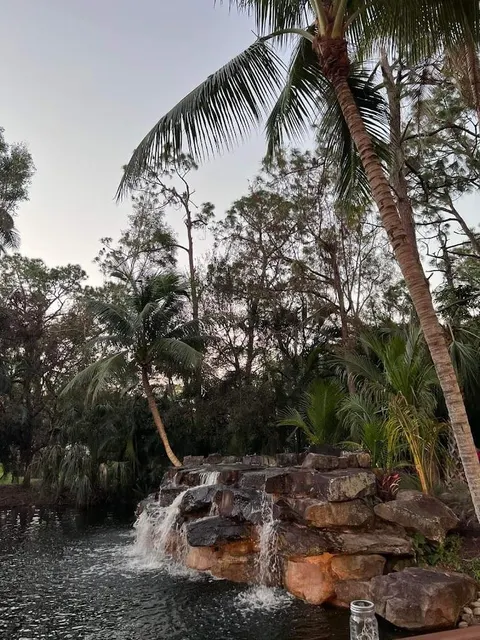
04After the storms
Look for what the summer storms moved
A Naples owner who comes back in late October is still inside hurricane season. NOAA's National Hurricane Center says, "The Atlantic hurricane season runs from June 1 to November 30," and puts the peak at September 10 [3]. Walk the property once in daylight before your dusk check, and note any fixture that is leaning, flat, buried in sand, sitting in water, or showing cable.
Even a summer with no named storm is hard on a lighting system here. The National Weather Service in Miami calls Florida the "lightning capital" of the United States, based on 2022 flash density data [9]. Every storm that blinks the power can stop a mechanical timer dial, which then runs late. One more reason the timer comes first.
Water is the slower problem. FEMA's technical bulletin on corrosion in coastal areas says, "The longer a surface remains damp during the normal daily fluctuations in humidity, the higher the corrosion rate" [8]. A fixture in a low spot that held water all summer has had a long, damp season. Look hardest at low corners of the lawn and along the seawall.
NightScapes' storm damage guidance is short: walk the property in daylight, "note what moved, what is under water or sand, and where cable is showing," and if the transformer or its outlet got wet, leave the system off. Photograph anything knocked flat or cut, and if a storm has come through recently, read our storm damage repair page before you switch anything on.
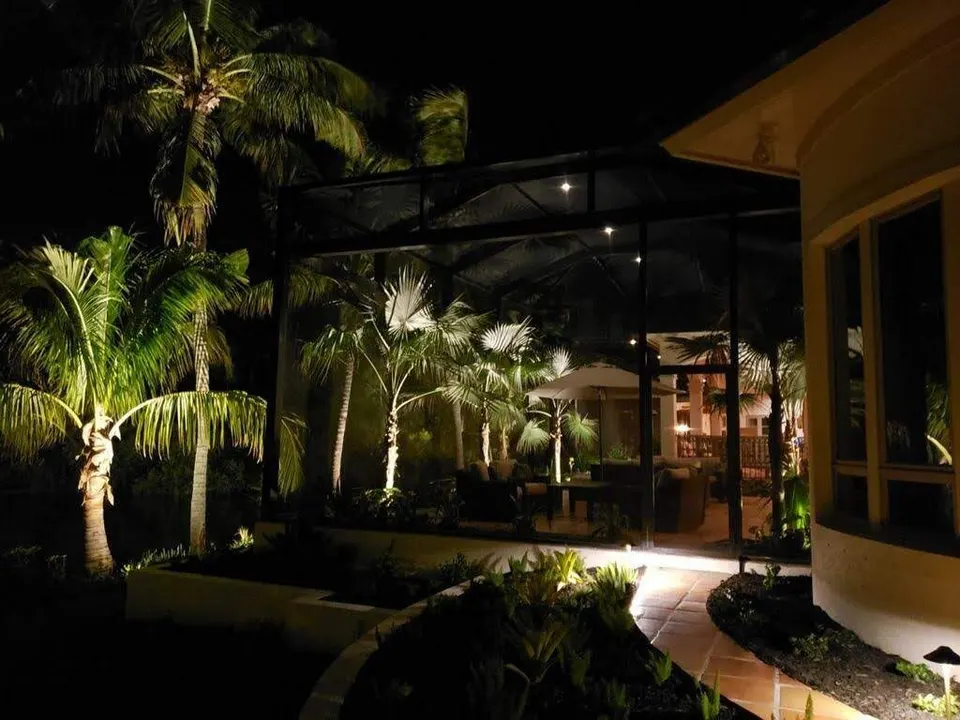
05Transformer and photocell
The transformer, the outlet and the photocell
The transformer is the box that steps household current down for the lights. It plugs into an outdoor outlet, usually protected by a ground fault device. A photocell is a light sensor that signals a controller, "which switches or dims the controlled lights in response to daylight availability," in the Department of Energy's words [6]. An astronomical timer calculates sunset from the date and location instead, and adjusts for the seasons and the clock change [5].
Start at the outlet. Look, don't touch: is the cover closed, is the cord whole, is there water in the cover or on the cabinet? NightScapes' transformer page lists the usual failures there as "a tripped ground fault device, a corroded outlet, a damaged cord." If the ground fault outlet has tripped, don't reset it to see what happens. As the same page explains, what trips it "is current leaking where it should not, often because water has got in," and the cause has to be found first. That's a call.
Then the photocell, if you have one. The Department of Energy's guidance places light sensors with a "non-obstructed view of the sky" [6]. On a Naples lot, watch for a shrub grown over the sensor, a clouded lens, or a lit lanai or window that makes it think it is still day. Photocells also age. The Department of Energy notes that their materials "can change over time and become less sensitive," so the lights come on earlier in the evening and go off later in the morning [5].
Two quick tests, both from NightScapes' transformer page: "Covering a photocell, or checking a timer's clock against the actual time, quickly shows whether the control or the power is at fault." Cover the photocell at dusk: if the lights come on, the power side is fine. If nothing happens, the fault is in the cabinet, and the transformer needs a professional look.
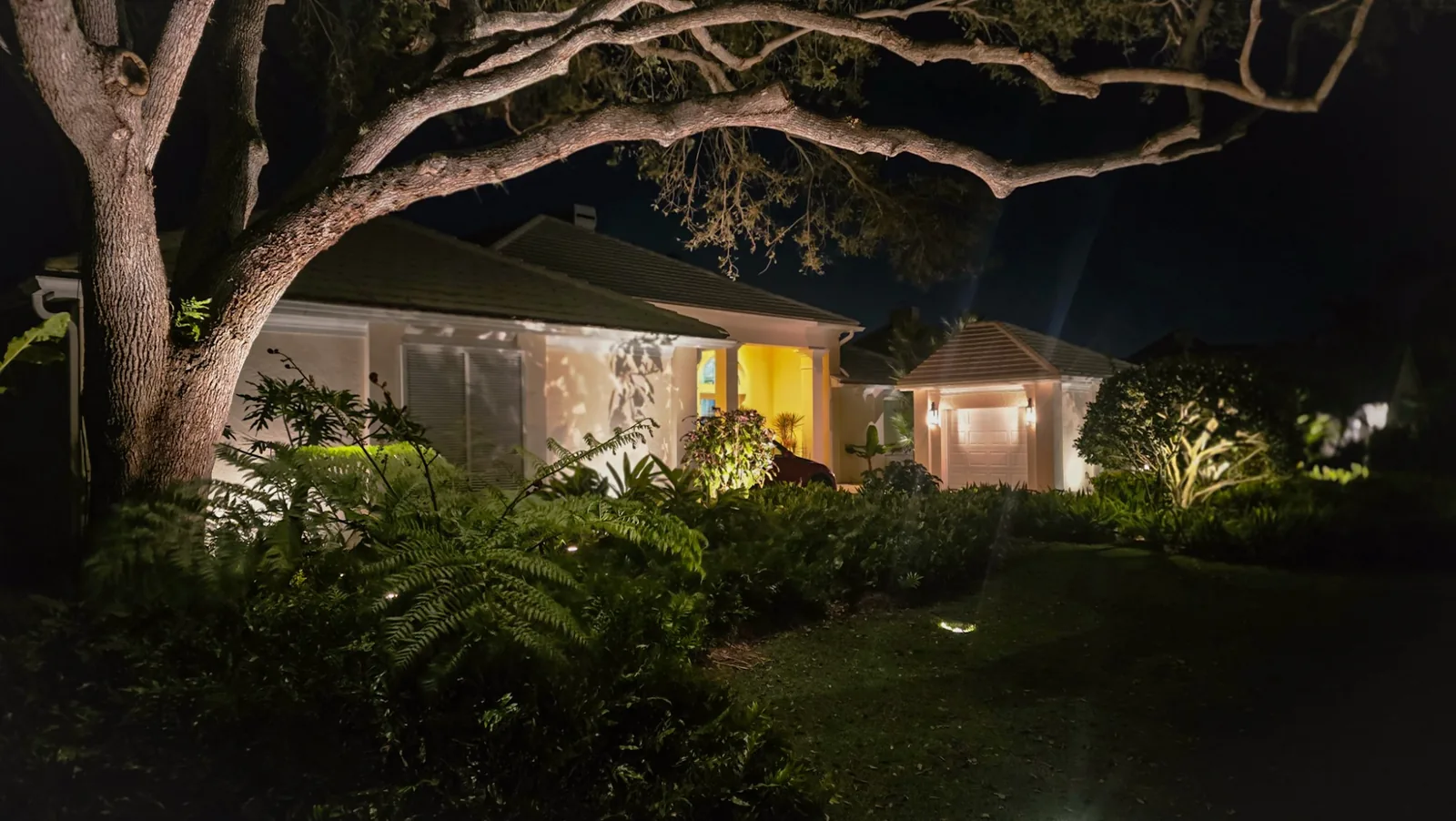
06Reset or call
What you can reset and what needs a call
Most of a first-week check is yours to do: setting a timer's clock and on time, clearing plants and mulch, wiping lenses and turning spray heads. Anything on the power side is a call: a tripped ground fault outlet, a wet transformer or outlet, a system that stays dark, a cut cable, or a photocell that fails the cover test. Here is the check in order, with the outcome of each step.
- Set the timer. Compare its clock with your phone and set the on time after the new sunset (5:45 p.m. on November 1 in Naples) [2]. Yours to reset; if the clock won't hold its time, call.
- Clear the photocell. Trim anything over it and keep lanai and security lights off it. Yours to reset; if it fails the cover test, call.
- Walk at dusk. List every dark, dim or misaimed fixture. No repair yet.
- Clear the growth. Cut planting back, pull mulch off, wipe lenses, turn spray heads away. Yours; re-aiming a palm or tree light is a call.
- Check the storm damage. In daylight, note what is leaning, flat, buried, in water or showing cable. Standing a path light back up in loose soil is yours; cut cable, crushed fixtures and anything in water are a call.
- Look at the outlet and transformer. Look for water, a damaged cord or a tripped ground fault outlet, without touching. Anything wrong here is a call.
| What you found | Reset it yourself | Call for service |
|---|---|---|
| Lights on at the wrong time, every fixture working | Set the timer clock and on time | The clock won't hold its time |
| Lights never come on, or come on in daylight | Clear the photocell's view of the sky | The photocell fails the cover test |
| One fixture dim | Clear plants and mulch, wipe the lens | Still dim after cleaning, or the aim is off |
| One fixture or one area dark | Stand a knocked light back up | Still dark: lamp, connection or run fault |
| Whole system dark | Nothing | Outlet, transformer or timer fault |
| Outlet tripped, or water at the outlet or transformer | Nothing; leave the system off | Always |
If you'd rather not do any of it, that's what a yearly maintenance visit is for. NightScapes times the visit before the season so the "schedule and timer checked against the new sunset" is done before Naples sunsets reach 5:40 p.m. in December [2].
07
Questions we hear
Frequently Asked Questions About Landscape Lighting When You Return to Naples
 NightScapes Landscape Lighting Outdoor lighting only, Naples since 2006
Choose a question
Do landscape lights come on automatically?
Yes, if the system has a timer, a photocell or an astronomical controller, and each works differently. A photocell turns the lights on when the sky gets dark, so it needs a clear view of the sky. An astronomical controller calculates sunset from the date and location and adjusts for the seasons and daylight saving time on its own. A mechanical dial or a digital timer comes on at a fixed clock time, so in Naples it drifts out of step with the sunset, which moved from 8:22 p.m. on June 21 to 5:45 p.m. on November 1, 2026. If your lights come on at the wrong time, find out which one you have first.
Do landscape light timers adjust for daylight saving time?
Some do and some don't. An astronomical controller adjusts for the clock change on its own, according to the U.S. Department of Energy. A photocell has no clock, so the change doesn't affect it. A mechanical dial doesn't adjust, and a digital timer is only right if its clock is right. In 2026, daylight saving time ends at 2:00 a.m. on Sunday, November 1. After that, compare the timer's clock with your phone; if it reads an hour ahead, it missed the change. Set the clock, then set the on time after the new Naples sunset: 5:45 p.m. on November 1 and 5:40 p.m. on December 21.
Why are my landscape lights not working after the summer?
Start with what is dark. If nothing lights, the fault is on the power side: the outdoor outlet, its ground fault device, the transformer or the timer. One dark area points to one wire run; one dark fixture points to that fixture, its lamp or its connection. After a Naples summer, also look for growth and storm damage, since hurricane season runs from June 1 to November 30. If the outlet has tripped or the transformer got wet, leave the system off and call for service rather than resetting the outlet.
Why are some of my landscape lights dim?
In a Naples yard after the summer, look at what is in front of the fixture first. South Florida's wet season runs from May 15 to October 15 and brings 60 to 70 percent of the year's rain, so plants grow fast while seasonal owners are away. Leaves over a lens, mulch over a well light, a hedge grown past a path light, or film from a spray head all make a working light look dim. Clear it and wipe the lens with a damp cloth. If it is still dim after cleaning, or its aim is off, it needs a service visit to check the lamp, the connection and the voltage reaching it.
How long do LED landscape lights last?
LEDs don't usually burn out like old bulbs. ENERGY STAR says, "LEDs typically do not 'burn out' or fail," and an LED's rated lifetime is a prediction of when its light output falls by 30 percent. So an aging LED fixture gets dimmer rather than going dark. That's one reason to clean and clear a dim fixture before you replace anything: a covered lens and an aging LED look the same from the lawn. A fixture that has gone completely dark points to the lamp, a connection, the cable or water in the fixture, which is a service call.
Related services
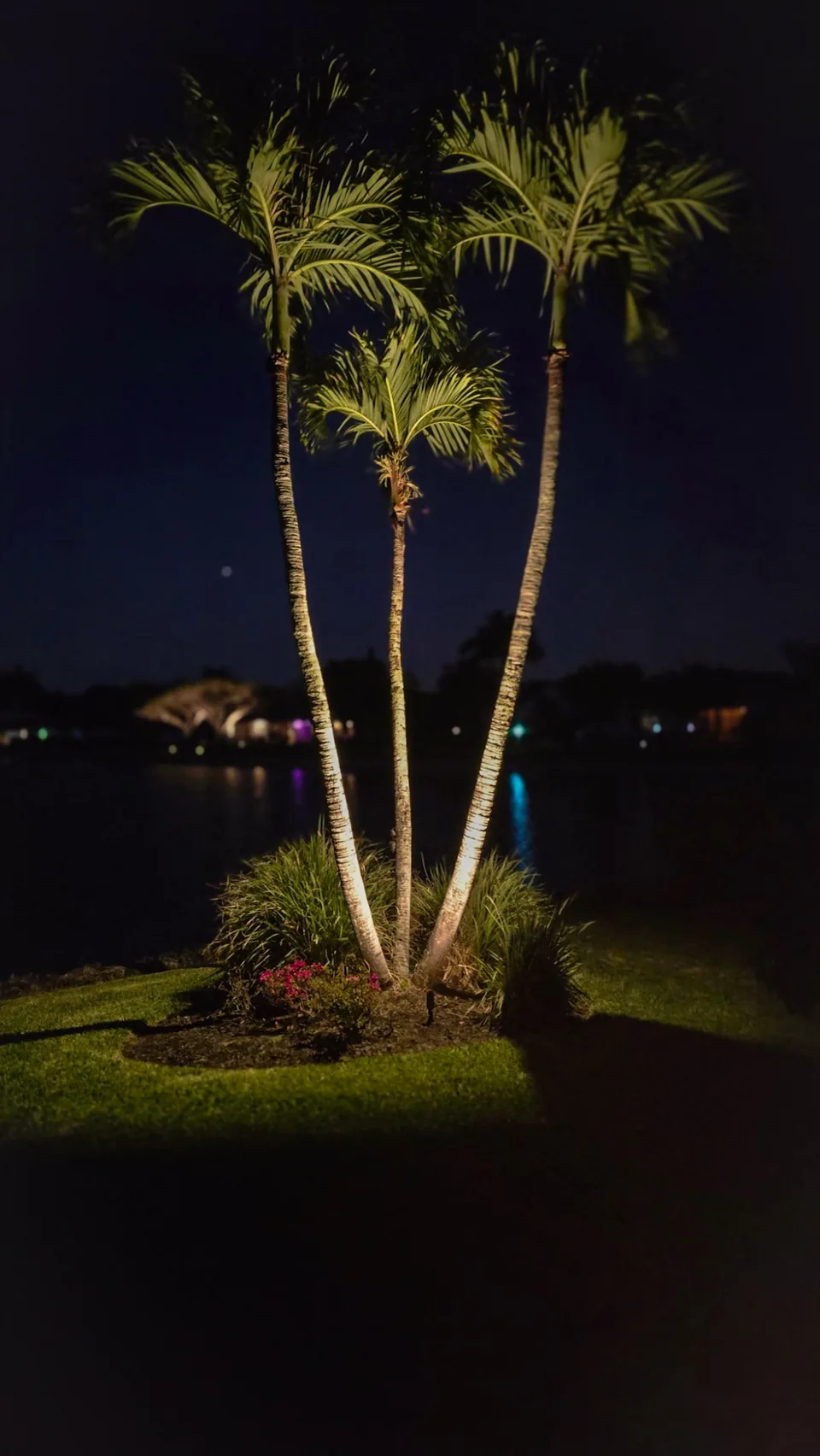
08Next step
Your first evening back, in order
Check the lights in your first week back, before the guests arrive and before the clock change on November 1 makes every timer error an hour worse [1]. Set the timer against the new sunset, clear the photocell, walk the property at dusk with a list, clear the growth, look for storm damage in daylight, and look at the outlet and transformer without touching them.
Most of that is yours to fix in an evening. The power side is not. A tripped outlet, a wet transformer, or a system that stays dark gets a call.
NightScapes has designed, installed and repaired outdoor lighting in Naples since 2006 (Todd since 1998), and outdoor lighting is all we do. If your check turned up anything on the call list, or you'd rather we do the whole check, call (239) 649-6940 or request a free estimate.
09Sources
References
- U.S. Code. 15 U.S.C. 260a, Advancement of time or changeover dates (Legal Information Institute, Cornell Law School). Read October 23, 2026. law.cornell.edu/uscode/text/15/260a
- U.S. Naval Observatory. Sun and Moon Data for One Day, Naples, Florida (26.142 N, 81.795 W), 2026. Local clock time, daylight saving time applied; dates March 20, May 1, June 21, September 22, October 29, November 1 and December 21, 2026 (same query with each date). Read October 23, 2026. aa.usno.navy.mil/api/rstt/oneday
- NOAA National Hurricane Center. Tropical Cyclone Climatology. Read October 23, 2026. nhc.noaa.gov/climo/
- National Weather Service, Miami-South Florida Forecast Office. Rainy Season 2025 Outlook. May 22, 2025. weather.gov/media/mfl/news/RainySeasonOutlook2025.pdf
- U.S. Department of Energy, Federal Energy Management Program. Guide to FEMP-Designated Parking Lot Lighting. March 2013. energy.gov/sites/prod/files/2014/02/f7/parking_lots_guide.pdf
- U.S. Department of Energy, Better Buildings Alliance. Exterior Lighting Control Guidance. 2013. betterbuildingssolutioncenter.energy.gov/sites/default/files/att
- University of Florida IFAS Extension. Quercus virginiana: Southern Live Oak (ENH-722). Revised December 2018. ask.ifas.ufl.edu/publication/ST564
- FEMA. Corrosion Protection for Metal Connectors and Fasteners in Coastal Areas (NFIP Technical Bulletin 8). June 2019. fema.gov/sites/default/files/2020-07/tb8-corrosion_protection_me
- National Weather Service, Miami-South Florida Forecast Office. 2023 Severe Weather Awareness Week: Lightning Awareness Day. February 2023. weather.gov/media/mfl/news/LightningWeb_2023.pdf
- ENERGY STAR. Learn About LED Lighting. Read October 23, 2026. energystar.gov/products/learn-about-led-lighting